



Why Small Businesses Should Invest in SEO Instead of Paid Ads
Why Small Businesses Should Invest in SEO Instead of Paid Ads
For a small business, every marketing rupee matters. You want more website visitors, enquiries and customers, but you also need to control acquisition costs and avoid becoming dependent on a marketing channel that requires continuous spending.
This is where the debate between SEO and paid advertising becomes important.
Paid ads can be extremely useful when a business needs immediate visibility, wants to test an offer or is running a time-sensitive campaign. But for small businesses building sustainable online visibility, Search Engine Optimization (SEO) can create value that continues beyond an individual campaign.
Working with the Best SEO Agency for Small Business India should therefore be less about chasing rankings and more about building a search presence that attracts relevant customers over time.
A useful way to understand the difference is:
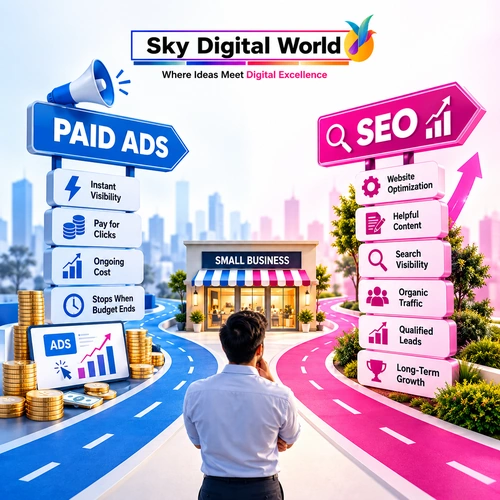
Paid Ads: Budget → Clicks → Leads → Stop Budget → Traffic Drops
SEO: Optimize → Build Authority → Improve Visibility → Attract Traffic → Generate Opportunities
The right choice is not always SEO or ads. However, businesses with limited budgets should understand why building an organic foundation can reduce long-term dependence on paid traffic.
SEO vs Paid Ads: What Is the Real Difference?
SEO focuses on improving your website so that search engines can understand its pages and users can discover useful content when searching for relevant products, services or information.
This may involve:
- keyword and search-intent research;
- technical SEO;
- website structure;
- service and product page optimization;
- local SEO;
- helpful content;
- internal linking;
- page experience;
- and authority building.
Paid advertising works differently. Businesses bid or pay to place advertisements in front of selected audiences or searches.
That makes advertising useful for speed, while SEO is generally a longer-term investment.
The difference can be summarized as:
SEO | Paid Ads |
Usually takes time to build | Can generate visibility quickly |
Focuses on organic visibility | Visibility depends on ad delivery |
Builds website content and structure | Builds campaigns and targeting |
Can attract traffic without paying for every click | Usually incurs cost for clicks/impressions/actions |
Compounds through content and authority | Requires ongoing campaign budget |
Useful for long-term discovery | Useful for immediate campaigns |
Neither channel guarantees sales. Results still depend on competition, demand, offer quality, website experience and execution.
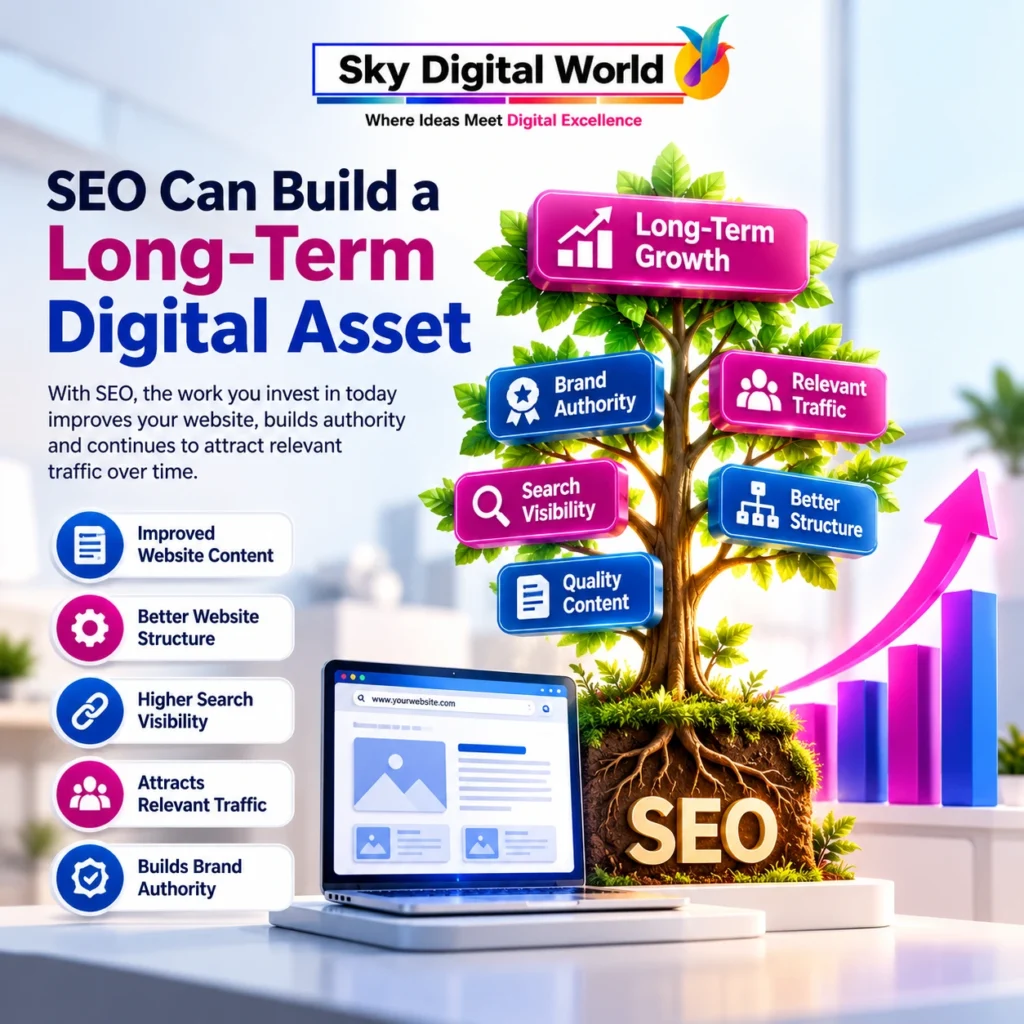
1. SEO Can Build a Long-Term Digital Asset
One of SEO’s biggest advantages for a small business is that the work improves an asset you own—your website.
Suppose you create a high-quality service page targeting a commercially relevant search.
Over time, that page can become stronger through improved content, internal links, external references, better user experience and increased topical relevance.
A paid advertisement works differently. When its budget is paused, paid distribution normally stops.
With SEO, the work already completed does not simply disappear when you stop spending on clicks.
That does not mean SEO is permanent or maintenance-free. Rankings can change, competitors improve and search engines evolve. But optimized pages, useful content and better site architecture can continue providing value.
2. Small Businesses Need to Reduce Dependence on Paid Traffic
Imagine a small business generates most of its enquiries through advertising.
As long as advertising remains profitable, this can work well.
But what happens when:
Cost per click rises → Cost per lead increases → Budget becomes limited → Lead volume declines?
Heavy dependence on one paid channel can leave a business vulnerable to changing auction costs and campaign performance.
SEO adds another acquisition channel.
Instead of depending entirely on paid traffic, a business can gradually develop:
Organic Search + Local Search + Direct Traffic + Referrals + Paid Advertising
That creates a more diversified digital marketing strategy.
For a Best SEO Agency for Small Business India, one meaningful objective should therefore be reducing unnecessary dependency on paid acquisition—not simply reporting keyword positions.
3. SEO Captures Existing Search Intent
Someone searching:
“accountant near me”
is different from someone casually scrolling through social media.
The search itself indicates a need.
SEO allows businesses to create pages around different types of intent:
Informational Intent: “How much does home renovation cost?”
Commercial Investigation: “Best interior designers in Indore”
Transactional Intent: “Hire interior designer in Indore”
Local Intent: “Interior designer near me”
A strong SEO strategy maps these searches to appropriate pages instead of trying to rank one homepage for everything.
This creates a customer journey such as:
Question → Helpful Content → Service Page → Trust → Enquiry
For small businesses, that can be more valuable than generating large amounts of poorly targeted traffic.
4. SEO Helps Customers Discover You During Research
Not every potential customer is ready to purchase immediately.
Before contacting a business, people may research:
- pricing;
- service differences;
- common problems;
- alternatives;
- locations;
- reviews;
- expected timelines;
- and frequently asked questions.
If your website provides useful answers throughout this process, customers may encounter your brand multiple times before making a decision.
For example, an SEO agency could create content around:
“How much does SEO cost for a small business?”
Then connect that article to:
Small Business SEO Services → Case Studies → FAQs → Contact
This turns SEO from a keyword-ranking exercise into a customer education system.
5. SEO Can Strengthen Trust Before the Enquiry
Paid ads can introduce your brand quickly, but visibility alone does not create trust.
Imagine a customer discovers your business and then searches your company name.
What do they find?
A professional website? Detailed service pages? Helpful articles? A properly optimized Google Business Profile? Consistent business information? Genuine reviews?
SEO supports many of these trust-building touchpoints.
A useful framework is:
Visibility → Relevance → Credibility → Trust → Enquiry
For small businesses competing against larger brands, credibility can be especially important.
6. Local SEO Can Be Powerful for Small Businesses
Many small businesses do not need customers across India.
They need customers within a specific city, neighbourhood or service area.
That makes local SEO particularly valuable.
For example:
Dentist in Indore
CA in Bhopal
Interior Designer in Pune
Digital Marketing Agency in Indore
Local SEO can involve optimizing relevant website pages, maintaining accurate business information, developing useful local content and improving Google Business Profile visibility.
For businesses where customers actively search locally, this can complement paid campaigns while creating a stronger organic presence.
7. SEO Supports More Than Google Rankings
Modern SEO should not focus only on “position #1.”
A well-optimized website can improve:
Website Structure: Users can navigate services more easily.
Content Quality: Important customer questions are answered.
Page Performance: Faster and more usable pages can improve customer experience.
Internal Linking: Related information becomes easier to discover.
Conversion Paths: Visitors have clearer next steps.
Brand Authority: Detailed, useful content demonstrates expertise.
So even when ranking improvements take time, SEO work can improve the overall digital foundation of the business.
8. SEO Can Become More Cost-Efficient Over Time
Paid advertising generally has a direct relationship with ongoing media spend.
If a campaign produces 100 paid visits, generating another 100 usually requires additional advertising expenditure.
SEO operates differently.
A useful page may initially require research, writing, design, optimization and promotion. But if that page earns consistent organic visibility, it can potentially attract additional visits without a separate media charge for every organic click.
This is why SEO should be evaluated over a longer period.
Instead of asking:
“How many leads did SEO generate this week?”
also measure:
Organic visibility → Relevant traffic → Qualified enquiries → Conversion rate → Customer acquisition → Revenue contribution
This gives small businesses a more meaningful picture of SEO performance.
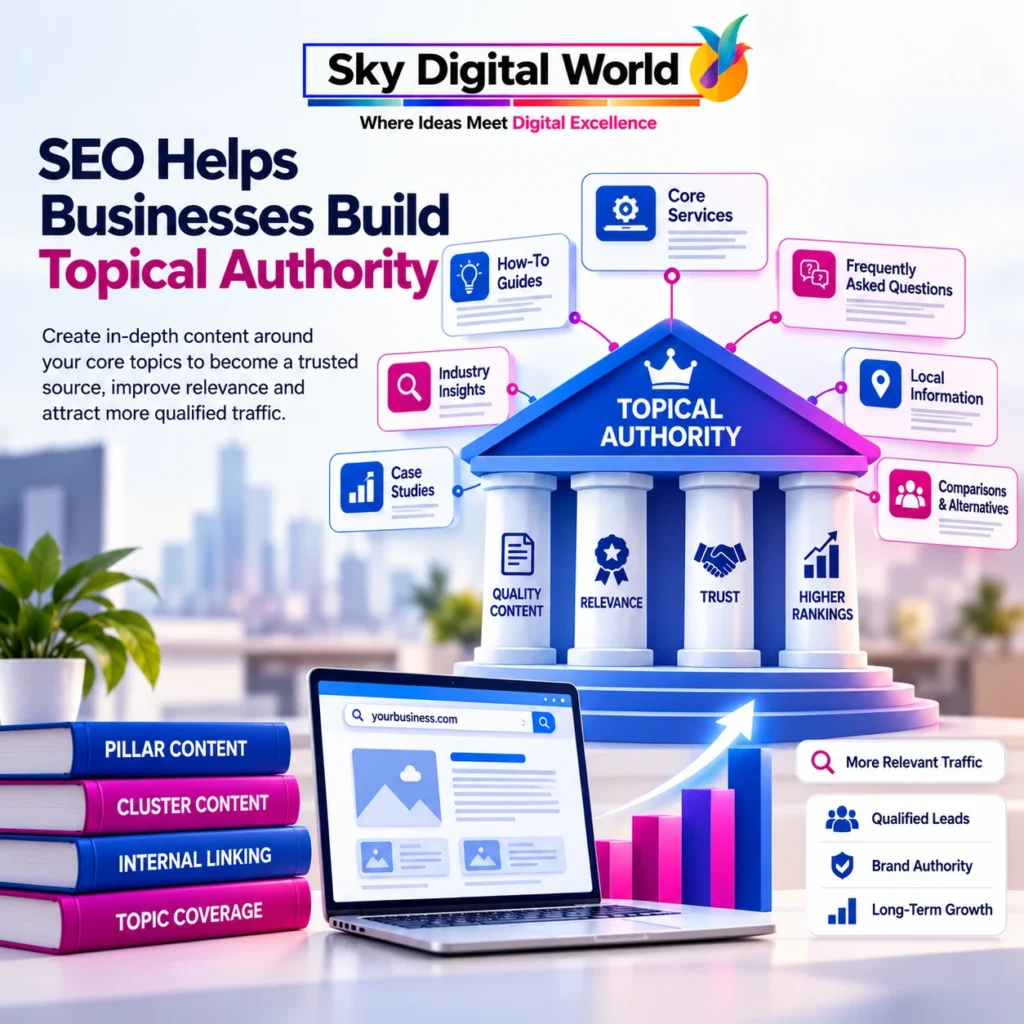
9. SEO Helps Businesses Build Topical Authority
A small business should not create hundreds of unrelated articles.
It should build depth around the subjects most relevant to its customers.
For example, a real estate company could develop clusters around:
Buying Property → Home Loans → Location Guides → Property Documentation → Investment Questions → Project Pages
A digital marketing company might build:
SEO → Technical SEO → Local SEO → Content SEO → Website Speed → Search Visibility → AI Search
This creates meaningful relationships between pages.
The objective is not to publish more content than everyone else. It is to create a website that answers important customer questions comprehensively and logically.
10. SEO and Paid Ads Can Work Together
“SEO instead of paid ads” should not be interpreted as “paid ads are bad.”
Paid advertising can be highly useful for:
- new product launches;
- immediate lead generation;
- limited-time promotions;
- remarketing;
- campaign testing;
- and entering a market where organic visibility has not yet developed.
A stronger small-business strategy can therefore look like:
Short Term → Paid Ads for immediate visibility
Medium Term → SEO builds organic discovery
Long Term → SEO + Paid Ads + Retargeting + Content
The difference is that SEO can help prevent the business from remaining completely dependent on paid acquisition.
11. Why SEO Does Not Produce Instant Results
Small businesses should also have realistic expectations.
SEO usually requires time because search visibility depends on factors such as:
Competition + Website Condition + Content Quality + Search Intent + Technical Health + Authority + Market Demand
A new website targeting highly competitive keywords may require significantly more work than an established local business targeting a smaller geographic market.
Anyone promising guaranteed #1 rankings within a fixed short period should therefore be approached carefully.
A professional SEO strategy should focus on measurable improvements rather than unrealistic ranking guarantees.
12. What Should the Best SEO Agency for Small Business India Actually Do?
Choosing an SEO agency should not be based solely on who promises the most backlinks or keywords.
A small-business SEO strategy should begin with business goals.
The agency should understand:
What do you sell? → Who buys it? → What do they search? → Which searches show buying intent? → Which pages should rank? → What prevents those pages from performing? → How will SEO contribute to enquiries or sales?
A strong SEO program may include technical audits, keyword research, competitor analysis, on-page optimization, content strategy, local SEO, internal linking, website improvements, authority development and performance reporting.
More importantly, reporting should connect SEO activity with meaningful business outcomes.
A Better SEO Strategy for Small Businesses
Instead of targeting hundreds of keywords immediately, start with a focused model:
Step 1: Fix Technical Problems
Ensure important pages can be crawled, indexed and used properly.
Step 2: Target High-Intent Keywords
Prioritize searches closely related to actual products and services.
Step 3: Improve Money Pages
Build strong service, product and location pages.
Step 4: Create Helpful Supporting Content
Answer questions customers ask before buying.
Step 5: Build Local and Brand Authority
Strengthen reviews, citations, relevant mentions and brand signals.
Step 6: Measure Business Results
Track qualified traffic, calls, forms, enquiries and conversions—not rankings alone.
The complete growth path becomes:
Search Demand → Visibility → Relevant Visitor → Trust → Enquiry → Customer
Final Thoughts
Small businesses often need both immediate opportunities and sustainable growth.
Paid ads can deliver fast visibility, but they require ongoing campaign investment. SEO usually takes longer, but it can build an organic discovery channel around your website, content, local presence and brand authority.
That makes SEO particularly valuable for businesses that want to create a stronger long-term marketing foundation.
The goal of choosing the Best SEO Agency for Small Business India should not simply be getting more keywords onto page one.
It should be:
Build Visibility → Attract the Right Audience → Earn Trust → Generate Qualified Enquiries → Reduce Paid Dependence → Support Sustainable Growth
SEO works best when it is treated as a long-term business asset rather than a quick ranking trick.
Is SEO better than paid ads for small businesses?
They solve different problems. Paid ads can provide immediate visibility, while SEO focuses on developing organic visibility over time. Businesses with limited budgets can use SEO to build a sustainable acquisition channel while using paid ads selectively for immediate campaigns.
How long does SEO take for a small business?
There is no universal timeline. Results depend on website condition, competition, location, keyword difficulty, existing authority and the quality of execution. Local or lower-competition opportunities may develop sooner than highly competitive national searches.
Can a small business do SEO without running Google Ads?
Yes. Organic rankings are not dependent on buying Google Ads. However, businesses can use both channels when their objectives and budgets justify it.
What should I look for in the Best SEO Agency for Small Business India?
Look for an agency that understands search intent, technical SEO, content, local SEO, website experience and conversion tracking. It should provide transparent reporting and avoid guaranteed-ranking claims.
Is SEO a one-time investment?
No. Initial optimization can create a strong foundation, but websites, competitors and search behaviour continue to change. SEO generally requires ongoing monitoring, content improvements and technical maintenance to remain competitive.