




How Can Export Businesses Reach International Buyers Through LinkedIn?
How Can Export Businesses Reach International Buyers Through LinkedIn?
Expanding into international markets is an exciting opportunity for manufacturers and exporters. However, finding genuine overseas buyers, connecting with importers, and building trust across borders can be challenging. Traditional methods such as trade exhibitions, business directories, and cold emails still have value, but digital networking has opened new opportunities for global business growth.
One platform that deserves attention is LinkedIn.
Unlike many social media platforms, LinkedIn is built around professional relationships. Export businesses can use it to discover importers, distributors, procurement managers, wholesalers, and decision-makers across different countries.
The real advantage of LinkedIn Marketing for Export Businesses is not simply gaining followers. It is about reaching relevant people, demonstrating business credibility, and starting conversations that may develop into international trade opportunities.
So, how can exporters use LinkedIn effectively to connect with potential overseas buyers?
Why Is LinkedIn Important for Export Businesses?
International buyers often research suppliers before making contact. They want to understand a company’s manufacturing capabilities, product quality, industry experience, and ability to fulfil business requirements.
A professional LinkedIn presence gives exporters an opportunity to communicate these details.
For example, a scaffolding manufacturer in India looking for buyers in the UAE can use LinkedIn to identify construction material importers, procurement professionals, and distributors operating in that market.
Instead of waiting for buyers to discover the business, the manufacturer can proactively build relevant connections.
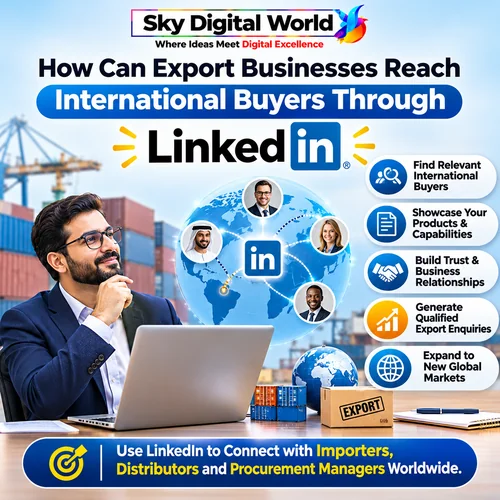
LinkedIn helps export businesses:
- Discover potential buyers in target countries.
- Connect directly with purchasing decision-makers.
- Showcase manufacturing facilities and product capabilities.
- Establish credibility through professional content.
- Develop long-term relationships with overseas businesses.
However, successful export marketing requires a clear strategy rather than sending random connection requests.
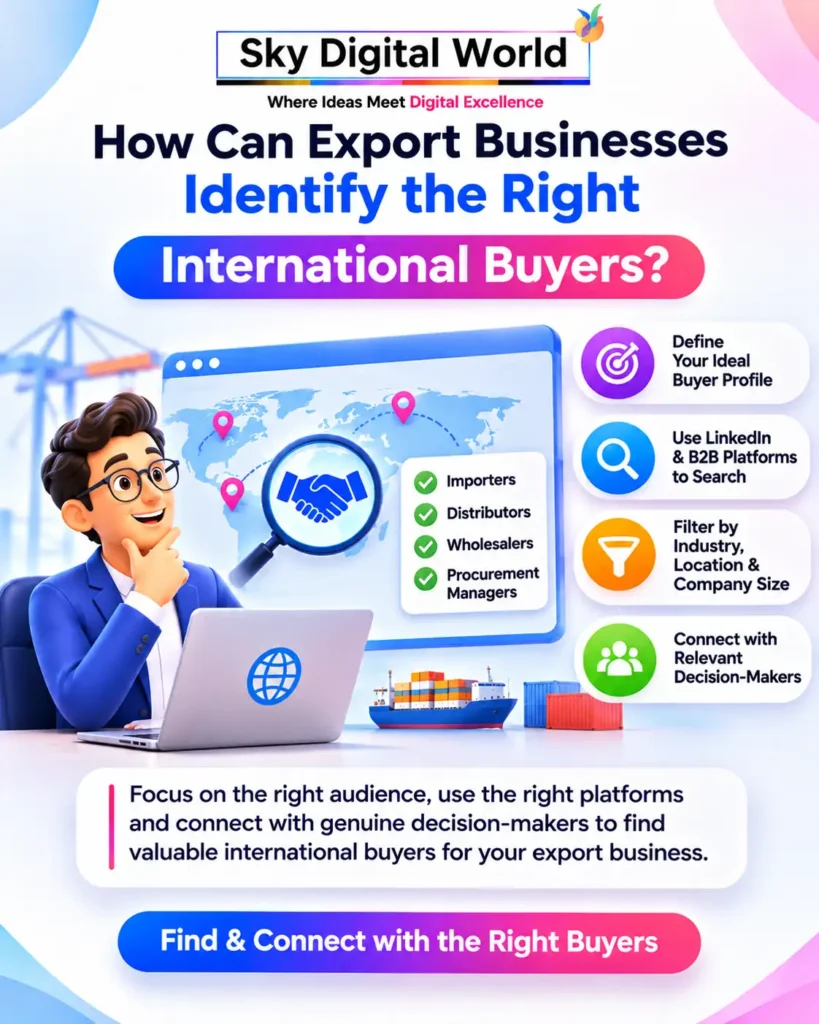
How Can Export Businesses Identify the Right International Buyers?
The first step in effective B2B LinkedIn Lead Generation is understanding exactly who the business wants to reach.
Not every international LinkedIn user is a potential customer.
Exporters should identify their ideal buyer profile based on product category, industry, business size, geographical market, and purchasing responsibilities.
For example, an Indian manufacturer supplying industrial steel products might target:
- Importers and distributors of steel products.
- Construction material wholesalers.
- Procurement managers at infrastructure companies.
- Industrial supply companies.
- International sourcing professionals.
LinkedIn’s search filters can help identify relevant companies and professionals by location, industry, company, and job-related information. Advanced prospecting tools such as LinkedIn Sales Navigator can provide additional search capabilities.
Practical tip: Begin with two or three priority export markets rather than targeting every country simultaneously.
This makes outreach more relevant and easier to manage.
How Should Exporters Optimize Their LinkedIn Company Page?
A LinkedIn company page acts as a digital introduction to an export business.
When an international buyer visits the page, they should quickly understand what the company manufactures, which industries it serves, and how to contact the sales team.
A strong company page should include:
- Professional company description
Explain the business clearly, including its main products, manufacturing capabilities, and target industries.
- Relevant industry keywords
Use terms such as steel pipe manufacturer, industrial equipment exporter, or scaffolding supplier where they accurately describe the business.
- High-quality product images
Show real products, manufacturing facilities, packaging, and dispatch activities.
- Company website
Provide a direct link to the official website where buyers can review product specifications and submit enquiries.
- Consistent branding
Maintain the same company logo, brand colors, and professional communication style across LinkedIn and other digital platforms.
An incomplete or inactive company page may make potential buyers hesitate before starting a conversation.
What Type of LinkedIn Content Attracts International Buyers?
International procurement professionals are generally interested in practical business information.
They want to know whether a supplier can meet their technical, commercial, and delivery requirements.
Therefore, exporters should focus on informative, product-oriented LinkedIn content rather than posting only promotional advertisements.
Useful LinkedIn content ideas for exporters
Content Type | Purpose |
Product demonstrations | Explain product features and applications |
Factory videos | Show manufacturing capabilities |
Technical posts | Help buyers understand specifications |
Packaging and dispatch updates | Demonstrate export readiness |
Quality processes | Build confidence in production standards |
Industry insights | Demonstrate market knowledge |
For example, a manufacturer could publish a short video showing how adjustable prop jacks are manufactured, inspected, packed, and prepared for shipment.
Such content helps buyers understand the supplier’s operations before making an enquiry.
How Can Exporters Connect With Overseas Procurement Managers?
Finding a potential buyer is only the beginning. The next challenge is starting a meaningful conversation.
Many businesses make the mistake of sending immediate sales pitches to every new connection.
A better approach is to begin with professional networking.
First, review the person’s company and responsibilities. Understand whether the organization imports, distributes, or purchases products similar to yours.
Then send a personalized connection request.
For example:
Hello, I noticed your company works in construction material supply in the UAE. We manufacture scaffolding and formwork products in India. It would be good to connect and exchange industry insights.
This approach introduces the business without creating unnecessary pressure.
After the connection is accepted, exporters can share relevant product information or ask whether the company currently sources similar materials.
The goal should be to build a business relationship, not simply send a catalogue to every connection.
How Can LinkedIn Help Exporters Build Trust With International Buyers?
Trust is particularly important in international trade because buyers may not have visited the supplier’s factory.
They need confidence in the company’s capabilities before discussing substantial orders.
LinkedIn provides opportunities to demonstrate professionalism through consistent communication.
Export businesses can share genuine factory photographs, quality inspection processes, production updates, employee expertise, and completed dispatches.
Where applicable, businesses can also highlight verified certifications, testing procedures, and manufacturing standards.
Employee profiles matter as well.
A company whose directors, export managers, and sales representatives maintain professional LinkedIn profiles can appear more approachable than a business with no visible team.
However, exporters should avoid exaggerated claims such as guaranteed quality, worldwide certification, or international market leadership unless these statements can be substantiated.
Authenticity is more valuable than impressive-looking but unsupported marketing claims.
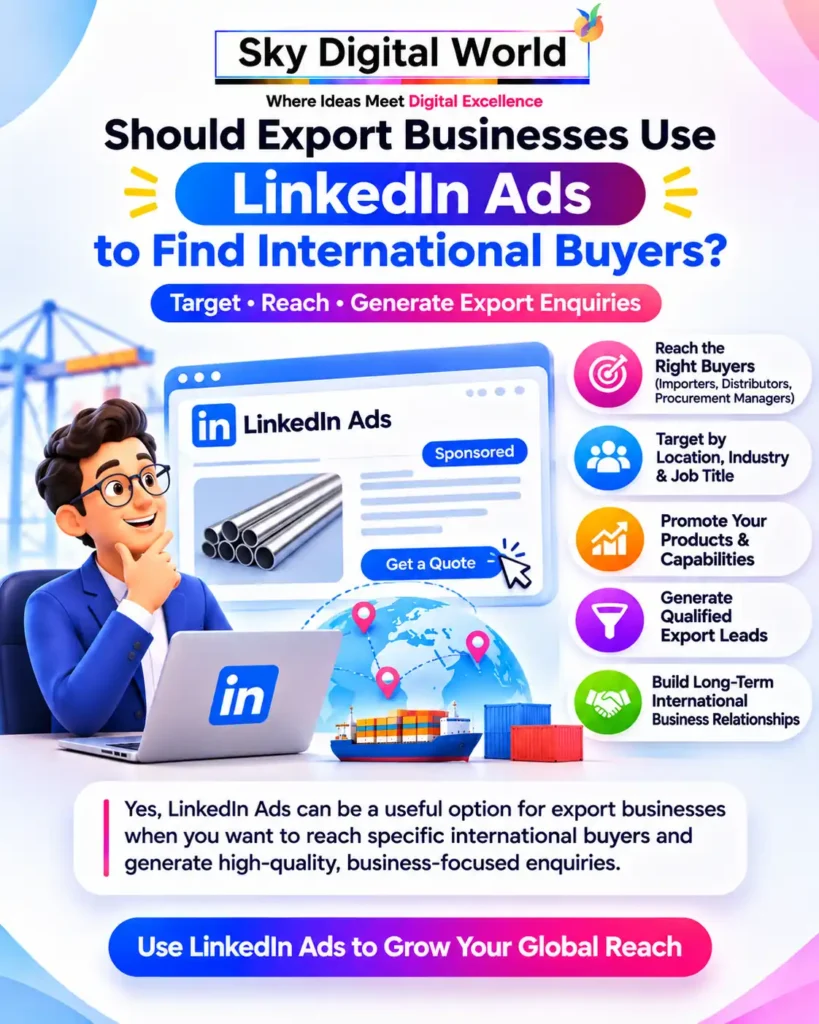
Should Export Businesses Use LinkedIn Ads to Find International Buyers?
LinkedIn Ads can support international buyer outreach, particularly when exporters want to reach specific professional audiences.
Depending on campaign settings and available targeting options, advertisers can target audiences using factors such as geography, industry, job function, and company characteristics.
For example, an industrial equipment exporter might promote a product catalogue to relevant professionals in selected overseas markets.
Possible campaign objectives include generating leads, increasing website visits, or improving awareness among relevant companies.
However, LinkedIn advertising is not automatically the best option for every exporter.
Costs and results depend on the market, audience size, competition, campaign quality, and product category.
Before investing heavily, businesses should test a focused campaign, measure enquiry quality, and assess whether the leads match their actual buyer profile.
For exporters with limited budgets, consistent organic content and personalized outreach may be a practical starting point.
How Can Exporters Turn LinkedIn Connections Into Genuine Enquiries?
A large connection list does not necessarily produce export orders.
The important step is moving relevant conversations toward a clear business opportunity.
When a prospect expresses interest, exporters should make the next action simple.
They can provide a relevant product catalogue, technical datasheet, company profile, or link to a product-specific webpage.
The sales team should then gather essential requirements, such as:
- Product type and technical specifications.
- Required quantity.
- Destination country or port.
- Applicable standards or certifications.
- Expected delivery timeline.
- Commercial requirements.
This information helps determine whether the enquiry is genuinely relevant.
A structured follow-up process is equally important. Exporters can maintain a CRM or prospect tracking sheet to record discussions, quotations, follow-up dates, and buyer responses.
Avoid repeatedly messaging people who have shown no interest.
Professional follow-up should add value and respect the buyer’s preferences.
How Can Export Businesses Measure LinkedIn Marketing Performance?
LinkedIn success should not be measured only by likes, impressions, or follower counts.
For export businesses, the most meaningful indicators relate to buyer engagement and business opportunities.
Important LinkedIn marketing KPIs
Metric | What It Measures |
Relevant connections | Growth in the target buyer network |
Connection acceptance rate | Effectiveness of prospect selection and introductions |
Qualified conversations | Discussions with relevant purchasing professionals |
Catalogue requests | Interest in products and specifications |
RFQs received | Formal quotation opportunities |
Orders generated | Business outcomes attributable to LinkedIn |
For example, receiving five relevant enquiries from verified importers may be more valuable than gaining hundreds of unrelated followers.
Exporters should review these metrics regularly and improve their content, targeting, and outreach approach accordingly.
What Common LinkedIn Marketing Mistakes Should Exporters Avoid?
Some exporters create LinkedIn accounts but struggle to generate meaningful opportunities because their activity lacks direction.
Common mistakes include sending generic messages, targeting unrelated industries, posting only sales offers, using poor-quality product images, and failing to respond promptly to enquiries.
Another mistake is focusing exclusively on company pages while ignoring the professional profiles of directors and export sales representatives.
In B2B markets, business relationships are often developed through individuals.
Exporters should also avoid automated mass messaging that creates spam-like interactions or violates platform rules.
A smaller network of relevant professionals is generally more useful than a large audience with no purchasing interest.
How Can Export Businesses Build a Practical 30-Day LinkedIn Strategy?
A simple monthly plan can help businesses begin without making the process unnecessarily complicated.
Week | Recommended Activities |
Week 1 | Optimize company and employee profiles, select target countries, identify buyer categories |
Week 2 | Publish product-focused content, research relevant companies, begin personalized networking |
Week 3 | Share factory or technical content, engage with industry discussions, follow up with interested connections |
Week 4 | Review qualified conversations, track catalogue requests, assess enquiries, refine the strategy |
This plan is a starting framework rather than a guarantee of enquiries or orders.
The strongest results usually come from consistent activity, relevant targeting, and timely communication.
Conclusion
LinkedIn can be a valuable channel for manufacturers and exporters looking to expand their international business network.
By identifying relevant buyers, maintaining professional company profiles, publishing useful product content, and building genuine relationships, export businesses can improve their chances of reaching overseas procurement professionals.
The key is to treat LinkedIn Marketing for Export Businesses as a long-term business development activity rather than a quick method for collecting contacts.
At Sky Digital World, we help businesses strengthen their digital presence through SEO, social media marketing, content creation, website development, and digital advertising.
Want to make your export business more visible to international buyers? Build a professional digital presence that helps the right businesses discover, evaluate, and contact you.
Frequently Asked Questions (FAQs)
Yes. Small exporters can use LinkedIn to identify international buyers, showcase their products, and develop professional relationships without immediately investing in paid advertising.
Yes. LinkedIn can help manufacturers research companies and connect with professionals working in importing, distribution, sourcing, and procurement.
Businesses should prioritize countries where their products have realistic demand and where they can meet applicable import requirements. Market selection should consider logistics, competition, buyer needs, and commercial feasibility.
Posting two to three useful, high-quality updates per week can be a manageable starting point. Consistency and relevance matter more than publishing frequently without a clear purpose.
Both serve different purposes. LinkedIn is useful for professional targeting and relationship development, while Google Ads can reach buyers actively searching for products or suppliers. The better option depends on the business, market, and budget.