




Why Do Industrial Buyers Request Quotations but Never Place Orders?

Why Do Industrial Buyers Request Quotations but Never Place Orders?
Getting a quotation request from an industrial buyer feels like a promising business opportunity. A procurement manager contacts your company, shares product requirements, asks for pricing, and sometimes even requests a technical catalogue.
Your sales team prepares a detailed quotation and sends it quickly.
Then nothing happens.
No purchase order. No confirmation. Sometimes, not even a reply.
This situation is common among manufacturers, industrial suppliers, and B2B exporters. But why do industrial buyers request quotations without placing orders?
The answer is not always your price. Buyers may be comparing suppliers, waiting for internal approval, checking technical specifications, or simply researching future purchases.
Understanding these reasons can help businesses improve their B2B quotation conversion rate and turn more enquiries into actual orders.
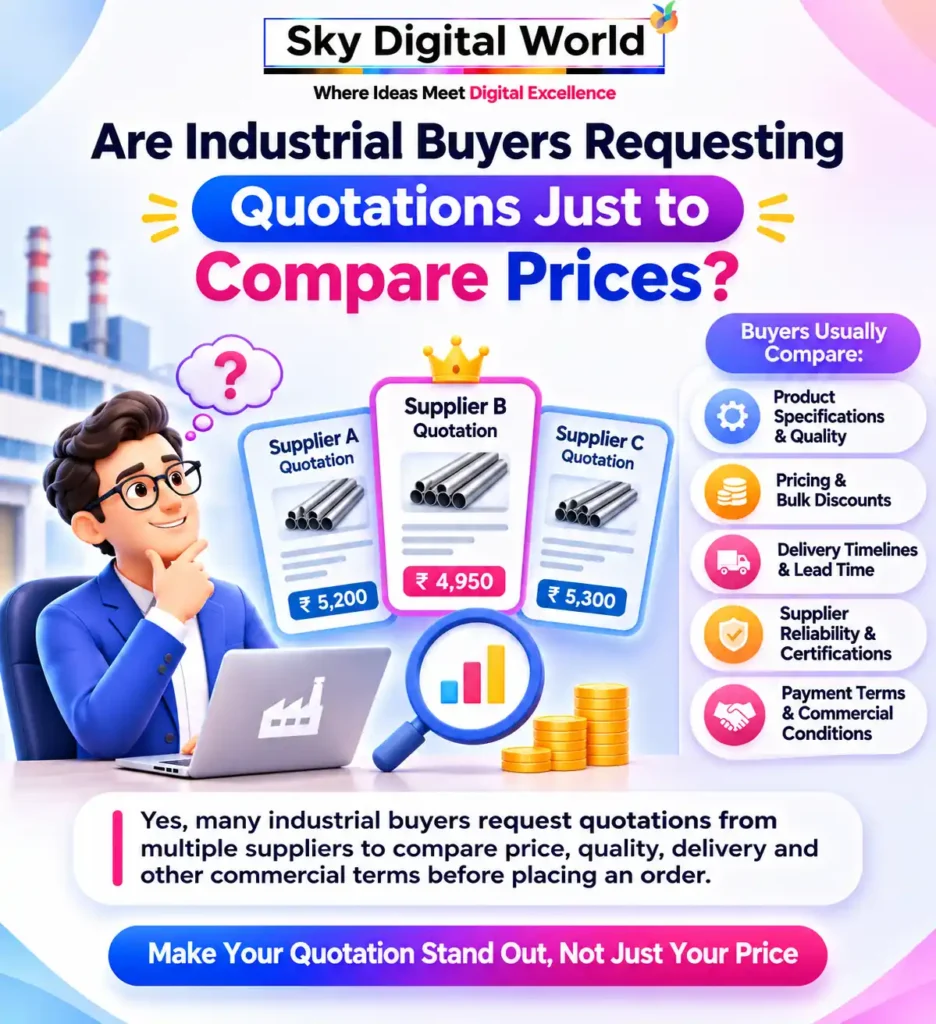
1. Are Industrial Buyers Requesting Quotations Just to Compare Prices?
Yes. Many industrial buyers contact multiple manufacturers before making a purchasing decision.
For example, a construction company looking for scaffolding materials may request quotations from five different suppliers.
They compare:
- Product specifications and material quality
- Pricing and bulk-order discounts
- Manufacturing and delivery timelines
- Payment terms and shipping arrangements
- Supplier reliability and documentation
A quotation request does not necessarily mean the buyer is ready to purchase immediately.
What should manufacturers do?
Instead of sending only a price, explain what makes your offer valuable. Include relevant specifications, product advantages, delivery commitments, and supporting documents.
The objective is to help buyers compare your offer confidently, not simply compete on the lowest price.
2. Is Your Quotation Missing Important Technical Information?
Industrial purchasing decisions depend heavily on technical accuracy.
A procurement manager buying steel pipes, machinery, industrial valves, or construction equipment needs more than a product name and price.
If your quotation does not contain sufficient details, the buyer may move to another supplier.
A professional industrial quotation should include:
- Product name, model, and specifications
- Material grade, dimensions, and applicable standards
- Quantity and minimum order requirements
- Unit price and total quotation value
- Applicable taxes, freight, and delivery terms
- Payment conditions and quotation validity
- Relevant certifications or testing information
Practical tip: Attach a product datasheet or digital catalogue so the buyer can review technical details without repeatedly contacting your team.
3. Why Does Supplier Trust Matter Before an Industrial Purchase?
Industrial orders often involve significant financial commitments.
A buyer may be comfortable requesting a quotation from an unfamiliar manufacturer but hesitate before transferring an advance payment.
They want to know whether your business can actually deliver what it promises.
Consider two suppliers offering similar products.
Supplier A sends a basic PDF quotation with limited company information.
Supplier B provides a professional quotation, company website, factory photographs, product certifications, and previous project experience.
Even if Supplier B charges slightly more, the buyer may consider it a lower-risk option.
How can manufacturers build trust?
Maintain an updated company website, publish genuine factory and product photographs, share relevant certifications, and clearly explain your manufacturing capabilities.
For exporters, provide accurate company registration details, export documentation information, and verifiable business credentials.
Trust can be an important factor in converting an enquiry into an order.
4. Are You Following Up With Buyers at the Right Time?
One of the biggest missed opportunities in industrial sales is poor follow-up.
Many businesses send a quotation and wait for the customer to respond.
However, procurement managers may be managing several suppliers, projects, and approval processes simultaneously.
Your quotation might simply get overlooked.
A structured follow-up process can help.
Timing | Recommended Action |
Day 1 | Send quotation with complete specifications |
Day 3 | Confirm receipt and ask whether clarification is needed |
Day 7 | Offer technical assistance or discuss requirements |
Day 14 | Ask about the purchasing timeline or approval status |
Day 21 | Share a relevant update, if appropriate |
These intervals are examples, not fixed rules. Adjust them according to the buyer’s purchasing timeline.
Avoid repeatedly sending messages such as “Any update?”
Instead, ask a useful question:
“Would you like us to clarify the technical specifications, delivery timeline, or commercial terms before your purchasing decision?”
This gives buyers a meaningful reason to respond.
5. Could Your Delivery Timeline Be Causing Buyers to Disappear?
Industrial buyers frequently work with project deadlines.
A manufacturer may offer competitive pricing but lose the order because its delivery schedule does not match the buyer’s requirements.
For example, a contractor may need adjustable props within 10 days, while your production and dispatch timeline is 25 days.
Even an excellent quotation cannot solve that mismatch.
What should suppliers communicate?
Clearly mention product availability, manufacturing lead time, dispatch schedule, and expected delivery arrangements.
If immediate supply is unavailable, offer a realistic alternative such as partial dispatch or a phased delivery schedule, where feasible.
Never promise unrealistic timelines just to secure an order.
6. Are Buyers Waiting for Internal Procurement Approval?
Not every quotation request comes from the final decision-maker.
In industrial companies, purchasing may involve several departments.
Typical Industrial Purchasing Process
Technical Team
Checks specifications and suitability
Procurement Team
Compares suppliers and quotations
Finance / Management
Reviews budget and approves purchase
Purchase Order
Issued after necessary approvals
This means a buyer might genuinely want your products but still be unable to place an order.
Ask about the purchasing process early.
For example: “Is this requirement for an approved project, or are you currently evaluating suppliers?”
This helps your sales team understand the opportunity’s actual stage.
7. Are Your Payment Terms Suitable for International Buyers?
Payment conditions can become a major obstacle, especially in export transactions.
A new international buyer may hesitate to pay 100% in advance to an unfamiliar supplier.
Meanwhile, the manufacturer may be unwilling to offer credit.
Both concerns can be reasonable.
Depending on the transaction, businesses may explore agreed advance payments, letters of credit, or other appropriate trade-payment arrangements.
Clear commercial terms, documentation, and transparent communication help reduce uncertainty.
8. How Can Manufacturers Identify Serious Buyers Before Preparing Quotations?
Not every enquiry deserves the same amount of sales effort.
A buyer asking only “Send your best price” without sharing product requirements may still be in the research stage.
A more qualified enquiry typically contains details such as quantity, technical requirements, destination, intended application, and purchasing timeline.
Before preparing a complex quotation, ask a few relevant questions.
Qualification Question | Why It Matters |
What quantity do you require? | Helps calculate accurate pricing |
What specifications are needed? | Confirms technical suitability |
Where will the products be delivered? | Helps estimate logistics |
When do you need delivery? | Identifies purchasing urgency |
Is the project approved? | Clarifies buying readiness |
These questions help manufacturers prioritize opportunities without discouraging genuine buyers.

9. Can a Professional Website Help Convert More Industrial Quotations?
Yes. Industrial buyers frequently research suppliers online before making purchasing decisions.
A well-organized website can support this evaluation process.
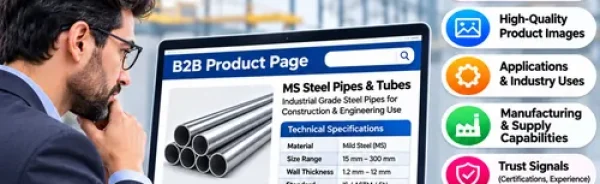
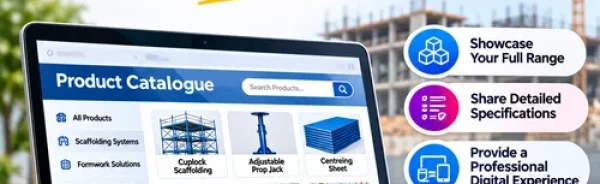
For example, a manufacturer selling steel tubes or scaffolding systems can create individual product pages containing specifications, available sizes, applications, product photographs, and enquiry options.
A useful website should also make it easy to find company information, manufacturing capabilities, downloadable catalogues, and contact details.
Combined with relevant SEO, these pages can attract buyers searching for specific industrial products.
The goal is not simply to increase website traffic. It is to attract visitors whose requirements match your products and capabilities.
10. How Can Manufacturers Improve Their Quotation-to-Order Conversion Rate?
The first step is to measure how many quotations actually become orders.
Quotation-to-Order Conversion Rate:
\[ \frac{\text{Orders Received}}{\text{Quotations Sent}}\times100 \]
For example, if your company sends 100 quotations and receives 12 orders, your conversion rate is 12%.
Quotation Conversion Calculator
Quotations Sent
Orders Received
12.0%
Your quotation-to-order conversion rate
To improve results, track lost quotations and their reasons.
Common categories include pricing, delivery, specifications, payment terms, delayed approvals, and no response.
Over time, this information can reveal which parts of your sales process need improvement
Conclusion: More Quotations Do Not Always Mean More Sales
Industrial buyers request quotations for many reasons, and not every enquiry is ready to become a purchase order.
Manufacturers who understand buyer intent, communicate technical information clearly, establish credibility, and follow up professionally can improve their chances of winning orders.
Instead of focusing only on generating more enquiries, businesses should build a stronger process for converting relevant enquiries into actual customers.
Sky Digital World helps manufacturers and B2B businesses improve their online presence through professional websites, SEO, digital product catalogues, and lead generation strategies.
Want to attract more serious industrial buyers? Visit Sky Digital World to explore digital marketing solutions for your business.
Buyers may be comparing suppliers, waiting for approval, facing budget changes, or delaying a project. Some enquiries are also made for preliminary market research.
Follow-up timing depends on purchasing urgency and project requirements. A structured approach over several weeks is often more useful than repeated daily reminders.
No. Industrial buyers also evaluate technical quality, supplier reliability, certifications, delivery schedules, and commercial terms.
Create detailed product pages, optimize relevant search keywords, publish accurate technical information, and use enquiry forms that capture meaningful purchasing requirements.
There is no universal benchmark. Conversion rates vary by industry, product complexity, order size, lead source, and buying cycle. Compare performance against your own historical results and different enquiry sources.