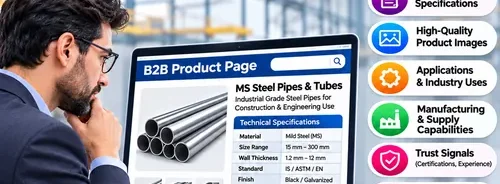





What Makes a B2B Product Page Useful for Procurement Managers?
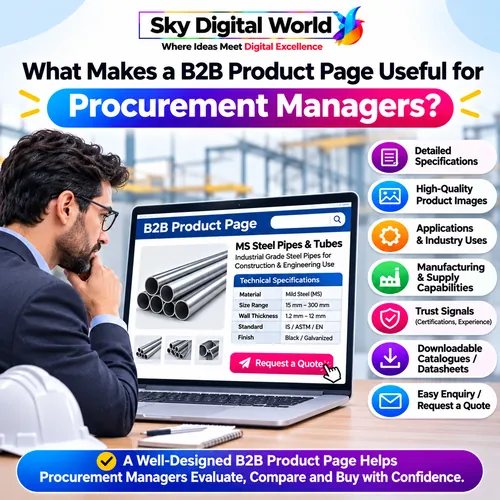
What Makes a B2B Product Page Useful for Procurement Managers?
Imagine a procurement manager searching online for a reliable supplier of industrial equipment, construction materials, or manufacturing components. They open several websites, compare products, check specifications, and shortlist suppliers who appear capable of meeting their requirements.
One website displays attractive product images but provides very little information. Another clearly explains product dimensions, material grades, applications, manufacturing capabilities, and how to request a quotation.
Which supplier is more likely to receive an enquiry?
Usually, the one that makes the buying process easier.
A B2B product page should do more than display a product. It should help procurement managers evaluate technical suitability, understand supplier capabilities, compare options, and confidently take the next step.
For manufacturers and industrial suppliers, creating useful product pages can improve buyer confidence and generate more relevant business enquiries.
What Is a B2B Product Page?
A B2B product page is a dedicated webpage that provides detailed information about a product sold to other businesses.
Unlike consumer product pages, which often focus on price, appearance, and immediate purchases, B2B product pages need to support a more detailed buying process.
Procurement managers may need approval from technical teams, finance departments, project managers, or senior management before placing an order.
A useful page should therefore answer important questions about product suitability, specifications, availability, supplier reliability, and the quotation process.
For example, a scaffolding manufacturer’s product page should explain more than the product name. It should help buyers understand available dimensions, material options, intended applications, and how to request bulk pricing.
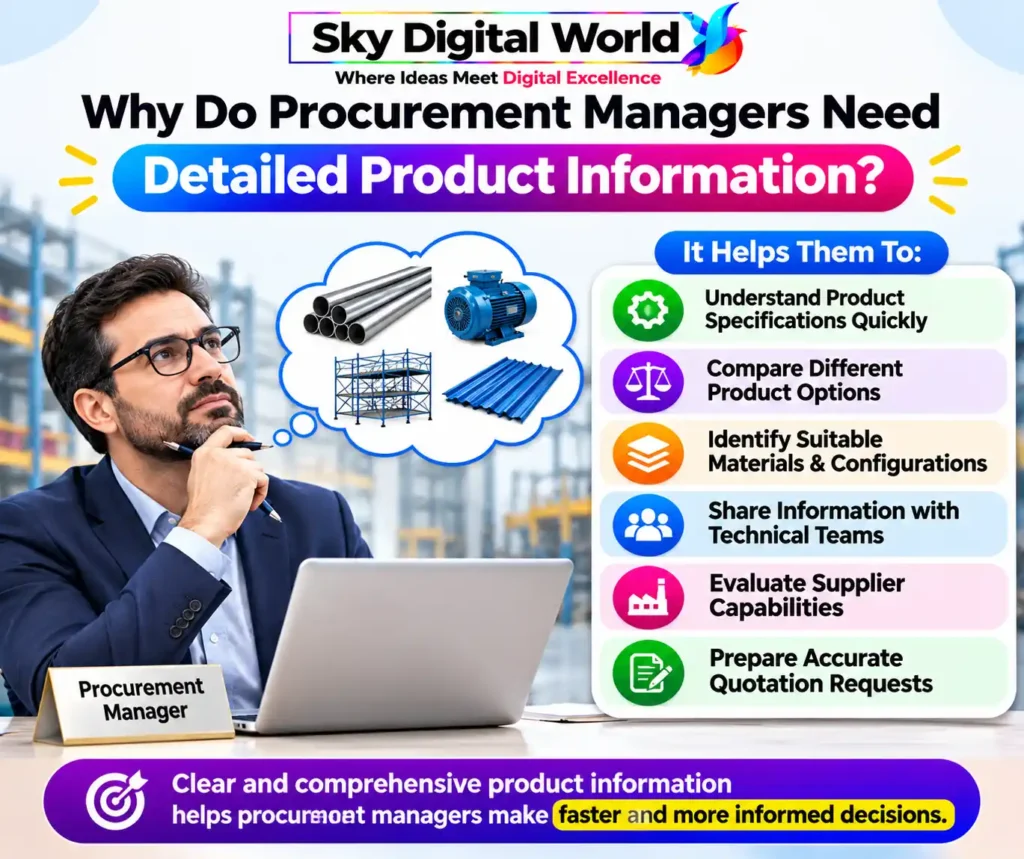
Why Do Procurement Managers Need Detailed Product Information?
Procurement managers are responsible for sourcing products that meet business requirements while balancing cost, quality, delivery, and supplier reliability.
They often compare multiple manufacturers before contacting anyone.
If important information is missing, they may need to send emails or make calls simply to understand whether a product is suitable.
This creates unnecessary delays.
A well-structured B2B product page helps procurement teams:
- Understand product specifications quickly.
- Compare different product options.
- Identify suitable materials and configurations.
- Share product information with technical teams.
- Evaluate supplier capabilities.
- Prepare accurate quotation requests.
When product information is clear and accessible, procurement managers can make faster and more informed decisions.
What Information Should Every B2B Product Page Include?
The most useful B2B product pages combine technical information with practical purchasing details.
1. Clear Product Name and Description
The product name should immediately explain what the manufacturer supplies.
Avoid using only internal product codes or overly creative names that buyers may not recognize.
For example, instead of writing Premium Industrial Solution, use a specific name such as Adjustable Steel Props for Construction Formwork.
The introductory description should briefly explain the product, its purpose, and its typical applications.
This helps buyers determine whether they are viewing the right product.
2. Detailed Technical Specifications
Technical specifications are among the most important elements of an industrial product page.
Depending on the product, specifications may include:
Specification | Information to Include |
Material | Steel grade, material type, or composition |
Dimensions | Length, width, diameter, and thickness |
Weight | Product weight or weight per unit |
Capacity | Applicable load or performance ratings |
Finish | Painted, galvanized, or other available finishes |
Standards | Applicable standards and verified certifications |
Customization | Available sizes and manufacturing options |
For example, a steel pipe manufacturer may provide outside diameter, wall thickness, length, material grade, and applicable standards.
Important: Manufacturers should publish only specifications and certifications they can verify.
Accurate information helps procurement managers assess technical compatibility before requesting a quotation.
3. High-Quality Product Images
Images play an important role even in technical B2B purchasing.
Procurement managers want to understand what the product looks like and how it is constructed.
A useful product page may include photographs showing the complete product, close-up details, different sizes, packaging, and actual applications.
For industrial products, real factory or product photography is often more informative than generic stock images.
Images should also be optimized for fast loading without losing important visual details.
4. Product Applications and Industry Uses
A product description becomes more useful when it explains where and how the product is used.
For example, a manufacturer supplying scaffolding systems may mention applications in commercial construction, industrial maintenance, infrastructure projects, and temporary access structures.
This helps procurement managers understand whether the product matches their project requirements.
Application details can also attract relevant visitors searching for industry-specific solutions.
5. Manufacturing and Supply Capabilities
Procurement managers are not only evaluating the product. They are also evaluating whether the supplier can fulfill the order.
Manufacturers should provide relevant information about production capabilities, bulk supply, available customization, packaging, and delivery arrangements.
Where appropriate, businesses can mention typical production lead times or minimum order quantities.
However, these details should be accurate and updated when circumstances change.
A manufacturer that communicates its capabilities clearly can make supplier evaluation easier.
How Can Product Pages Help Procurement Managers Compare Suppliers?
B2B purchasing usually involves comparing several suppliers against common requirements.
A useful product page should make this comparison straightforward.
For example, a procurement manager purchasing construction materials may need to compare material grades, product dimensions, finishing options, order quantities, and dispatch arrangements.
If one supplier provides all this information in an organized format, that supplier may be easier to shortlist.
Manufacturers can improve comparisons by adding downloadable specification sheets, product variants, technical tables, and relevant supporting documents.
They should also distinguish between standard products and customized manufacturing options.
The goal is not to overwhelm buyers with information. It is to present the right details in a format they can quickly understand.
Why Are Trust Signals Important on B2B Product Pages?
Industrial purchasing often involves significant budgets, strict project schedules, and operational responsibilities.
Procurement managers therefore look for evidence that a supplier is dependable.
Useful trust signals may include verified quality certifications, factory photographs, manufacturing experience, testing procedures, and relevant project experience.
Businesses can also provide company contact details and information about their manufacturing facilities.
Customer testimonials or project references may help when they are genuine and approved for publication.
Avoid unsupported statements such as best manufacturer in India or 100% guaranteed quality.
Specific, verifiable information is more useful than exaggerated marketing claims.
How Can Manufacturers Make Product Enquiries Easier?
Even an informative product page may fail to generate enquiries if contacting the supplier is difficult.
A procurement manager should not have to search through several pages to find a quotation form.
Useful calls to action include:
- Request a Bulk Quotation
- Download Technical Specifications
- Enquire About Custom Sizes
- Contact Our Sales Team
- Request Product Availability
The enquiry form should collect information that helps the manufacturer respond accurately.
For example, a simple B2B quotation form could ask for the buyer’s name, company, email address, product requirement, approximate quantity, and delivery location.
Avoid requesting too many unnecessary details at the first stage.
For manufacturers serving international markets, including a country or destination field may help the sales team prepare a relevant response.
Should B2B Product Pages Include Downloadable Catalogues?
Yes, downloadable catalogues can be useful, particularly when procurement managers need to share information internally.
A PDF catalogue or technical datasheet allows buyers to review specifications without repeatedly visiting the website.
However, a downloadable document should complement the webpage rather than replace it.
Important product information should still appear directly on the page so visitors can find it easily.
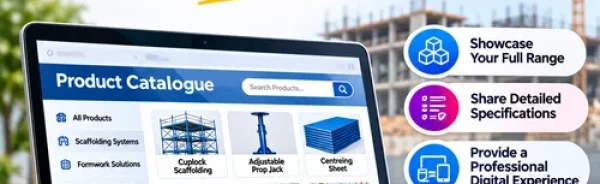
For businesses with a large product range, individual product pages can connect to a broader digital catalogue.
This creates a more convenient experience for buyers evaluating several products from the same manufacturer.
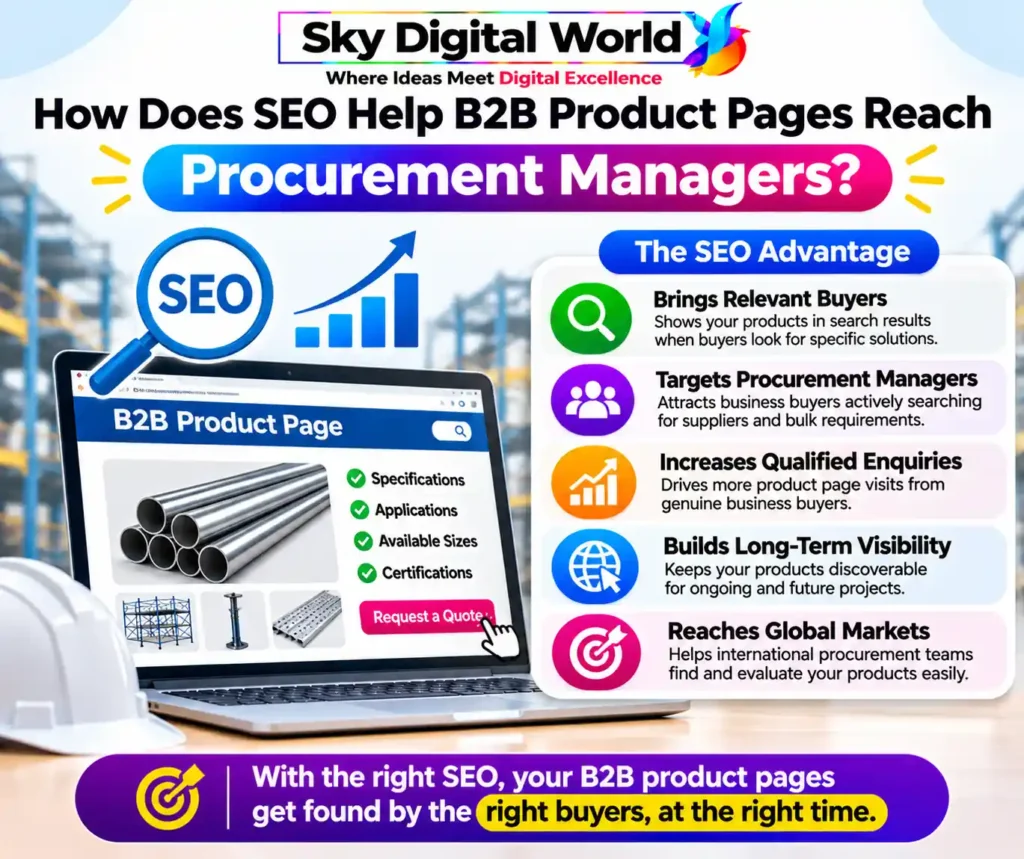
How Does SEO Help B2B Product Pages Reach Procurement Managers?
A well-optimized product page can attract potential buyers searching for specific industrial products.
For example, a procurement manager may search for phrases such as:
Cuplock scaffolding manufacturer in India, bulk steel pipe supplier, or industrial machinery manufacturer for export.
These searches often indicate a specific product requirement.
Manufacturers can improve product page SEO by using descriptive page titles, clear headings, original product descriptions, relevant keywords, and useful technical information.
Image alt text, internal links, and mobile-friendly page design also support usability and search visibility.
However, SEO should not involve repeating keywords unnaturally.
The primary objective should be to answer the buyer’s questions clearly. Search optimization should support that objective.
How Can Manufacturers Measure Whether Their B2B Product Pages Are Working?
Website traffic alone does not indicate whether a product page is successful.
Manufacturers should examine how visitors interact with the page and whether those interactions lead to relevant business opportunities.
Useful metrics include product page visits, quotation form submissions, catalogue downloads, contact button clicks, and qualified enquiries.
For example, consider two product pages:
Metric | Product Page A | Product Page B |
Monthly visitors | 1,000 | 500 |
Enquiries received | 10 | 25 |
Enquiry conversion rate | 1% | 5% |
In this hypothetical example, Product Page B receives fewer visitors but generates more enquiries.
This demonstrates why conversion performance can be more meaningful than traffic volume alone.
Manufacturers should also review enquiry quality. A page generating requests from genuine procurement managers may be more valuable than one attracting large numbers of unrelated visitors.
What Common Mistakes Should Manufacturers Avoid?
Many industrial websites lose potential enquiries because their product pages do not provide enough useful information.
Common mistakes include using generic descriptions, publishing low-quality images, omitting technical specifications, and hiding contact options.
Some websites also rely entirely on downloadable PDFs without explaining products on the webpage itself.
Another mistake is making unsupported claims about product quality, certifications, or delivery capabilities.
Manufacturers should regularly review product pages to ensure that specifications, images, and purchasing information remain accurate.
A clear, current, and trustworthy product page can support a better buying experience.
How Can Sky Digital World Help Manufacturers Improve B2B Product Pages?
Creating effective B2B product pages requires an understanding of both digital marketing and industrial buyer requirements.
At Sky Digital World, we help manufacturers and B2B businesses improve their online presence through website development, SEO, digital product catalogues, and lead generation strategies.
Our approach focuses on presenting product information clearly, improving website usability, and making it easier for potential buyers to contact the business.
Whether a manufacturer supplies construction materials, industrial equipment, engineering components, or other B2B products, a well-planned digital presence can help connect its offerings with relevant customers.
Conclusion
A successful B2B product page is not simply an online product display. It is a practical resource that helps procurement managers make informed purchasing decisions.
By combining clear descriptions, technical specifications, genuine product images, supplier information, and convenient quotation options, manufacturers can create a more useful buying experience.
The most effective B2B product pages do not just describe what a manufacturer sells. They help buyers decide whether the manufacturer is the right supplier for their requirements.
For manufacturers looking to improve their website and attract relevant business enquiries, Sky Digital World can help build a stronger digital foundation.
Frequently Asked Questions
The main purpose is to help business buyers understand a product, evaluate its suitability, and contact the supplier for further information or pricing.
They commonly look for technical specifications, product applications, supplier capabilities, quality documentation, and clear quotation options.
Not always. Pricing may depend on order quantity, customization, delivery destination, and other requirements. A clear quotation process can be more appropriate for complex products.
Specification tables primarily help visitors understand products. Clear, relevant technical information can also improve a page’s usefulness for product-related searches.
There is no fixed number. Manufacturers should include enough high-quality images to explain the product, its important features, and relevant applications.