





How to Rank on ChatGPT, Gemini & Google AI Overview in 2026
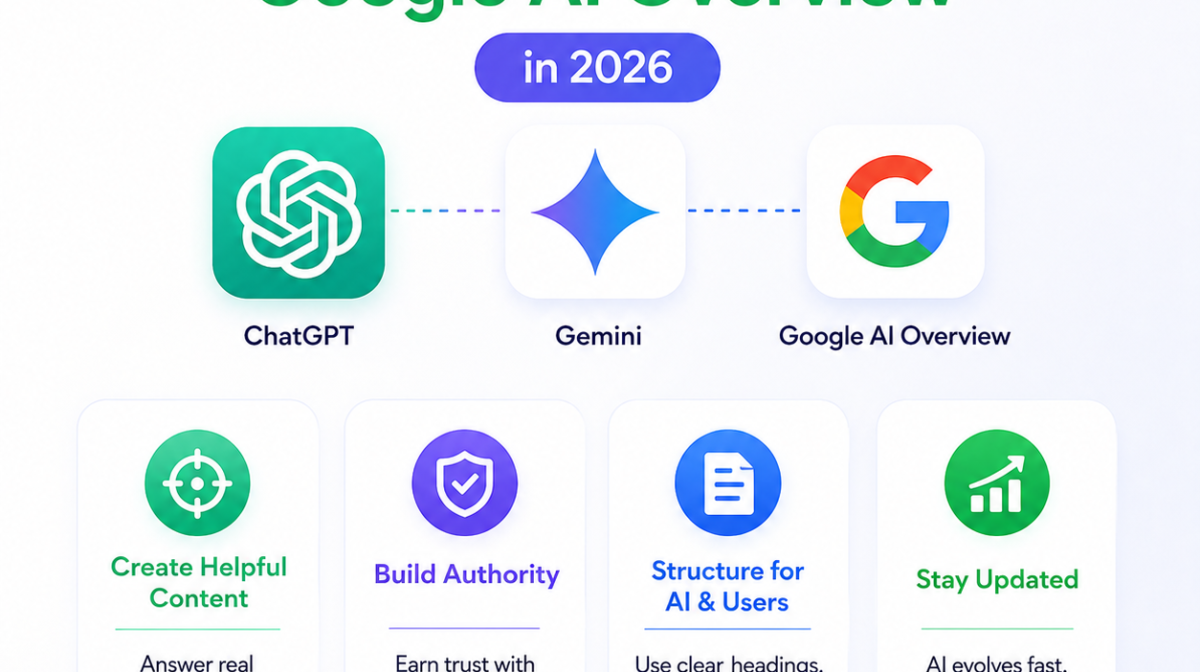
The way people search online is changing rapidly. Instead of only using traditional Google search results, users are now asking questions directly on AI platforms like ChatGPT, Google Gemini, and Google AI Overview.
In 2026, businesses that appear inside AI-generated answers are gaining massive visibility, trust, and traffic. This new approach is called:
Generative Engine Optimization (GEO)
GEO helps websites become visible inside AI-generated responses rather than only ranking in traditional search results.
At Sky Digital World, we help businesses optimize websites and content for:
- ChatGPT visibility
- Gemini AI search
- Google AI Overview
- Conversational AI search
- AI-powered SEO strategies
Why AI Search Ranking Matters in 2026
Search behavior has changed dramatically.
Earlier:
- Users searched keywords
- Clicked website links
- Compared multiple pages
Now:
- Users ask AI directly
- AI generates summarized answers
- AI cites trusted sources
- Users often don’t click traditional links
Google itself has transformed Search using Gemini-powered AI systems and conversational AI experiences.
This means if your website is not optimized for AI search engines, your visibility may decrease significantly.
What Is GEO (Generative Engine Optimization)?
Generative Engine Optimization (GEO) is the process of optimizing content so AI platforms like ChatGPT, Gemini, Claude, Perplexity, and Google AI Overview can:
- Understand your content
- Trust your website
- Extract your answers
- Cite your business in AI responses
Unlike traditional SEO, GEO focuses on becoming part of the AI-generated answer itself.
Difference Between SEO & GEO
Traditional SEO
Focuses on rankings |
Keyword-based |
Blue links |
Search engine focused |
Click optimization |
GEO (AI SEO)
Focuses on AI citations |
Context & intent-based |
Conversational answers |
AI answer engine focused |
Citation optimization |
Modern AI search optimization combines:
- SEO
- AEO (Answer Engine Optimization)
- GEO
- Conversational content optimization
How ChatGPT, Gemini & Google AI Choose Content
AI systems prioritize content based on:
- Relevance
- Authority
- Structured formatting
- Trustworthiness
- Freshness
- Clear answers
- User intent matching
Studies and GEO experts show AI engines prefer:
- Well-structured content
- FAQ sections
- Topic authority
- Strong E-E-A-T signals
- Interlinked content clusters
1. Build Strong Topical Authority
One of the most important AI ranking factors is topical authority.
AI engines prefer websites that deeply cover a subject instead of publishing random content.
Example:
If your business provides digital marketing services, create content around:
- SEO
- Meta Ads
- AI marketing
- Lead generation
- AI automation
- Website development
- GEO optimization
This helps AI understand your expertise.
At Sky Digital World, we focus on creating interconnected AI-friendly content ecosystems for better AI visibility.
Explore our
👉 SEO Services
2. Use Conversational Content Structure
AI search platforms prefer content written naturally and conversationally.
Instead of:
“Best SEO Company India”
Write:
“What Is the Best SEO Company for Businesses in India?”
AI engines understand natural language queries better.
Best Practices:
- Use question-based headings
- Write conversationally
- Use clear answers
- Add bullet points
- Add tables
- Use short paragraphs
This improves extractability for AI systems.
3. Optimize for Featured Snippets & AI Extraction
AI platforms often extract:
- Definitions
- Lists
- Tables
- FAQs
- Step-by-step answers
Structure Your Content Like:
What Is GEO?
Why GEO Matters
How to Rank in ChatGPT
Best GEO Strategies
Clear formatting helps AI systems easily parse your content.
4. Create FAQ Sections on Every Page
FAQ sections are extremely important for:
- ChatGPT visibility
- Gemini search
- Google AI Overview
- Voice search
Example FAQs:
- What is GEO?
- How does AI SEO work?
- How can businesses rank in ChatGPT?
- What is Google AI Overview?
AI systems love concise direct-answer formats.
5. Improve E-E-A-T Signals
Google and AI platforms heavily rely on:
E-E-A-T
- Experience
- Expertise
- Authoritativeness
- Trustworthiness
AI engines prioritize trustworthy brands and credible content sources.
Ways to Improve E-E-A-T:
- Add author information
- Show business details
- Publish case studies
- Use credible references
- Build backlinks
- Maintain consistent branding
6. Use Internal Linking Properly
Internal linking helps AI understand your website structure and topic relevance.
Example Internal Links:
- SEO Services
- Meta Ads Services
- AI Automation Services
- Website Design Services
- Digital Marketing Services
Internal links strengthen topic authority and improve AI discoverability.
7. Add Structured Data & Schema Markup
Schema markup helps AI systems understand:
- Business information
- Services
- FAQs
- Reviews
- Articles
- Products
Important Schema Types:
- FAQ Schema
- Article Schema
- Local Business Schema
- Organization Schema
- Breadcrumb Schema
Structured data improves extractability for AI Overviews and conversational search.
8. Focus on Technical SEO
AI visibility still depends heavily on strong traditional SEO foundations.
Experts emphasize:
Good GEO = Good SEO + AI Optimization
Important Technical SEO Factors:
- Fast website speed
- Mobile-friendly design
- HTTPS security
- Core Web Vitals
- Proper indexing
- Clean URL structure
If Google struggles to crawl your website, AI systems may also struggle to trust your content
9. Publish Original Helpful Content
AI-generated spam content is becoming easier for search engines to detect.
Google recently updated policies against manipulative AI optimization tactics.
Focus On:
- Real expertise
- Helpful insights
- Original research
- Practical examples
- Human-written experience
Helpful content consistently performs better in AI search ecosystems.
10. Build Brand Mentions Across the Internet
AI engines trust brands that appear consistently across:
- Websites
- Directories
- Social media
- Forums
- News mentions
- Reviews
This strengthens entity recognition.
Strong Entity Signals Include:
- Consistent business name
- Social profiles
- Google Business Profile
- Brand citations
- Industry mentions
AI systems use these signals to validate credibility.
11. Optimize for AI-Friendly User Intent
AI search focuses heavily on:
- User intent
- Complete answers
- Problem solving
Content That Performs Well:
- “How-to” guides
- Comparisons
- Tutorials
- Step-by-step content
- Expert insights
- Industry trends
AI engines prefer content that completely satisfies user intent.
12. Keep Content Updated Regularly
Fresh content matters significantly in AI search.
AI systems prefer:
- Updated statistics
- Current information
- Fresh trends
- Recent case studies
This is especially important in:
- AI marketing
- SEO
- Technology
- Digital advertising
Recent research shows AI engines prioritize freshness for fast-moving topics.
Best Content Format for AI Rankings
Recommended Blog Structure:
Introduction
Clear H2/H3 Headings
Bullet Points
Tables
FAQs
Internal Links
Conclusion
Schema Markup
This structure helps:
- Google AI Overview
- ChatGPT
- Gemini
- Perplexity
- Claude
extract and cite your content more effectively.
Common Mistakes That Hurt AI Rankings
Avoid:
- Keyword stuffing
- Thin content
- Duplicate blogs
- AI spam content
- Poor website speed
- No internal linking
- No schema markup
- Weak E-E-A-T signals
Google and AI systems are becoming smarter at detecting low-quality content.
Future of AI Search in 2026
AI search is evolving rapidly.
Google is deeply integrating Gemini into search experiences and conversational AI interactions.
This means future search success depends on:
- AI visibility
- Conversational optimization
- Structured authority
- Trust signals
- Helpful content ecosystems
Businesses that adapt early will dominate AI-powered search results.
Why Choose Sky Digital World
At Sky Digital World, we help businesses grow using:
- AI SEO
- GEO optimization
- Meta Ads
- Website development
- AI automation
- Social media marketing
- Lead generation systems
We build AI-friendly digital ecosystems designed for:
- Google rankings
- AI Overview visibility
- ChatGPT citations
- Gemini discoverability
Final Thoughts
The future of search is no longer limited to Google rankings alone.
Businesses must now optimize for:
- ChatGPT
- Gemini
- Google AI Overview
- Conversational search engines
The websites that provide:
- Helpful content
- Structured information
- Strong authority
- Clear answers
- Great user experience
will dominate AI-powered search in 2026 and beyond.
FAQ'S
GEO stands for Generative Engine Optimization. It helps websites appear inside AI-generated answers on platforms like ChatGPT and Gemini.
Yes. AI systems can cite websites based on authority, relevance, structure, and trust signals.
Yes. Strong SEO foundations remain essential for AI visibility.
Yes. Strong
Google AI Overview is Google’s AI-generated answer system that summarizes information directly in search results.
SEO foundations remain essential for AI visibility.
Businesses should focus on:
- Helpful content
- Internal linking
- Structured data
- Topic authority
- Conversational SEO
- E-E-A-T signals