



How Long Does SEO Take to Show Results?
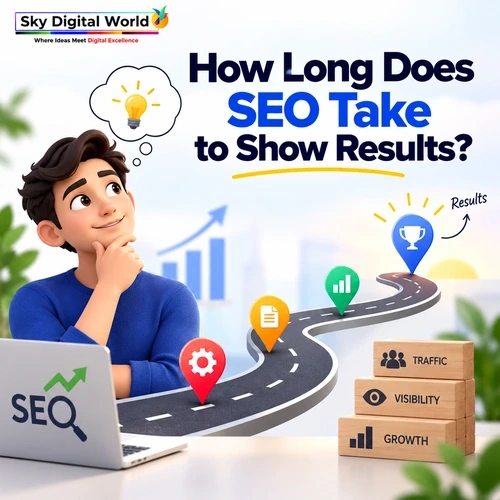
One of the first questions businesses ask before investing in SEO is simple:
“How long will it take before we see results?”
It is an important question—but SEO does not come with a universal 30-day, 60-day or 90-day guarantee.
Some improvements can become visible relatively quickly, while meaningful growth for competitive searches may require months of consistent work. Google itself explains that some website changes can be reflected within hours, while others may take several months; it generally recommends waiting at least a few weeks before judging whether changes have had a positive effect.
So instead of asking only “How long does SEO take?”, businesses should also ask:
“What needs to improve before my website can compete?”
That question gives a much more useful answer.
SEO Is a Process, Not a Switch
Running a paid advertisement can create visibility as soon as the campaign starts.
SEO works differently.
Search engines need time to discover pages, crawl them, process changes and evaluate pages against other available results. Google also notes that requesting a recrawl does not guarantee immediate inclusion; crawling itself can take anywhere from a few days to a few weeks.
At the same time, your SEO team may be working on:
Technical fixes → Keyword strategy → Content → Internal links → Authority → User experience → Conversion improvement
This is why SEO progress tends to build rather than appear all at once.
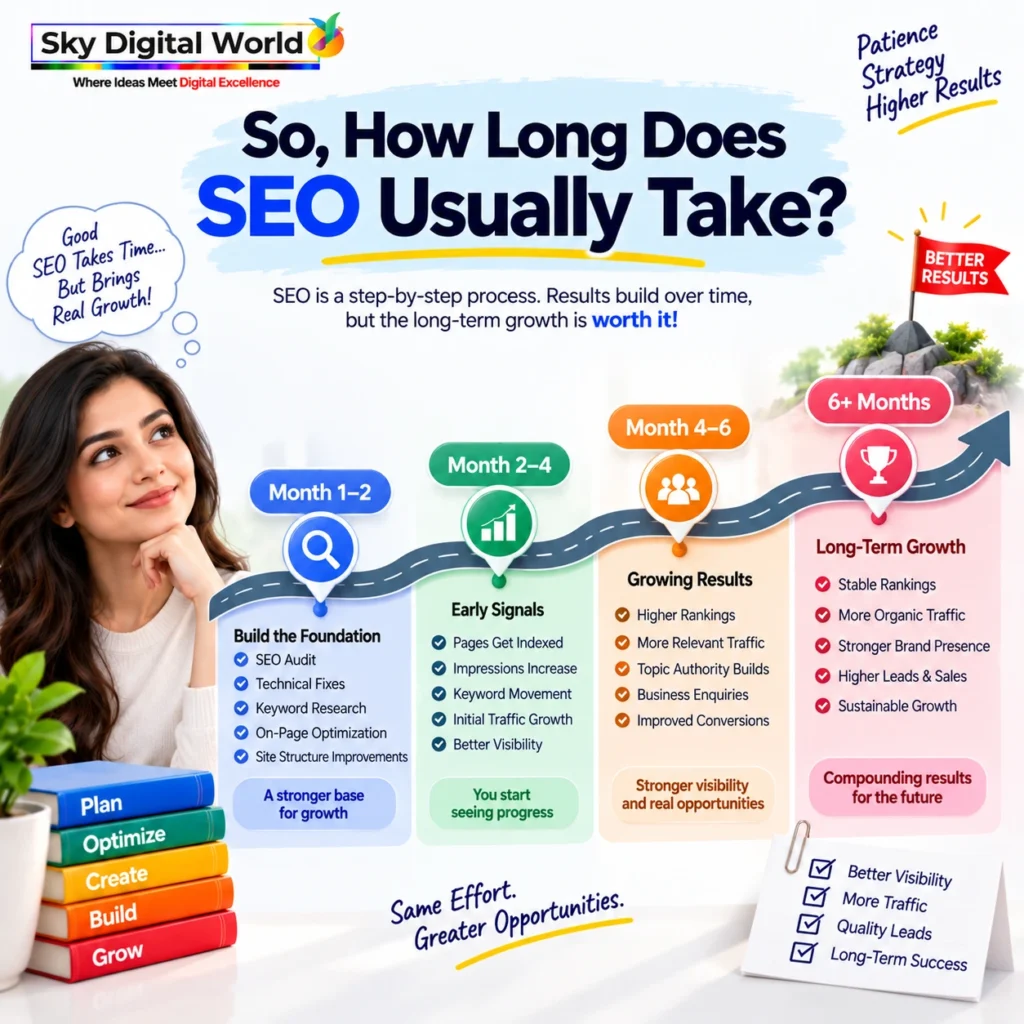
So, How Long Does SEO Usually Take?
There is no guaranteed timeline, but businesses can use the following as a planning framework rather than a promise.
First 1–2 Months: Build the Foundation
The early stage should usually focus on understanding the website rather than chasing immediate rankings.
Work may include:
- Technical SEO audit
- Google Search Console analysis
- Indexing checks
- Keyword and search-intent research
- Competitor analysis
- Existing content audit
- Internal linking review
- Website structure improvements
- Page-title and heading optimization
- Sitemap and crawling checks
If serious technical problems exist, correcting them can sometimes produce relatively quick changes.
But the purpose of this stage is primarily to build a stronger foundation.
Months 2–4: Early Signals May Start Appearing
As optimized pages are crawled and new content is discovered, you may begin seeing useful signals.
These can include:
More impressions → More indexed pages → Ranking movement → More non-branded queries → Early organic traffic growth
This does not necessarily mean that every important keyword will reach page one.
A page moving from position 60 to position 25 is still progress, even though it may not yet generate substantial traffic.
SEO should therefore be evaluated through trends, not only one keyword’s position.
Months 4–6: Stronger Visibility Can Develop
With consistent execution, this is often the stage where businesses hope to see more meaningful movement.
For example:
- Important pages may gain stronger visibility
- More relevant keywords may appear
- Organic traffic may improve
- Topic clusters may begin supporting each other
- Internal links can strengthen important pages
- More qualified visitors may arrive
- Organic enquiries may begin increasing
However, competitive industries may need significantly longer.
A local service business targeting a specific area faces a very different competitive environment from a national finance, SaaS, real estate or digital marketing website.
That is why “SEO takes exactly six months” is not a reliable rule.
Why Does SEO Take Time?
SEO results depend on several moving parts.
1. Your Website’s Starting Condition
Two businesses can hire an SEO agency on the same day and get very different results.
Website A may already have:
- Hundreds of indexed pages
- Good authority
- Useful content
- Strong brand searches
- Relevant backlinks
- Clean technical SEO
Website B may have:
- Indexing problems
- Thin content
- Weak internal links
- Almost no authority
- Poor site structure
- Duplicate pages
Website B has more foundational work to complete before it can compete effectively.
2. Your Competition Matters
Ranking for:
“Bakery in [local area]”
is not the same challenge as ranking nationally for:
“Digital Marketing Services India.”
If competitors have spent years creating authoritative content, earning relevant mentions and building strong websites, a new website should not realistically expect to overtake all of them in a few weeks.
SEO is relative.
You are not optimizing in an empty search engine—you are competing with other available pages for the same audience.
3. Google Has to Crawl and Index Your Pages
A beautifully optimized page cannot generate organic search visibility if search engines cannot properly access or index it.
Google’s minimum technical requirements include allowing Googlebot access, serving a successful HTTP response and providing indexable content. Meeting these requirements makes a page eligible, but does not guarantee indexing.
That makes technical SEO an important early priority.
Content Quality Can Change the Timeline
Publishing 30 generic articles every month does not necessarily make SEO faster.
In fact, a smaller collection of genuinely useful resources may create a much stronger foundation.
Google recommends creating helpful, reliable, people-first content, including original information or analysis that provides substantial value rather than simply rewriting what already exists.
Instead of asking:
“How many blogs should we publish?”
Ask:
“What information would make us genuinely useful to our customers?”
For example, a scaffolding manufacturer could publish practical resources about:
- Selecting scaffolding systems
- Load and application considerations
- Product differences
- Inspection warning signs
- Buying considerations
- Storage and maintenance
- Project-specific selection
- Common purchasing mistakes
This builds meaningful topic authority rather than simply increasing the website’s page count.
Internal Linking Can Help SEO Progress
Imagine publishing twenty excellent articles but leaving each one isolated.
Search engines and visitors then have fewer contextual pathways between related information.
A better structure might be:
Main Service Page
↓
Detailed Guide
↔ Supporting Blog
↔ FAQ Resource
↔ Case Study
↔ Related Service
Google specifically recommends crawlable links so it can discover other pages on a website.
Internal linking also creates a more logical journey for users.
Backlinks and Authority Don’t Usually Grow Overnight
SEO is not limited to changes made on your own website.
Relevant external references can help people and search engines discover your business and strengthen its wider digital presence.
But sustainable authority takes time.
Businesses should avoid chasing hundreds of random links simply because someone promises:
“1,000 backlinks in seven days.”
Focus instead on legitimate opportunities such as industry coverage, useful resources, partnerships, business associations, original research, digital PR and relevant mentions.
The objective should be real authority, not an impressive-looking backlink count.
New Website vs Established Website: Which Takes Longer?
A new website often requires more patience.
It has limited historical data, fewer external references, less content and often weaker brand awareness.
An established website may already have valuable assets that can be improved rather than built from scratch.
For example, updating an existing page with:
- Better search-intent alignment
- More useful information
- Improved internal links
- Clearer headings
- Updated examples
- Better user experience
can sometimes be more productive than constantly publishing new pages.
Google notes that some improvements may take days while broader site-level reassessment can take several months.
How Do You Know SEO Is Working Before Rankings Explode?
This is where many businesses make a mistake.
They check one keyword every morning.
If it is not in the top three, they assume nothing is happening.
Instead, monitor a broader set of signals.
Search Impressions
Are more people seeing your pages in search results?
Number of Relevant Queries
Is your website appearing for a wider range of searches?
Organic Clicks
Are more people visiting through unpaid search?
Important Page Visibility
Are your service and commercial pages gaining traction?
Non-Branded Search
Are customers discovering you without already knowing your company name?
Engagement
Are visitors actually reading and exploring the website?
Leads and Conversions
Most importantly:
Is organic search generating meaningful business opportunities?
Traffic without business relevance should not be the final objective.
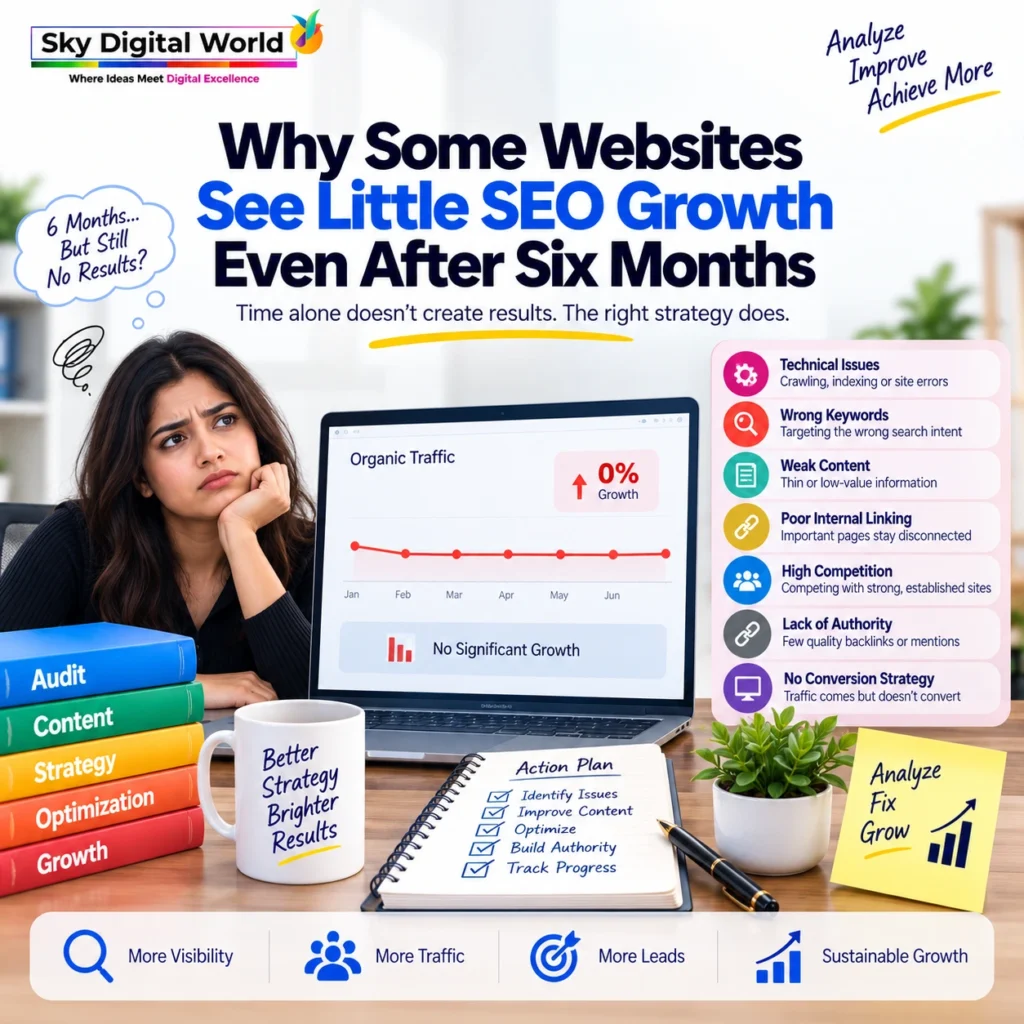
Why Some Websites See Little SEO Growth Even After Six Months
Time alone does not create SEO success.
Doing weak SEO for twelve months does not automatically outperform doing strong SEO for six.
If results remain poor, investigate the strategy.
Possible problems include:
Wrong keywords — targeting terms that do not match the audience or business.
Weak content — publishing information that adds little value.
Indexing issues — important pages may not be properly indexed.
Poor internal linking — valuable pages remain disconnected.
Technical problems — crawling, rendering or site architecture may be holding pages back.
Weak authority — competitors may have much stronger market signals.
Poor search intent — the page answers something different from what searchers need.
No conversion strategy — traffic arrives but does not turn into enquiries.
Waiting another six months without diagnosing these issues is not a strategy.
Can SEO Results Be Guaranteed?
No credible SEO provider can guarantee a particular organic ranking by a specific date.
Google explicitly says there are no secrets that automatically rank a site first, and even following its technical requirements and best practices does not guarantee that a page will be indexed or served in search results.
Be cautious with promises such as:
“#1 ranking guaranteed in 30 days.”
“First page guaranteed for every keyword.”
“Instant organic traffic.”
A professional SEO strategy should provide a clear process, measurable objectives and transparent reporting—not artificial certainty.
How Can Businesses Improve Their Chances of Faster SEO Progress?
You cannot force Google to rank a website immediately, but you can remove unnecessary obstacles.
Start with:
Fix technical problems so important pages are accessible.
Target realistic search intent instead of choosing keywords only because they have high volume.
Improve existing pages before producing hundreds of new ones.
Create genuinely useful content based on customer problems.
Build topic clusters instead of random blogs.
Strengthen internal links between relevant pages.
Earn credible authority rather than buying low-quality backlinks.
Improve user experience so visitors can easily understand the business.
Measure conversions instead of celebrating traffic alone.
SEO becomes much more effective when all of these areas work together.
A Better Way to Think About the SEO Timeline
Instead of expecting:
Month 1 → Rank #1
Think:
Month 1 → Understand
Month 2 → Fix
Month 3 → Build
Month 4 → Strengthen
Month 5 → Measure
Month 6+ → Improve and Scale
The exact timeline will vary, but the principle remains useful.
SEO is an ongoing system of improvement.
Final Thoughts
So, how long does SEO take to show results?
There is no universal answer. Some changes may be reflected quickly, while competitive, site-wide growth can take months. Google itself advises that changes can range from hours to several months to show their impact.
The more useful question is:
Are we building the right SEO foundation and seeing meaningful progress?
A sustainable strategy combines:
Technical SEO + Search Intent + Helpful Content + Internal Linking + Authority + User Experience + Continuous Measurement
SEO should not be viewed as waiting for Google to magically reward a website.
It is the ongoing process of making your website easier to discover, understand, trust and choose.
And when that foundation becomes stronger, rankings are no longer the only result worth measuring—relevant visibility, qualified traffic, enquiries and business growth matter more.
FAQs
1. How long does SEO usually take to show results?
SEO does not have a fixed timeline. Some technical or indexing improvements may become noticeable relatively quickly, while meaningful growth for competitive keywords can take several months. Website condition, competition, content quality, authority and consistency all affect the timeline.
2. Can SEO show results within the first month?
Yes, early improvements are possible, particularly when a website has technical errors, indexing problems, weak on-page optimization or easily achievable keyword opportunities. However, businesses should not expect every important keyword to reach the first page within one month.
3. Why does SEO take several months?
SEO involves more than publishing content. Search engines need to crawl and process website changes, while businesses need time to improve technical SEO, content, internal linking, topical coverage, user experience and authority. Competitive markets can require additional time and sustained work.
4. How can I know whether SEO is working?
Do not measure SEO only through a few keyword positions. Monitor organic impressions, clicks, relevant keyword visibility, indexed pages, non-branded searches, engagement, conversions and qualified leads. Positive movement across these metrics can indicate that the SEO strategy is progressing.
5. Can an SEO agency guarantee first-page rankings within a specific time?
No professional SEO strategy can guarantee a particular organic Google position by a specific date. A reliable agency should instead provide a clear strategy, measurable goals, transparent reporting and continuous optimization based on performance.