



SEO Traffic Is Growing, but Sales Aren’t. What’s Missing?
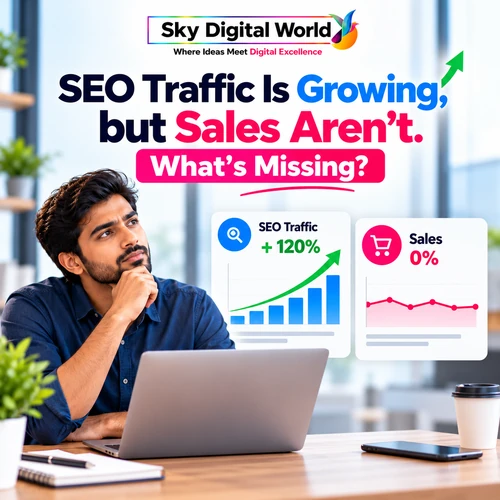
SEO Traffic Is Growing, but Sales Aren’t. What’s Missing?
Getting more visitors from Google is usually considered a positive sign. Your website rankings are improving, organic traffic is increasing, and more people are discovering your business through search engines.
But there is one frustrating problem.
Your website traffic is growing, yet your sales and customer enquiries remain almost the same.
You may be attracting hundreds or thousands of visitors every month, but very few are requesting quotations, booking consultations, purchasing products, or contacting your business.
This situation is more common than many businesses realize.
The problem is not always your SEO strategy. Sometimes, your website is successfully attracting visitors but failing to guide them toward meaningful actions.
This is where SEO Conversion Optimization becomes important.
SEO helps potential customers discover your website, while conversion optimization improves the experience that encourages relevant visitors to become leads or customers.
In this guide, we will explore why increasing organic traffic does not always lead to higher sales, what might be missing from your website, and how businesses can connect search visibility with measurable business growth.
Why Doesn’t More SEO Traffic Always Mean More Sales?
One of the biggest misunderstandings in digital marketing is assuming that more website visitors automatically mean more customers.
However, not every visitor has the same intention.
Some people are researching a topic, others are comparing solutions, and some are ready to make a purchase.
For example, consider these two searches:
Search 1: “What is digital marketing?”
Search 2: “Digital marketing agency for small businesses in Indore”
The first search is primarily informational. The second may indicate that someone is actively evaluating a service provider.
Both searches can generate organic traffic, but their potential to produce immediate business enquiries is different.
A website attracting mainly informational visitors may experience traffic growth without a corresponding increase in sales.
The solution is to understand what visitors need and provide a clear path toward the next relevant action.
SEO Visibility + Relevant Search Intent + Website Trust + Clear Conversion Path = Better Sales Opportunities

1. You’re Attracting Traffic, but Not the Right Audience
A website can rank for numerous keywords without reaching the people most likely to become customers.
For example, a B2B marketing agency might receive traffic from general searches about social media trends, marketing definitions, or free online tools.
These visitors may find the content useful, but they may not be looking to hire an agency.
This creates a gap between traffic volume and business opportunities.
How to fix it
Review the search queries bringing visitors to your website using Google Search Console.
Identify which keywords are informational, commercial, or transactional.
Focus on developing content that addresses real customer needs, including service comparisons, pricing considerations, solutions, and purchase-related questions.
Instead of targeting only broad searches such as “SEO benefits,” also consider relevant searches like “SEO services for manufacturing companies” or “SEO agency for small businesses.”
The objective is not to eliminate informational traffic. It is to build a balanced content strategy that attracts potential customers at different stages of their decision-making journey.
2. Your Website Is Optimized for Rankings, Not Conversions
Many websites are designed primarily to improve their search engine visibility.
They include target keywords, optimized headings, internal links, and useful blog content.
These elements support SEO, but they do not automatically create a convincing customer experience.
A visitor may understand your service but still have unanswered questions.
Why should they choose your business? What makes your approach suitable? What happens after they submit an enquiry?
If your website does not address these questions, visitors may leave without taking action.
How SEO Conversion Optimization helps
SEO Conversion Optimization connects organic search performance with website usability, persuasive content, trust signals, and conversion opportunities.
A conversion-focused page should communicate its main value clearly, explain the service, address customer concerns, and provide a logical next step.
For example, instead of using only a generic “Contact Us” button, a service page could offer:
“Discuss Your SEO Requirements”
or
“Request a Website SEO Consultation.”
The best call to action depends on the page’s purpose and the visitor’s intent.
3. Your Website Doesn’t Build Enough Customer Trust
Before spending money or sharing contact information, customers often look for reasons to trust a business.
A website might have attractive graphics and detailed service descriptions, but that alone may not answer the customer’s concerns.
Potential customers may want to see genuine project examples, business information, relevant experience, and authentic feedback.
Without sufficient evidence, visitors may continue comparing competitors.
How to improve trust
Include relevant case studies, genuine customer testimonials, clear business information, team or company details, and realistic descriptions of your services.
If you publish performance results, explain the context and measurement period.
Avoid unsupported claims such as “guaranteed first-page rankings” or “100% sales growth.”
Trust is not created by impressive promises. It develops when customers can understand your business and evaluate credible evidence.
4. Your Calls to Action Are Weak or Difficult to Find
Imagine a visitor reading an informative service page.
They understand the solution and are interested in learning more.
But when they look for the next step, they cannot find a clear enquiry option.
The page may contain a contact link hidden in the footer, a generic button, or no relevant call to action.
This creates unnecessary friction.
What should you do?
Use clear, relevant calls to action that match the page’s content.
For example:
Page Type | Suggested CTA |
SEO Service Page | Request an SEO Consultation |
Website Development Page | Discuss Your Website Project |
Lead Generation Blog | Explore Lead Generation Solutions |
Local SEO Page | Review Your Local Search Presence |
E-commerce Product Page | Add to Cart / View Product Details |
A CTA should help visitors understand what happens next.
Avoid placing too many competing buttons on the same screen. Give the most important action clear visual priority.
5. Your Website Experience Is Creating Conversion Barriers
A visitor may be ready to enquire, but technical or usability problems can interrupt the process.
Common issues include slow-loading pages, confusing navigation, difficult mobile layouts, broken buttons, lengthy forms, and unclear service information.
For example, a potential customer visiting your website from a mobile search may abandon the enquiry if the form requires too many unnecessary details.
Website performance is important for both usability and search experience.
However, improving page speed alone will not guarantee better conversions.
A practical improvement checklist
- Make important service information easy to find.
- Ensure mobile visitors can navigate comfortably.
- Keep enquiry forms short and relevant.
- Check that contact buttons and links work.
- Improve readability with clear headings and spacing.
- Reduce unnecessary pop-ups and distractions.
- Test the complete enquiry process regularly.
The goal is to make useful actions straightforward rather than forcing visitors through complicated steps.
6. Your Content Answers Questions but Doesn’t Guide Decisions
Informational blogs can attract valuable organic traffic.
However, a common mistake is publishing educational content without connecting it to the next stage of the customer journey.
Consider a blog titled:
“Why Is Your Website Not Ranking on Google?”
The article might explain technical SEO, keyword targeting, indexing, and content quality.
But after reading it, visitors may still wonder how to identify the specific problems affecting their own website.
A relevant next step could be an internal link to a technical SEO service page or an invitation to discuss an SEO audit.
This helps readers move naturally from learning about a problem to exploring a potential solution.
Build content around the customer journey
From search traffic to customer action
Awareness
Understand the problem
Consideration
Compare solutions and providers
Decision
Evaluate trust, fit and value
Conversion
Enquire, book or purchase
Not every visitor will convert immediately. Helpful content can still build familiarity and trust that influence future decisions.
7. Your Service Pages Are Not Answering Buying Questions
A visitor considering your services may have practical questions that your website does not address.
For example, they might want to know:
- Which businesses do you work with?
- What is included in your service?
- How does your process work?
- What information do you need to begin?
- How are results measured?
- How can someone request a proposal?
If your website provides only general statements such as “We offer the best digital marketing solutions,” potential customers may struggle to understand the actual value.
Create detailed, user-friendly service pages that explain your approach, deliverables, suitable customer types, and expected process.
You do not need to disclose every commercial detail, but transparency can help customers decide whether to contact you.
8. You’re Measuring Traffic Instead of Business Results
Organic traffic is useful, but it is not the only measure of SEO success.
A business can increase website visitors by 50% without increasing qualified enquiries.
Another business may experience modest traffic growth but generate more customers because its pages attract relevant visitors and provide a better conversion experience.
Consider this hypothetical example.
Example: More traffic does not always mean more leads
Metric | Before | After |
Monthly organic visitors | 2,000 | 3,000 |
Enquiries | 40 | 42 |
Visitor-to-lead rate | 2.0% | 1.4% |
Illustrative data: traffic increased by 50%, but enquiries increased by only 5%.
This example shows why traffic growth should be evaluated alongside conversion performance.
Useful metrics include organic enquiries, conversion rate, qualified leads, lead-to-customer rate, revenue attributed to organic search, and customer acquisition cost.
Google Analytics 4 can help measure important website actions, while Google Search Console provides information about organic search visibility.
Use both to understand how visitors discover your website and what they do afterward.
9. Your Enquiry Follow-Up Process Is Too Slow
Sometimes the website successfully generates leads, but those enquiries do not become sales.
This may happen because responses are delayed, enquiries are sent to the wrong team member, or potential customers do not receive the information they need.
For example, a prospect might submit a service enquiry and receive no response until several days later.
By then, they may have contacted another provider.
A practical follow-up system can help businesses manage opportunities more effectively.
Use a CRM or organized enquiry tracker, assign responsibilities, acknowledge enquiries promptly, and maintain appropriate follow-up communication.
Respect customer preferences and obtain the necessary consent for marketing messages.
Website Conversion → Qualified Enquiry → Timely Response → Sales Conversation → Customer
Improving this process can be just as important as increasing traffic.
10. Your Website Doesn’t Match the Searcher’s Expectations
Search intent is not only about choosing the right keywords.
It also involves delivering the information visitors expect after clicking a search result.
For example, someone searching for “SEO services for small businesses” may expect to find a service page explaining solutions, process, experience, and consultation options.
If the page mainly contains a general explanation of what SEO means, it may not meet their immediate needs.
Similarly, a person searching for an educational guide may not appreciate landing on an aggressive sales page.
Match your content format, headline, information, and calls to action with the visitor’s likely purpose.
A relevant landing page should answer the searcher’s question before encouraging an appropriate next step.
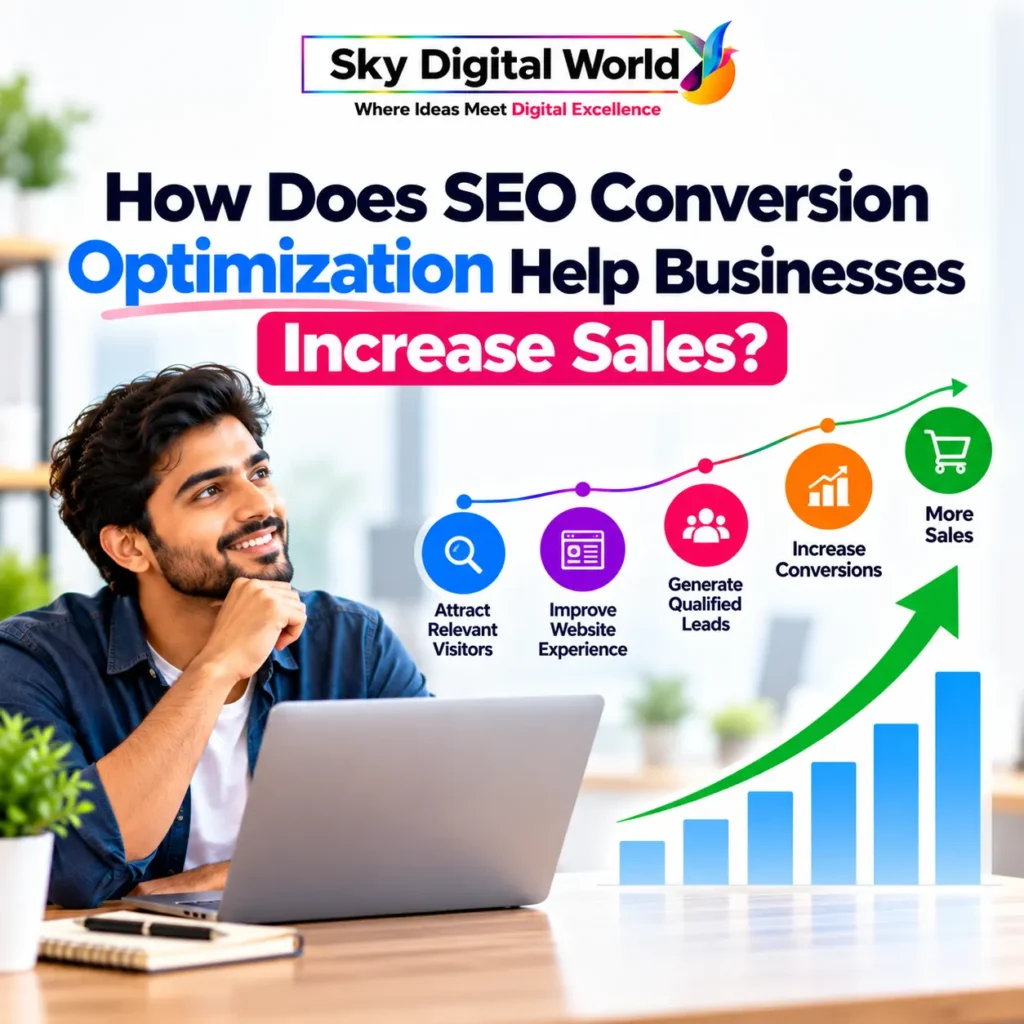
How Does SEO Conversion Optimization Help Businesses Increase Sales?
SEO Conversion Optimization brings together organic search strategy and conversion rate optimization to help businesses make better use of their existing website traffic.
Traditional SEO activities focus on discoverability, relevance, technical accessibility, and organic visibility.
Conversion optimization focuses on understanding visitor behaviour, reducing friction, communicating value, and improving meaningful customer actions.
When these activities work together, businesses can identify which search queries bring relevant visitors, which pages create engagement, and where potential customers leave before converting.
A practical process includes:
- Review organic traffic quality: Identify high-traffic pages and the search intent behind their visitors.
- Analyze conversion performance: Track enquiries, purchases, consultation bookings, and other relevant actions.
- Identify conversion barriers: Review content clarity, page layout, mobile experience, trust signals, and enquiry forms.
- Improve important landing pages: Align page content, service value, and calls to action with customer expectations.
- Test and measure improvements: Use appropriate experiments and performance data to evaluate changes.
- Strengthen lead follow-up: Connect website enquiries with a reliable sales process.
The objective is not simply to improve conversion percentages. It is to create more relevant business opportunities and understand which improvements contribute to actual revenue.
How to Find Out What’s Missing From Your SEO Strategy
Before investing in more content or additional marketing channels, review your existing performance.
SEO Conversion Checklist
0 of 8 checked
Organic visitors are reaching relevant service pages
High-traffic pages have a clear next step
Mobile enquiry forms and contact buttons work
Service pages answer common buying questions
Genuine reviews or case studies are visible
Organic enquiries and purchases are tracked
Qualified leads receive timely follow-up
Sales results are reviewed alongside SEO traffic
8 areas still need review
Use unchecked items to prioritize your next website and sales-process audit. This is a planning checklist, not an SEO ranking score.
Copy Checklist
A Practical 30-Day SEO Conversion Improvement Plan
Week | Focus Area | Recommended Action |
Week 1 | Traffic and Conversion Audit | Review organic landing pages, search queries, enquiries, and sales performance |
Week 2 | Website Improvements | Improve service content, trust signals, CTAs, mobile experience, and enquiry forms |
Week 3 | Content and Search Intent | Update relevant blogs, improve internal links, and connect informational pages with suitable services |
Week 4 | Tracking and Follow-Up | Review conversion data, test changes where feasible, and improve lead response processes |
This plan provides a starting point for identifying conversion opportunities. Meaningful improvements may require longer periods of testing and measurement, depending on website traffic and business conditions.
Final Thoughts
Growing organic traffic is an achievement, but traffic alone does not guarantee business growth.
If your website is attracting more visitors without generating additional sales, the missing element may be search intent, website trust, conversion-focused content, usability, lead quality, or customer follow-up.
Instead of focusing exclusively on higher rankings and more visitors, evaluate what happens after someone reaches your website.
A thoughtful SEO Conversion Optimization strategy can help connect organic visibility with relevant customer actions and measurable business outcomes.
Getting found on Google is the beginning. Helping the right visitors become customers is where SEO starts creating stronger business value.
Frequently Asked Questions
Organic traffic may increase without conversions when visitors have informational intent, landing pages lack clear calls to action, the website has usability problems, or the content does not match customer expectations. Reviewing traffic sources and conversion behaviour can help identify the issue.
SEO Conversion Optimization combines search engine optimization with conversion rate optimization. It focuses on attracting relevant organic visitors and improving website content, usability, trust, and calls to action to encourage meaningful customer actions.
Yes. SEO can attract potential customers through organic search, and conversion-focused pages can help turn relevant visits into enquiries or purchases. Results depend on search demand, competition, website quality, products or services, and the overall customer experience.
You can improve landing page clarity, strengthen trust signals, simplify contact forms, make calls to action more visible, improve mobile usability, and address common customer concerns. Measure changes to determine which improvements work for your audience.
Important metrics include organic sessions, organic conversion rate, qualified enquiries, purchases, lead-to-customer rate, revenue from organic search, and customer acquisition cost. These metrics help connect search visibility with business performance.