




How Retargeting Ads Help Businesses Recover Lost Customers
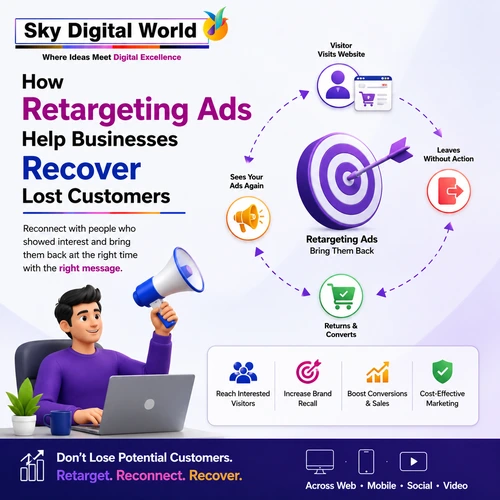
Getting people to visit your website is only one part of digital marketing. The bigger challenge is turning those visitors into customers.
Many potential customers visit a website, explore products or services, compare options, and then leave without taking action. Some get distracted. Others need more time to decide. Some may simply forget the business they were considering.
This is where retargeting advertising becomes valuable.
With a carefully planned retargeting strategy, businesses can reconnect with people who have already shown interest and bring them back at the right stage of their buying journey. For companies looking for Retargeting Ads Services India, the goal should not be to repeatedly show the same advertisement. It should be to create relevant follow-up experiences that encourage potential customers to return and take the next step.
What Are Retargeting Ads?
Retargeting ads are advertisements shown to people who have previously interacted with a business digitally but did not complete a desired action.
Depending on the advertising platform and available consented data, these audiences may include people who:
- Visited specific website pages
- Viewed a product or service
- Added an item to their cart
- Engaged with social media content
- Watched a video
- Opened or interacted with certain digital experiences
- Started but did not complete a conversion journey
Instead of treating every prospect like a completely new visitor, retargeting allows businesses to continue an existing customer journey.
That difference is important.
A new visitor may still be discovering your brand. A returning prospect may already know what you offer and simply need additional information, reassurance, or a stronger reason to act.
Why Do Potential Customers Leave Without Converting?
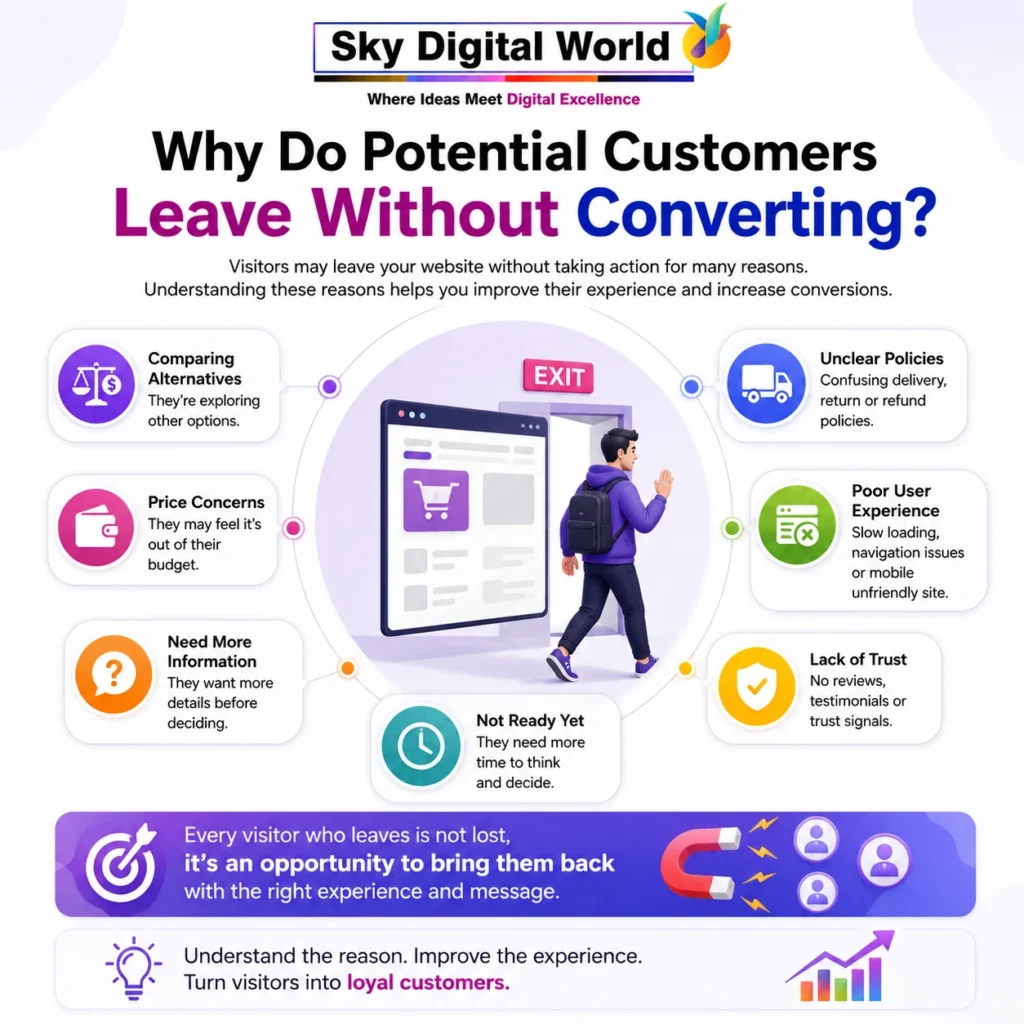
A visitor leaving your website does not necessarily mean they are uninterested.
Think about your own online behaviour. You may discover a product during lunch, check its price, close the page, compare alternatives later, and make a purchase several days afterward.
Customers behave similarly.
They may leave because they are comparing competitors, checking reviews, waiting for approval, considering their budget, researching features, or simply not ready to make a decision.
This creates an important marketing opportunity.
Rather than assuming every non-converting visitor is lost, businesses can use retargeting campaigns to reconnect with appropriate audiences later.
How Retargeting Ads Help Recover Lost Customers
1. Retargeting Keeps Your Brand Visible
People encounter a huge amount of online content every day. Even someone genuinely interested in your business may forget your company name after leaving the website.
Retargeting provides another opportunity to appear in front of that potential customer.
Repeated visibility can strengthen brand recall, particularly when the advertisements provide useful information rather than simply repeating the same sales message.
For example, someone who viewed your service page might later see an advertisement highlighting a relevant case study, customer benefit, consultation option, or frequently asked question.
The brand remains familiar without forcing an immediate decision.
2. Retargeting Reaches People Who Already Showed Interest
One of the biggest differences between prospecting and retargeting is audience familiarity.
Cold advertising generally reaches people who may fit your target audience but have not interacted with your business yet.
Retargeting focuses on people who have already demonstrated some level of interest.
That could mean visiting your website, viewing a product, interacting with your social content, or reaching an important page.
Because these audiences are already familiar with the business, your messaging can focus more on helping them move toward a decision.
This is why professional Retargeting Ads Services India should consider previous user behaviour rather than treating every audience segment identically.
3. Different Visitors Need Different Retargeting Messages
Not every website visitor has equal intent.
Someone who reads one blog article is different from someone who visits your pricing page three times. Likewise, someone who adds a product to their cart is much closer to conversion than someone who only visits the homepage.
Businesses can therefore segment audiences according to behaviour.
For example:
Blog Visitor → Educational Content
Service Page Visitor → Benefits + Proof
Pricing Page Visitor → Value Proposition + Consultation
Cart Abandoner → Product Reminder
Previous Customer → Relevant Complementary Offer
This makes advertising more relevant to the customer’s actual journey.
4. Retargeting Can Support Abandoned Cart Recovery
Cart abandonment is a major challenge for e-commerce businesses.
Customers may add products to their carts and leave because they want to compare prices, reconsider the purchase, check delivery information, or complete the transaction later.
A well-designed e-commerce retargeting strategy can remind these visitors about products they previously considered.
The advertisement should make returning to the shopping experience simple.
Businesses should also look beyond advertising and investigate why carts are being abandoned. If customers are leaving because of unexpected charges, complicated checkout processes, or technical problems, retargeting alone will not solve the underlying issue.
5. Retargeting Builds Trust Before Asking for the Sale
Not every retargeting advertisement needs to say “Buy Now.”
For high-consideration services such as real estate, B2B services, education, consulting, healthcare services, technology, or professional services, customers may need multiple interactions before making a decision.
Retargeting can help provide additional confidence through useful content such as:
Customer Testimonials → Case Studies → Product Benefits → FAQs → Demonstrations → Consultation CTA
This approach supports decision-making rather than simply increasing advertising frequency.
Retargeting Works Best Across the Customer Journey
A strong retargeting strategy should consider where someone currently sits in the buying process.
Awareness Stage
The customer has recently discovered the business.
Use helpful educational content, brand positioning, and clear benefits.
Consideration Stage
The visitor has explored particular products or services.
Use testimonials, comparisons, key features, case studies, or stronger value propositions.
Decision Stage
The prospect has demonstrated higher purchase intent.
Use relevant calls-to-action such as Book a Consultation, Request a Quote, Complete Your Purchase, or Talk to Our Team.
The closer the visitor gets to conversion, the more specific the advertising message can become.
Use Meta and Google Retargeting Strategically
Businesses can build retargeting strategies across major advertising ecosystems, depending on available audience signals, platform rules, and privacy requirements.
Meta retargeting ads can support follow-up campaigns across Facebook and Instagram, while Google Ads can provide remarketing opportunities across eligible Google advertising placements and formats.
The important point is not simply being present on multiple platforms.
Businesses should understand where their audience spends time and how each platform contributes to the customer journey.
A coordinated cross-channel retargeting strategy can create more consistent communication than disconnected campaigns.
Frequency Matters: Don’t Chase Your Customers Everywhere
Retargeting becomes ineffective when customers feel overwhelmed by repetitive advertisements.
Showing the same creative too frequently can lead to ad fatigue and a poor brand experience.
Businesses should monitor campaign frequency, rotate creatives, refresh messages, and exclude audiences who are no longer relevant.
For example, someone who has already completed a purchase may need to be excluded from an acquisition campaign or moved into a different customer segment.
Effective retargeting should feel like a useful reminder—not digital stalking.
Creative Quality Can Make or Break Retargeting Campaigns
Retargeting audiences already have some familiarity with your brand, so showing them the exact same advertisement they previously ignored may not be enough.
Create different ads around different reasons to return.
A service business could test:
Ad 1: Customer problem
Ad 2: Service benefit
Ad 3: Case study or social proof
Ad 4: FAQ or objection handling
Ad 5: Consultation CTA
An e-commerce brand could test product-focused creatives, customer reviews, product benefits, new collections, or relevant incentives.
Creative variation gives businesses more opportunities to discover what actually moves customers forward.
Retargeting and Conversion Optimization Should Work Together
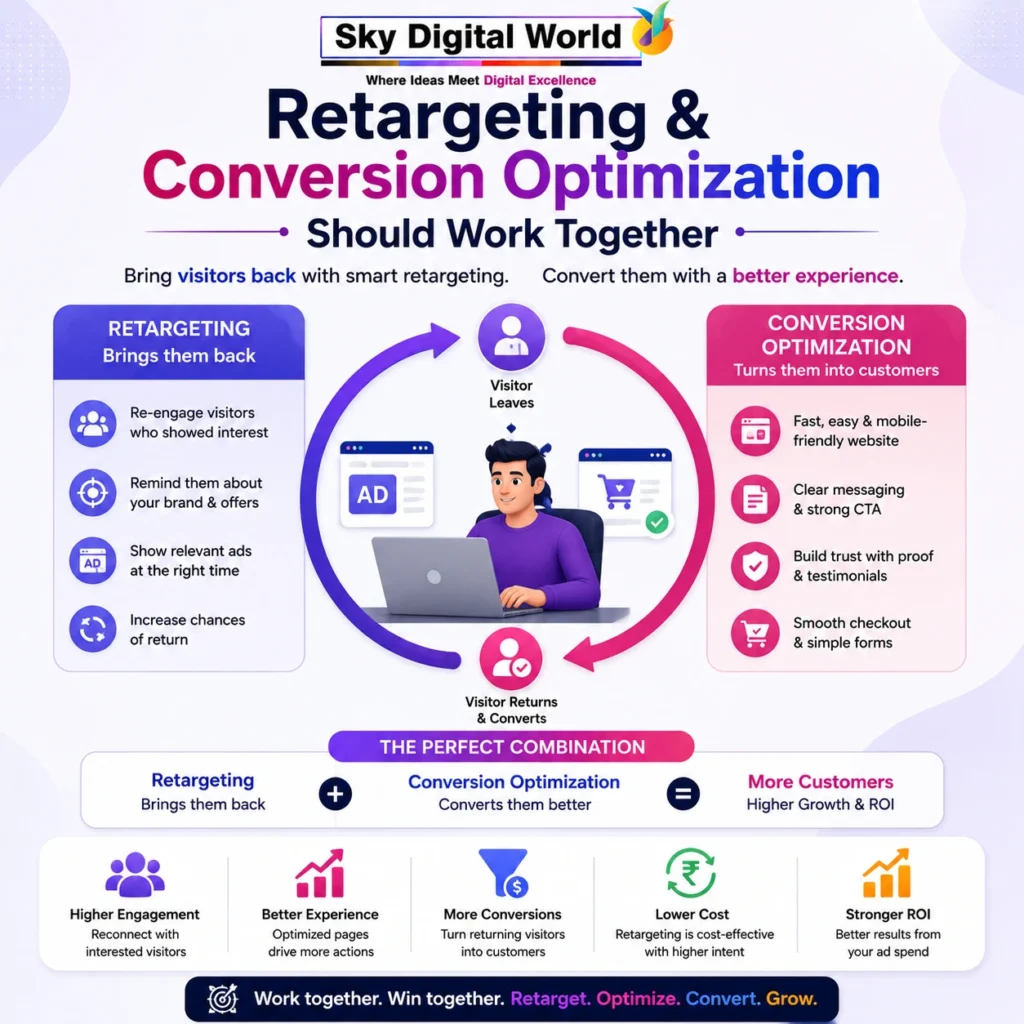
Retargeting can bring people back, but your website still needs to convert them.
Imagine spending money to return a potential customer to a page that is slow, confusing, difficult to navigate, or missing a clear CTA.
The advertising campaign may be working while the website prevents the conversion.
That is why retargeting should work alongside conversion rate optimization (CRO).
Businesses should improve landing-page relevance, mobile experience, page speed, trust signals, forms, CTAs, and checkout experiences alongside their advertising strategy.
The complete journey becomes:
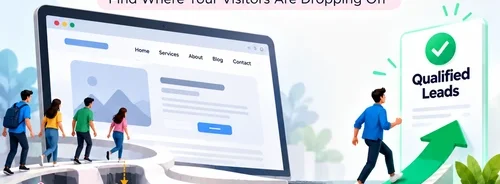
Initial Visit → Interest → Exit → Retargeting → Return Visit → Conversion
Measure Business Results, Not Just Clicks
A successful retargeting campaign should not be judged only by impressions and clicks.
Businesses should monitor metrics such as:
Return visitors, conversion rate, qualified leads, purchases, cost per conversion, cost per acquisition, ROAS where appropriate, and revenue.
It is also important to evaluate attribution carefully. A customer may interact with SEO, social media, email, direct traffic, and multiple advertisements before converting.
Retargeting may be one part of that journey rather than the only reason for the sale.
Common Retargeting Mistakes Businesses Should Avoid
Retargeting becomes less effective when every visitor receives the same advertisement.
Businesses should avoid:
- Targeting all website visitors with identical messaging
- Showing ads too frequently
- Using the same creative for too long
- Ignoring different customer-intent levels
- Sending users to irrelevant landing pages
- Failing to exclude converted customers where appropriate
- Measuring clicks instead of actual business outcomes
- Ignoring privacy, consent, and advertising-platform requirements
A thoughtful retargeting advertising strategy prioritizes relevance over repetition.
Why Choose Professional Retargeting Ads Services India?
Running retargeting ads involves more than creating an audience and launching an advertisement.
A professional strategy may involve audience segmentation, tracking setup, campaign structure, creative planning, landing-page alignment, funnel analysis, conversion measurement, budget optimization, and ongoing testing.
Businesses searching for Retargeting Ads Services India should choose a digital marketing partner that focuses on measurable outcomes rather than simply impressions or reach.
The objective should be to understand who left, what they were interested in, where they dropped out, and what message could reasonably bring them back.
Final Thoughts
Not every visitor who leaves your website is a lost customer.
Some prospects simply need more time, information, trust, or another reminder before making a decision.
Retargeting gives businesses an opportunity to continue that conversation.
When combined with relevant audience segmentation, strong creative, conversion-focused landing pages, accurate measurement, and responsible frequency management, retargeting can become an important part of a broader customer acquisition strategy.
The smartest approach is not:
“Show more ads to everyone.”
It is:
“Show the right follow-up message to the right audience at the right stage of their journey.”
For businesses investing in Retargeting Ads Services India, that shift from repetition to relevance can make retargeting a much more meaningful part of digital growth.
FAQs
1. What are retargeting ads?
Retargeting ads are paid advertisements designed to reconnect with people who have previously interacted with your website, products, services, or digital content but did not complete a desired action.
2. How do retargeting ads help businesses recover lost customers?
Retargeting helps businesses reconnect with interested prospects by showing relevant follow-up messages. These ads can remind users about products or services they explored and encourage them to return and continue their buying journey.
3. What are Retargeting Ads Services India?
Retargeting Ads Services India can include audience segmentation, campaign setup, tracking, Meta and Google remarketing campaigns, creative strategy, landing-page alignment, conversion tracking, testing, and ongoing campaign optimization.
4. What is the difference between retargeting and remarketing?
The terms are often used interchangeably. Retargeting commonly refers to paid ads shown to previous visitors or engaged audiences, while remarketing can also include re-engagement through channels such as email. The exact terminology can vary by platform.
5. Can retargeting ads help recover abandoned carts?
Yes. E-commerce businesses can use eligible retargeting audiences to reconnect with shoppers who viewed products or abandoned their carts. However, businesses should also fix checkout problems that may be causing customers to leave.