




From Website Visitors to Customers: Complete Conversion Optimization Guide
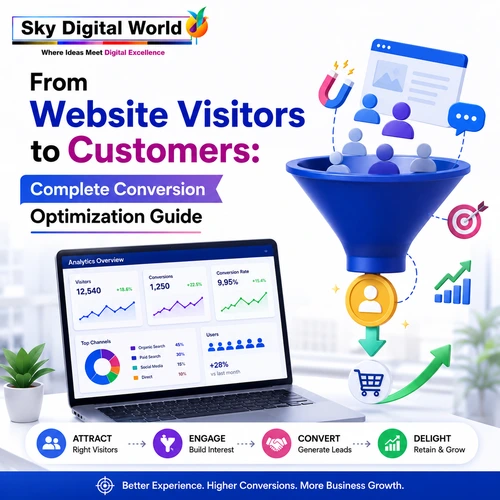
Getting people to visit your website is only the beginning. A business can receive thousands of visitors through SEO, Google Ads, social media, or referrals and still struggle to generate enough enquiries or sales.
The real question is not simply, “How much traffic are we getting?” It is “What happens after people arrive?”
That is where conversion optimization becomes important. A well-optimized website guides visitors from curiosity to confidence and then toward a meaningful action—calling your business, submitting an enquiry, booking an appointment, requesting a quote, signing up, or completing a purchase.
For businesses investing in digital growth, professional Conversion Optimization Services India can help turn existing traffic into measurable business opportunities without depending only on increasing advertising budgets.
What Is Conversion Optimization?
Conversion optimization, often called Conversion Rate Optimization (CRO), is the process of improving a website so that a higher percentage of visitors complete a desired action.
A conversion can be different for every business. For an e-commerce store, it may be a purchase. For a service company, it could be a quote request. For a real estate business, it may be a site-visit enquiry. For a B2B company, it could be a consultation booking or qualified lead.
Good CRO is not about filling every page with buttons or aggressive sales messages. It is about understanding what visitors need and making their journey easier.
Simple formula:
Conversion Rate = (Conversions ÷ Total Visitors) × 100
If 2,000 people visit a landing page and 80 submit an enquiry, the conversion rate is 4%.
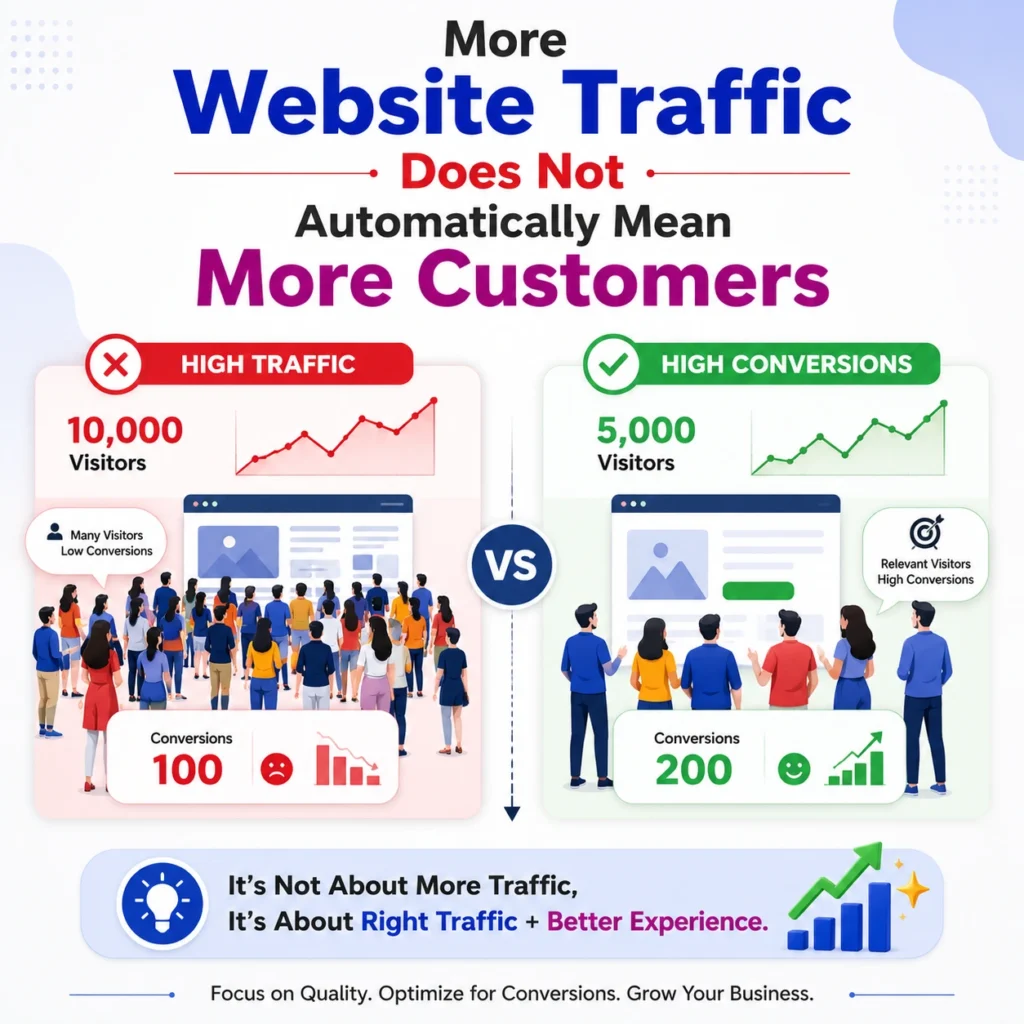
More Website Traffic Does Not Automatically Mean More Customers
One of the most common digital marketing mistakes is treating traffic as the final measure of success.
Imagine two websites:
Website A receives 10,000 monthly visitors but generates 100 enquiries.
Website B receives 5,000 visitors but generates 200 enquiries.
Website B has half the traffic but twice the leads.
This is why businesses should evaluate traffic quality, user behaviour, engagement, conversion rate, lead quality, cost per acquisition, and revenue together.
SEO and advertising bring potential customers to your digital doorstep. Conversion optimization helps them decide whether to walk in.
Start by Understanding Visitor Intent
Not every visitor reaches your website for the same reason.
Someone searching for “what is conversion optimization?” is probably researching. A person searching for “Conversion Optimization Services India” may already be comparing service providers.
These visitors should not necessarily receive the same experience.
Your website content should match different stages of the customer journey:
Awareness → Consideration → Evaluation → Decision → Conversion
Educational visitors may need useful guides and examples. High-intent visitors need clear services, proof, pricing context where appropriate, FAQs, and an easy way to contact you.
Understanding search intent and customer intent helps businesses build pages around what users actually want rather than what the company simply wants to say.
Your Value Proposition Should Be Clear Within Seconds
When somebody lands on your website, they should quickly understand three things:
What do you offer? Who is it for? Why should they choose you?
Complicated headlines can create unnecessary friction.
Instead of:
“Transforming Tomorrow Through Innovative Digital Excellence”
a conversion-focused message could be:
“Generate More Qualified Leads From Your Existing Website Traffic.”
The second version immediately communicates a practical benefit.
Your headline, supporting copy, visual content, and primary call-to-action should work together to answer the visitor’s first questions.
Build Landing Pages Around One Clear Goal
Sending every campaign visitor to your homepage is rarely the strongest approach.
If you are running an advertisement for SEO services, visitors should reach a relevant SEO landing page. If the campaign promotes a consultation, the landing page should make booking that consultation straightforward.
An effective landing page optimization strategy generally includes a strong headline, clear benefits, relevant visual content, trust signals, concise supporting information, FAQs, and a prominent CTA.
Remove elements that distract people from the main purpose of the page.
One page does not need to explain your entire company. It needs to help the visitor make the next logical decision.
Make Calls-to-Action Specific and Useful
Generic buttons such as “Submit” or “Click Here” provide little context.
More meaningful CTAs tell users what happens next:
- Request a Free Consultation
- Get a Custom Quote
- Talk to Our Team
- Book an Appointment
- Get Your Website Reviewed
CTA placement also matters. A visitor should not have to search for a way to contact you after becoming interested.
Place calls-to-action naturally at key decision points rather than repeating them after every sentence.
Reduce Friction in Lead Generation Forms
Long forms can quietly damage conversion rates.
If somebody only wants an initial consultation, asking for ten or fifteen details before they can speak with your team may be unnecessary.
For many lead-generation websites, starting with information such as name, phone/email, service requirement, and a short message may be enough.
Additional information can be collected during qualification.
The goal is not always to create the shortest possible form. It is to ask only for information that genuinely helps move the conversation forward.
Trust Can Be the Difference Between a Visit and an Enquiry
People hesitate when they are uncertain about a business.
Before contacting you, visitors may wonder:
Is this company genuine? Can they deliver what they promise? Have other customers worked with them? What happens after I enquire?
Trust signals help answer those questions.
Useful trust elements can include authentic customer reviews, testimonials, case studies, portfolio examples, certifications, clear contact information, transparent policies, team information, and real business photographs.
Avoid exaggerated claims such as “100% guaranteed results” when results depend on factors outside your control. Credible evidence generally converts better than oversized promises.
Website Speed Is Part of Conversion Optimization
A beautiful website that feels slow can lose potential customers before they even see the offer.
Large images, unnecessary scripts, excessive plugins, poorly configured hosting, and heavy page builders can affect performance.
Businesses should regularly review:
page loading performance, mobile usability, Core Web Vitals, image optimization, caching, and unnecessary scripts.
Technical performance supports both user experience and SEO, making website speed optimization an important part of a broader CRO strategy.
Mobile Conversion Optimization Cannot Be an Afterthought
Many potential customers discover businesses on smartphones.
A desktop page may look excellent while being frustrating on mobile because buttons are too small, forms are difficult to complete, text is crowded, or important information appears too far down the page.
A mobile-friendly conversion journey should provide readable content, comfortable spacing, easy navigation, quick contact options, fast loading, and simple forms.
For local and service businesses, visible Call or WhatsApp actions can also reduce the number of steps between interest and enquiry.
Use Data Instead of Guesswork
Conversion optimization becomes much more effective when decisions are based on actual user behaviour.
Analytics can reveal:
- which pages generate conversions;
- where visitors leave;
- which traffic sources bring valuable leads;
- which devices perform poorly;
- whether users engage with important content;
- where forms are abandoned.
Tools such as analytics platforms, heatmaps, session recordings, and funnel reports can help identify friction.
For example, if a page receives strong organic traffic but very few enquiries, traffic itself may not be the problem. The offer, CTA, page structure, intent alignment, trust level, or form experience may need improvement.
This is where website conversion analysis becomes more valuable than simply watching visitor numbers increase.
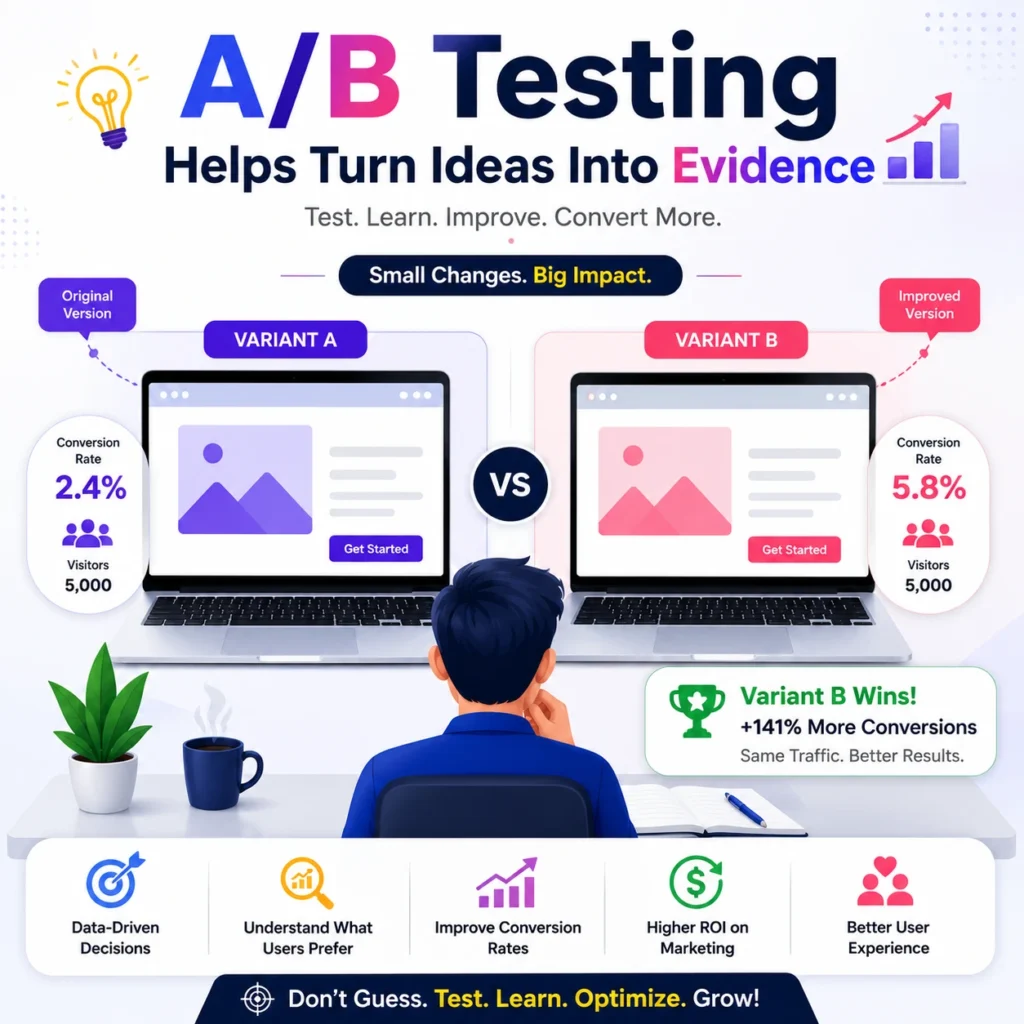
A/B Testing Helps Turn Ideas Into Evidence
Teams often debate whether a new headline, button, form, or layout will perform better.
Testing can provide a stronger answer than opinion.
A/B testing compares different versions of a page element to understand how each affects user behaviour.
Businesses can test headlines, CTA wording, hero sections, forms, page layouts, social proof, offers, or landing-page content.
However, testing should have a clear hypothesis.
For example:
“Reducing the enquiry form from eight fields to four may increase completed submissions because mobile visitors currently abandon the form.”
That is much more useful than changing random elements and hoping conversions increase.
Optimize for Better Leads, Not Just More Leads
A higher conversion rate is valuable only when the resulting conversions support business goals.
Suppose a landing page generates 100 enquiries, but only five are relevant. Another version generates 60 enquiries, with 30 qualified prospects.
The second page may be much more valuable to the business.
That is why a complete conversion rate optimization strategy should track downstream metrics such as qualified leads, appointments, sales, customer acquisition cost, and revenue—not simply form submissions.
Marketing and sales data should work together.
Connect SEO, Paid Ads and CRO
SEO, advertising, and CRO should not operate as separate activities.
SEO attracts relevant organic visitors.
Paid advertising creates targeted visibility quickly.
Conversion optimization helps turn those visitors into enquiries and customers.
When these channels are connected, businesses can understand which keywords, advertisements, landing pages, and offers contribute to actual results.
For companies seeking Conversion Optimization Services India, this integrated approach can be more valuable than treating CRO as a one-time website redesign.
Conversion Optimization Is an Ongoing Process
Customer behaviour changes. Competitors change. Traffic sources change. Offers change.
That means CRO is not something businesses “finish.”
A practical optimization cycle looks like:
Measure → Identify Problems → Form a Hypothesis → Improve → Test → Measure Again
Small improvements across multiple stages of the journey can produce meaningful gains over time.
The strongest conversion strategies are usually built through continuous learning rather than one dramatic redesign.
Final Thoughts
Getting more website visitors feels like progress, but traffic alone does not grow a business.
Growth happens when the right visitors understand your offer, trust your brand, find what they need easily, and feel confident enough to take action.
A strong conversion strategy brings together user experience, landing page optimization, persuasive content, analytics, website performance, customer intent, testing, and lead quality.
Businesses investing in Conversion Optimization Services India should therefore focus on more than changing button colours or adding extra CTAs. The real objective is to create a smoother journey from visitor → prospect → qualified lead → customer.
When your website becomes better at converting the traffic you already have, every SEO campaign, paid advertisement, and content marketing effort has the potential to work harder.
FAQs
1. What is conversion optimization?
Conversion optimization is the process of improving a website or landing page so more visitors complete valuable actions such as submitting an enquiry, booking an appointment, calling a business, or making a purchase.
2. Why is conversion rate optimization important for businesses?
CRO helps businesses generate more value from their existing website traffic. Instead of focusing only on attracting more visitors, it improves the experience so more relevant visitors become leads or customers.
3. What are Conversion Optimization Services India?
Conversion Optimization Services India typically include website analysis, user journey evaluation, landing page optimization, CTA improvement, form optimization, A/B testing, analytics tracking, mobile optimization, and other improvements designed to increase conversions.
4. How can I increase my website conversion rate?
Start by improving page speed, simplifying navigation, creating clear headlines, strengthening CTAs, reducing unnecessary form fields, adding authentic trust signals, and making important pages mobile-friendly. Use analytics to identify where visitors are dropping off before making changes.
5. What is a good website conversion rate?
There is no universal “good” conversion rate. Results vary by industry, traffic source, offer, device, customer intent, and conversion type. It is usually more useful to benchmark your current performance and continuously improve it while monitoring lead quality.