





What Makes a Website Ready for AI Search?
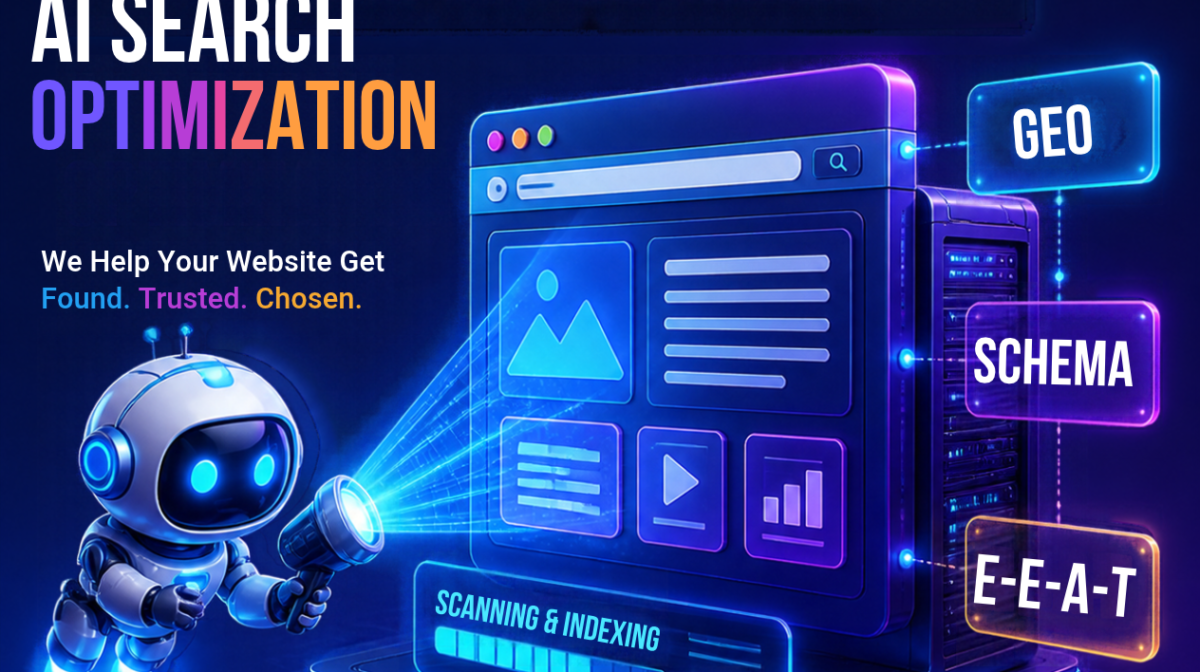
AI Search Optimization (GEO): How to Make Your Website AI-Ready in 2026
Introduction
The way people search for information online is undergoing a massive transformation. For decades, traditional Search Engine Optimization (SEO) was all about ranking on the first page of Google by targeting specific keywords, building backlinks, and optimizing meta tags.
However, with the rapid rise of Generative AI platforms like ChatGPT, Google Gemini, Claude, and Perplexity, search behavior has fundamentally changed. Users are no longer just clicking through ten blue links; they are asking complex questions and getting direct, conversational answers generated in real-time.
This evolution has given birth to a new domain: Generative Engine Optimization (GEO) or AI Search Optimization.
So, what actually makes a website ready for AI search? How do you ensure that AI models cite your content as an authoritative source when answering user queries?
In this comprehensive guide, we will break down the essential factors required to make your website fully AI-search-ready.
1. Clear Structure and Semantic HTML
AI search engines use Advanced Natural Language Processing (NLP) models to parse, extract, and synthesize content. If your website is messy or unstructured, AI crawlers will struggle to understand your context.
Key Optimization Steps:
- Use Proper Heading Hierarchy: Maintain a clear structure using logical tags (<h1>, <h2>, <h3>). Your <h1> should state the core topic, while subheadings should logically break down related concepts.
- Semantic HTML Elements: Use tags like <article>, <section>, <header>, <footer>, and <aside> instead of relying solely on generic <div> tags.
- Direct & Concise Answers: AI models favor direct answers. Start sections with clear 1-2 sentence definitions or summary statements before diving into detailed explanations.
2. Implementing Comprehensive Schema Markup (Structured Data)
Schema markup acts as an explicit instruction manual for AI algorithms. It translates human language into structured machine-readable code.
Essential Schema Types for AI Readiness:
- FAQ Schema: Allows AI agents to quickly grab clear question-and-answer pairs.
- Article & NewsArticle Schema: Helps AI understand publication details, authors, and timestamps.
- Organization & Person Schema: Establishes who created the content and builds domain authority.
- Product & Service Schema: Essential for e-commerce and B2B websites to showcase specifications, pricing, and availability.
When your structured data is error-free, AI models can easily cite your entity details accurately without hallucinating.
3. High E-E-A-T (Experience, Expertise, Authoritativeness, and Trustworthiness)
AI engines prioritize content from verifiable, credible sources. Because AI models aim to reduce misinformation, they heavily weigh content that exhibits high E-E-A-T.
How to Demonstrate E-E-A-T:
- Detailed Author Bio: Attribute every article to a real industry expert with links to their LinkedIn profile, author page, or published credentials.
- Cite Trustworthy Sources: Reference original research, official statistics, academic papers, and recognized industry reports.
- Original Data and Research: AI search models love unique data. Publishing original survey results, case studies, or proprietary data makes your website a primary source for citations.
4. Conversational and Intent-Based Content
Traditional search queries were fragmented (e.g., “best laptops 2026”). AI search queries are conversational and long-form (e.g., “What are the top 3 lightweight laptops under $1000 for graphic design and video editing?”).
Content Strategies for Conversational AI:
- Target Question-Based Queries: Frame your headings around natural questions (Who, What, Why, How, Where).
- Adopt a Natural, Conversational Tone: Write as if you are directly answering a consultation call with a client.
- Provide Context-Rich Answers: Do not just list features; explain why a feature matters and who it is best suited for.
5. Information Density & Nuanced Depth
AI engines look for “information-dense” content. Low-value “fluff” articles that repeat the same keyword multiple times without providing real substance are ignored by generative engines.
How to Achieve Information Density:
- Avoid Word Padding: Focus on delivering actionable insights, comparison tables, step-by-step guides, and clear takeaways.
- Cover Edge Cases: Address pros and cons, limitations, common pitfalls, and real-world applications.
- Use Formatting for Readability: Bullet points, numbered lists, comparison charts, and bold text help AI models quickly extract factual data points.
6. Fast Technical Performance and Clean Architecture
Technical health remains foundational. If an AI search agent cannot efficiently crawl, render, or process your page, your site won’t be indexed or summarized effectively.
Technical Checklist:
- Page Speed & Core Web Vitals: Ensure fast loading times across mobile and desktop environments.
- Clean Javascript Rendering: Ensure critical text content is accessible in the raw HTML response and not hidden behind complex client-side scripts.
- Crawlability & Robots.txt: Ensure your robots.txt file permits modern AI crawlers (like GPTBot, PerplexityBot, and Google-Extended) if you wish to be cited in AI answers.
7. Strong Off-Page Brand Entity Presence
AI models do not just rely on what is on your website; they look at what the broader web says about your brand. They evaluate your “entity reputation” across third-party sources.
Building Entity Reputation:
- PR and Brand Mentions: Get featured in industry news, podcasts, interviews, and recognized online publications.
- Active Review Profiles: Maintain verified listings on Google Business Profile, Trustpilot, G2, or industry-specific review hubs.
- Community Engagement: High presence on forums like Reddit, Quora, and Stack Overflow helps AI connect your brand with specific topics.
Comparison: Traditional SEO vs. AI Search Optimization (GEO)
Feature | Traditional SEO | AI Search Optimization (GEO) |
Primary Goal | Rank #1 on SERP for target keywords | Become the source cited in AI generative answers |
User Journey | Click link → Visit site → Find answer | Read AI answer → Click citation for deep dive |
Content Style | Keyword-density focused | Deep information density & conversational flow |
Key Metrics | Keyword rank, Impressions, CTR | Brand citations, Entity authority, Referral traffic |
Conclusion: Preparing Your Website Today
Making your website ready for AI search is not about discarding traditional SEO best practices—it is about evolving them. By building a website rooted in structured data, high E-E-A-T, conversational tone, clear site architecture, and authoritative content, you position your brand to thrive in the modern AI-first web ecosystem.
Start by auditing your top-performing pages today: implement proper Schema markup, convert dense paragraphs into clear Q&A formats, and ensure your author expertise shines through. The future of search belongs to those who provide clear, trustworthy, and easily digestible information for both humans and AI.
Frequently Asked Questions (FAQs)
Generative Engine Optimization (GEO) is the process of structuring website content so AI tools like ChatGPT, Gemini, and Perplexity cite it as an authoritative answer.
Traditional SEO focuses on keyword rankings and backlinks for blue links, while GEO focuses on information density, structured data, and conversational context for direct AI answers.
FAQ, Article, Author, and Product Schema are most important because they convert your content into clear, machine-readable data for AI crawlers.
Yes. Allowing bots like GPTBot and PerplexityBot ensures AI engines can crawl, process, and cite your website content in their answers.
Use clear semantic headings, answer questions directly in 1–2 sentences, maintain high E-E-A-T with expert authors, and cite original data.