





The New Rules of Technical SEO in 2026

Introduction
Technical SEO has changed dramatically.
In 2026, ranking on Google isn’t just about publishing content or building backlinks. Search engines now evaluate website experience, crawlability, AI readiness, structured data, page performance, and overall technical quality before deciding which websites deserve top rankings.
With Google’s AI-powered search experiences becoming the new normal, websites that ignore technical SEO are losing visibility—even if they publish excellent content.
Whether you own a business website, eCommerce store, corporate portal, or WordPress website, following the latest technical SEO practices is essential for sustainable organic growth.
A professional Technical SEO Company India helps businesses build search-engine-friendly websites that perform faster, rank higher, and deliver exceptional user experiences.
This guide explores the new rules of Technical SEO in 2026 and explains how your business can stay ahead of competitors.
Why Technical SEO Matters More Than Ever
Think of your website like a factory.
Your content is the product.
Technical SEO is the machinery that ensures every product reaches customers efficiently.
Without strong technical SEO:
- Google cannot crawl pages properly.
- Important content remains undiscovered.
- Slow websites lose visitors.
- Rankings decline.
- Conversion rates drop.
Good technical SEO creates the foundation for every successful SEO strategy.
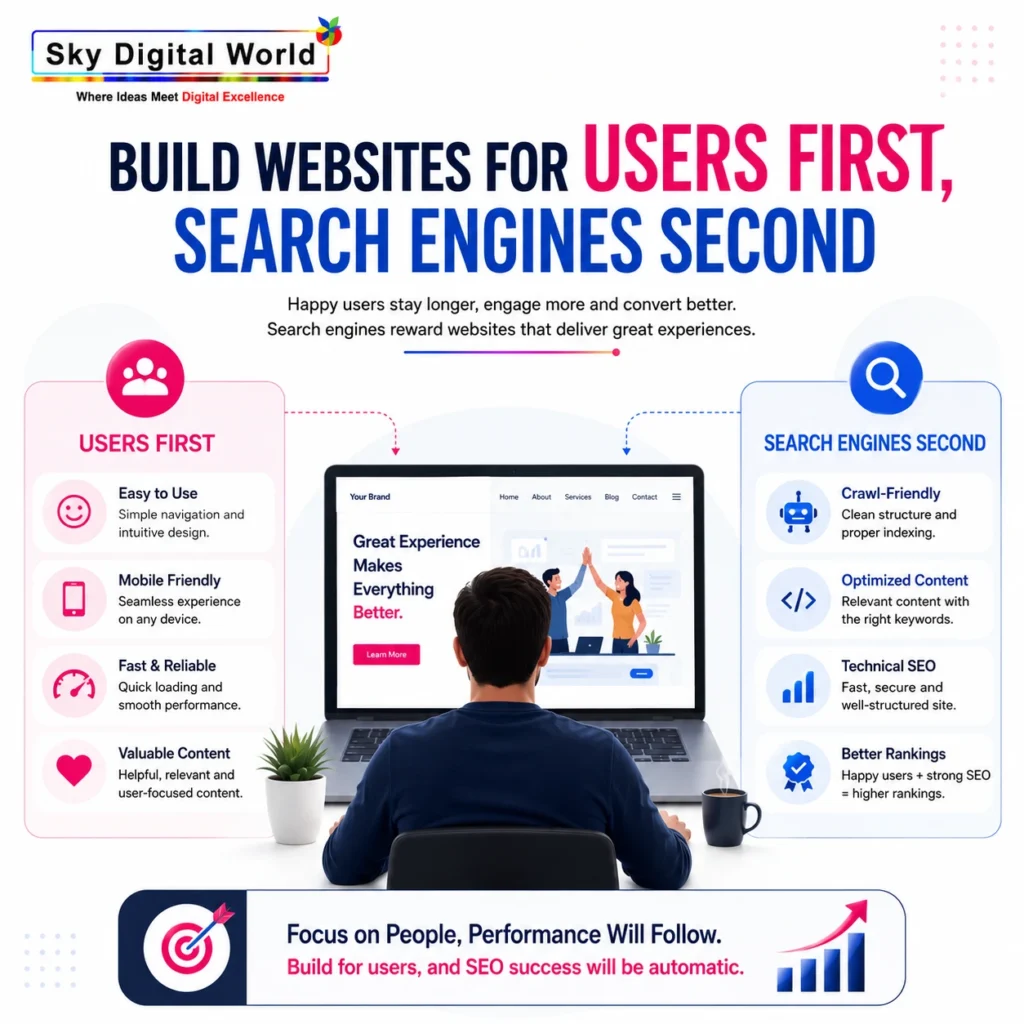
1: Build Websites for Users First, Search Engines Second
Google’s AI systems now understand user behavior better than ever.
Instead of asking:
“How can I rank?”
Ask:
“How can I create the best possible experience?”
Focus on:
- Faster loading
- Simple navigation
- Easy readability
- Mobile responsiveness
- Helpful content
- Accessibility
Great user experience naturally supports better SEO performance.
2: Core Web Vitals Are Non-Negotiable
Google continues to use Core Web Vitals as a major ranking signal.
Your website should deliver:
Largest Contentful Paint (LCP)
Loads within 2.5 seconds.
Interaction to Next Paint (INP)
Responds quickly to user interactions.
Cumulative Layout Shift (CLS)
Maintains a stable layout without unexpected movement.
Improving these metrics enhances both rankings and customer satisfaction.
3: AI-Friendly Website Structure
AI-powered search engines don’t just scan keywords—they interpret relationships between topics.
Your website should include:
- Clear heading hierarchy (H1–H3)
- Organized categories
- Topic clusters
- Internal linking
- Descriptive URLs
- Logical navigation
A well-structured site helps AI understand your expertise.
4: Optimize Crawl Budget
Google allocates a limited crawl budget to every website.
Avoid wasting it on:
- Duplicate pages
- Broken links
- Redirect chains
- Thin content
- Parameter URLs
- Archived pages
Keep your crawl path clean so Google indexes your most valuable pages.
5: Schema Markup Is Essential
Structured data helps search engines understand your content.
Important schema types include:
- Organization
- Local Business
- Article
- FAQ
- Breadcrumb
- Product
- Review
- Service
Schema increases the chances of earning rich search results and AI citations.
6: Mobile-First Is Now Mobile-Only
Google primarily evaluates the mobile version of your website.
Your website should:
- Adapt to all devices
- Load quickly
- Use readable typography
- Have touch-friendly buttons
- Avoid intrusive pop-ups
Mobile usability directly impacts rankings and conversions.
7: Website Speed Is a Competitive Advantage
Every second matters.
Optimize:
- Images (WebP/AVIF)
- CSS & JavaScript
- Browser caching
- CDN
- Hosting
- Lazy loading
A faster website improves engagement, reduces bounce rates, and boosts rankings.
8: Secure Every Page
HTTPS is a standard expectation.
Also ensure:
- SSL certificate
- Secure forms
- Safe payment gateways
- Updated plugins
- Malware protection
Security builds user trust and supports SEO.
9: Fix Technical Errors Regularly
Routine audits should identify:
- 404 errors
- Redirect issues
- Duplicate metadata
- Missing canonical tags
- Broken internal links
- XML sitemap errors
- Robots.txt issues
- Server errors
Small technical problems often become major ranking issues if ignored.
10: Optimize for AI Search Engines
Modern SEO goes beyond traditional rankings.
Prepare for AI-powered search by creating:
- Clear answers
- Well-structured paragraphs
- FAQ sections
- Entity-based content
- Expert insights
- Original research
- Trustworthy sources
AI systems prefer content that is organized, reliable, and easy to summarize.
10: Optimize for AI Search Engines
Modern SEO goes beyond traditional rankings.
Prepare for AI-powered search by creating:
- Clear answers
- Well-structured paragraphs
- FAQ sections
- Entity-based content
- Expert insights
- Original research
- Trustworthy sources
AI systems prefer content that is organized, reliable, and easy to summarize.
11: Strengthen Internal Linking
Internal links help:
- Pass authority
- Improve crawling
- Increase page views
- Build topic relevance
- Guide users
Every important page should be reachable within a few clicks.
12: Keep Your Website Updated
Outdated websites gradually lose authority.
Regularly update:
- Blog content
- Product pages
- Service pages
- Images
- Plugins
- Themes
- Metadata
Fresh content signals relevance to search engines.
Common Technical SEO Mistakes to Avoid
Many websites still struggle because they ignore basic technical issues.
Avoid:
❌ Slow loading pages
❌ Duplicate content
❌ Missing XML sitemap
❌ Poor Core Web Vitals
❌ Broken internal links
❌ Incorrect redirects
❌ Missing structured data
❌ Weak mobile experience
❌ Orphan pages
❌ Large, uncompressed images
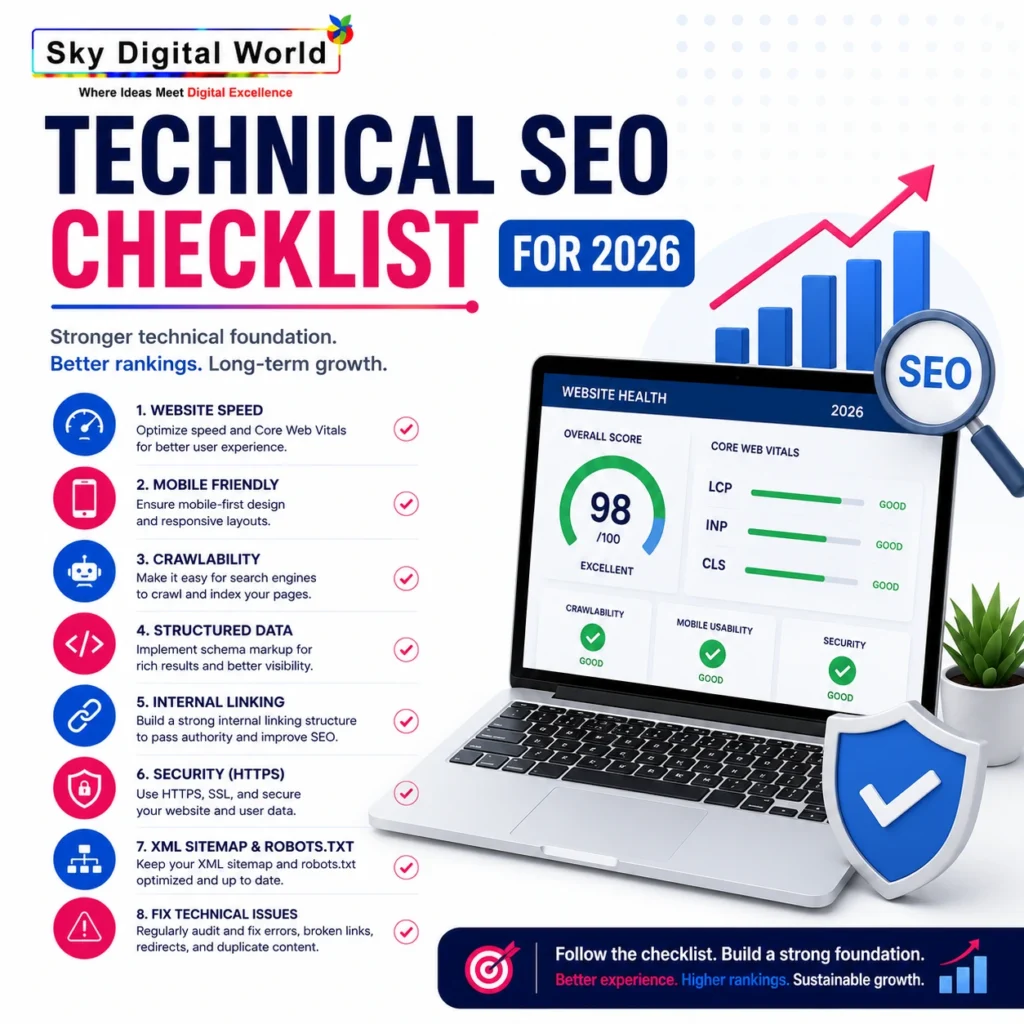
Technical SEO Checklist for 2026
Use this quick checklist to evaluate your website:
✅ HTTPS enabled
✅ Mobile responsive
✅ Core Web Vitals optimized
✅ XML sitemap submitted
✅ Robots.txt configured
✅ Structured data implemented
✅ Fast page speed
✅ Clean URL structure
✅ Optimized images
✅ Internal linking strategy
✅ Canonical tags added
✅ Regular technical audits
Why WordPress Users Need Strong Technical SEO
WordPress powers millions of websites, but its SEO performance depends on proper configuration.
A technically optimized WordPress website should include:
- Lightweight SEO-friendly theme
- Fast hosting environment
- Clean permalink structure
- Optimized images (WebP)
- Caching plugin
- Schema implementation
- XML sitemap generation
- SEO plugin configuration (Yoast SEO or Rank Math)
- Regular plugin updates
- Security optimization
Without proper optimization, even a well-designed WordPress site can experience slow loading speeds, indexing issues, and poor search performance. A trusted Technical SEO Company India ensures your WordPress website follows the latest SEO standards while remaining secure, fast, and AI-ready.
Why Choose Sky Digital World?
At Sky Digital World, we provide advanced Technical SEO solutions that prepare businesses for the future of search.
Our services include:
- Comprehensive Technical SEO Audits
- WordPress Technical SEO Optimization
- Core Web Vitals Improvement
- Website Speed Optimization
- Structured Data & Schema Markup
- Crawl & Index Optimization
- Mobile SEO
- Internal Linking Strategy
- Technical Issue Resolution
- AI Search Optimization
We help businesses create technically strong websites that rank higher, perform better, and deliver exceptional user experiences.
Conclusion
Technical SEO is no longer a one-time setup—it’s an ongoing strategy. As Google’s AI-driven algorithms evolve, businesses that invest in website performance, user experience, structured data, and clean technical architecture will continue to outperform competitors.
Whether you’re running a business website, an eCommerce store, or a WordPress site, following these new technical SEO rules will help you improve visibility, attract qualified traffic, and achieve long-term organic growth.
Partnering with a reliable Technical SEO Company India ensures your website remains optimized for today’s search engines and tomorrow’s AI-powered search experiences.
Frequently Asked Questions (FAQs)
1. What is Technical SEO?
Technical SEO involves optimizing your website’s infrastructure to help search engines crawl, index, and rank your pages more efficiently.
2. Why is Technical SEO important in 2026?
Google now prioritizes website performance, user experience, Core Web Vitals, structured data, and AI-friendly architecture, making technical SEO essential for visibility.
3. Is Technical SEO necessary for WordPress websites?
Yes. WordPress websites require proper optimization, including caching, schema markup, image optimization, clean URLs, and plugin management to achieve the best SEO performance.
4. How often should a technical SEO audit be performed?
A full technical audit is recommended every 3–6 months, with regular monitoring of website performance, indexing, and Core Web Vitals.
5. Why hire a Technical SEO Company India?
A professional Technical SEO Company India provides expert audits, WordPress optimization, performance improvements, and AI-ready SEO strategies that help businesses rank higher and generate more organic traffic.