



Why Was Telegram Blocked in India? Understanding the Reason, Impact, and What Businesses Should Learn
Why Was Telegram Blocked in India? Understanding the Reason, Impact, and What Businesses Should Learn
Telegram Blocked in India: What Happened?
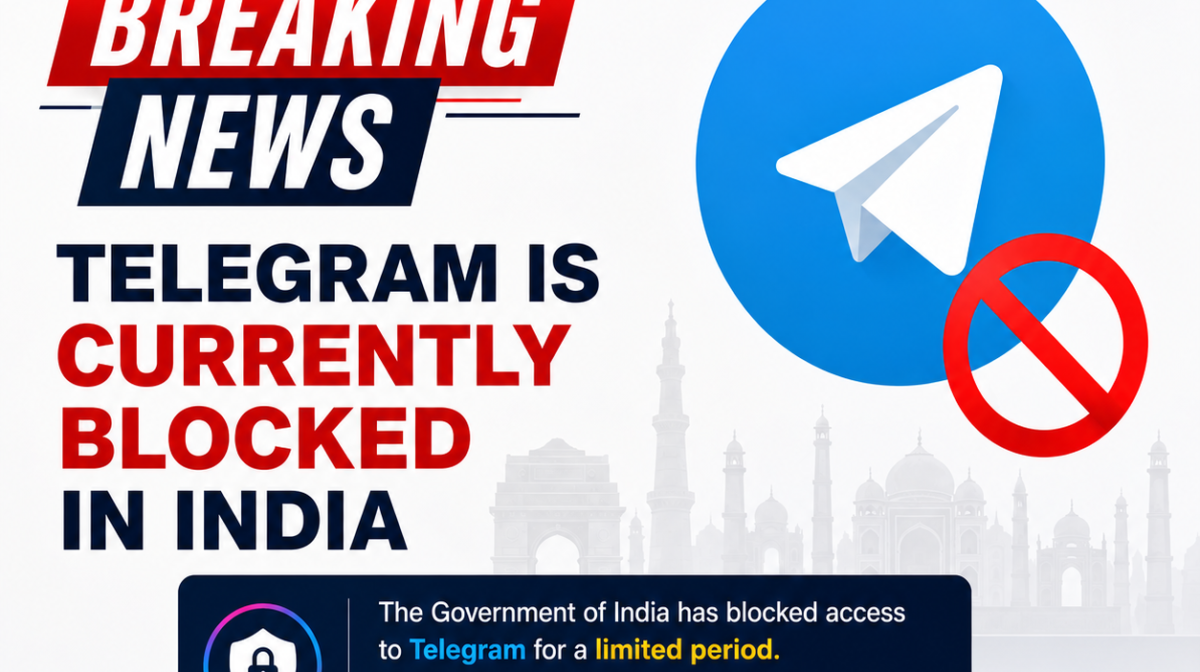
Telegram has become one of the most widely used messaging platforms in India, serving everyone from students and professionals to businesses and content creators. However, recent developments have placed the platform in the spotlight after temporary restrictions were imposed on Telegram access in India.
The move has sparked widespread discussions among internet users, businesses, digital marketers, and technology experts. While many people immediately assumed it was a complete or permanent ban, the situation is more complex.
According to reports, the restriction was introduced as a temporary measure linked to concerns surrounding the NEET-UG 2026 re-examination and alleged misuse of Telegram channels by cheating networks and fraud groups. Authorities claimed that organized groups were using the platform to circulate misleading information and facilitate exam-related fraud. As a result, access restrictions were introduced for a limited period.
Why Did the Government Take This Step?
Government agencies reportedly identified Telegram as one of the platforms being used by groups attempting to exploit students through fake exam papers, false leak claims, and fraudulent schemes connected to the NEET examination process. Authorities argued that temporary restrictions would help reduce the spread of such activities during the re-examination period.
Officials stated that the decision was aimed at maintaining examination integrity and preventing further misuse of digital communication channels during a critical national-level examination process.
Why This News Matters Beyond Telegram
The story is not just about one messaging application.
It highlights a larger issue facing modern businesses and digital communities:
What happens when your primary communication platform suddenly becomes unavailable?
Many companies, educators, creators, and communities rely heavily on a single platform for audience engagement. When access becomes restricted, even temporarily, communication can be disrupted instantly.
The Impact on Businesses
Customer Communication Interruptions
Businesses using Telegram groups or channels for announcements, support, and promotions may struggle to reach customers during restrictions.
Community Engagement Challenges
Many brands spend years building large communities. If users lose access, engagement can drop significantly.
Marketing Campaign Delays
Businesses running launches, webinars, product updates, or educational campaigns through Telegram may need alternative communication channels.
Operational Risks
Organizations that depend entirely on a single platform face higher risks whenever technical issues, policy changes, or government actions affect accessibility.
A Lesson for Digital Marketers
The Telegram situation teaches an important digital marketing principle:
Never Build Your Business on One Platform
Many businesses make the mistake of relying exclusively on:
- Telegram
- YouTube
Any platform can experience outages, restrictions, algorithm changes, or policy updates.
The most successful brands diversify their communication ecosystem.
What Businesses Should Do Now
Build a Strong Website
Your website is your most valuable digital asset because you control it completely.
Create an Email Database
Email remains one of the most reliable marketing channels because it does not depend on social media algorithms.
Use Multiple Communication Channels
Businesses should maintain active audiences across:
- Email Marketing
- YouTube
- SMS Marketing
Implement CRM Systems
Customer Relationship Management systems help businesses retain customer data independently from third-party platforms.
Could Similar Situations Happen Again?
Digital platforms around the world regularly face regulatory scrutiny, legal challenges, and temporary restrictions.
The Telegram incident demonstrates that governments may take action when platforms are believed to be facilitating illegal activities or public-interest concerns.
Whether one agrees with such measures or not, businesses should prepare for uncertainty by maintaining diversified communication strategies.
The Bigger Digital Reality
Modern businesses often spend enormous resources building audiences on rented platforms.
However, social media accounts, messaging apps, and external platforms are ultimately controlled by someone else.
The brands that thrive long-term are those that focus on:
- Website ownership
- Customer databases
- Email marketing
- CRM systems
- Multi-platform engagement
- First-party customer relationships
These assets remain valuable regardless of changes on any individual platform.
Conclusion
The temporary Telegram restriction in India has become more than just a technology story. It serves as a reminder of how dependent businesses and communities have become on third-party platforms.
While authorities cite concerns related to exam fraud and misuse during the NEET re-examination process, the broader lesson is clear: businesses should never rely on a single communication channel.
A strong digital presence is built on owned assets, diversified communication channels, and direct customer relationships. The businesses that prepare for disruption today will be better positioned to grow tomorrow.