





What Makes a Brand Memorable? Brand Identity Guide
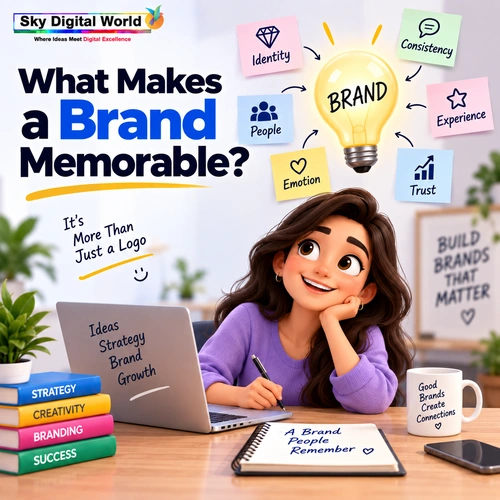
What Makes a Brand Memorable? How to Build a Brand People Recognize, Trust and Remember
Think about a brand you recognize instantly.
You may remember its logo, but chances are that is not the only thing that stayed in your mind. Perhaps it was a distinctive color, a particular tone of voice, an unforgettable customer experience or simply the way the brand consistently made you feel.
That is the difference between having a brand identity and becoming a memorable brand.
Businesses investing in Brand Identity Design Services India should therefore look beyond creating an attractive logo. A strong identity should help customers recognize the business, understand what it represents and remember it when they are ready to make a decision.
So, what makes a brand memorable?
The answer begins with something surprisingly simple: clarity.

1. Memorable Brands Are Easy to Understand
Imagine discovering two companies.
The first says:
“We provide innovative, next-generation, customer-centric solutions.”
The second clearly explains what it does, who it helps and why its approach is useful.
Which one are you more likely to remember?
Usually, the second.
Many businesses try so hard to sound impressive that their message becomes generic. A potential customer should not have to decode your website to understand your business.
A clear brand should answer:
Who are you?
What do you offer?
Who do you serve?
What makes your approach distinctive?
Clarity makes everything else in branding easier.
2. A Distinctive Visual Identity Creates Recognition
Visual identity is often the first recognizable layer of a brand.
It can include:
- Logo
- Color palette
- Typography
- Graphic elements
- Icons
- Photography style
- Illustration style
- Packaging
- Social media templates
- Website design
But consistency does not mean every creative should look exactly the same.
A better objective is to create a recognizable visual system.
Someone scrolling quickly through Instagram, browsing your website or seeing your packaging should gradually begin to recognize your brand even before consciously reading the name.
That is why professional Brand Identity Design Services India should create a complete visual language rather than only delivering a logo file.
A logo identifies you. A visual system helps people recognize you repeatedly.
3. Consistency Turns Recognition Into Memory
Imagine a business using sophisticated minimal branding on its website, playful cartoon graphics on Instagram, aggressive sales language in advertisements and completely different colors in its brochures.
Each piece might look good individually.
Together, they can feel like four different brands.
Consistency creates familiarity.
Your brand should feel connected across:
Website → Social Media → Ads → Packaging → Email → Presentations → Offline Material
This does not require copying the exact same layout everywhere.
It means maintaining recognizable elements such as:
Colors + Typography + Voice + Messaging + Visual Style + Brand Personality
The more consistently customers encounter those elements, the easier the brand can become to recognize.
4. Your Brand Needs a Personality
If your logo disappeared from a social media caption, could customers still recognize that the message came from your brand?
That is a useful branding test.
A memorable brand develops a recognizable voice and personality.
Depending on the business, that personality might be:
Professional and authoritative.
Friendly and conversational.
Premium and sophisticated.
Energetic and youthful.
Simple and reassuring.
Bold and unconventional.
The important part is not choosing the “coolest” personality.
It is choosing one that fits your audience, offering and positioning.
A financial consultancy and a youth fashion brand probably should not communicate in exactly the same way.
Your brand voice should sound like your business, not like every competitor in the category.
5. Emotion Makes a Brand Easier to Remember
People do not experience brands only through information.
They also experience them emotionally.
A brand might make someone feel:
Confident.
Excited.
Safe.
Inspired.
Understood.
Premium.
Comfortable.
Consider the difference between saying:
“We deliver premium interior design services.”
and communicating an idea such as:
“Come home to a space that finally feels like yours.”
The first explains a service.
The second connects the service with an experience.
Good branding does not manufacture emotion artificially. It understands what customers genuinely care about and communicates around that value.
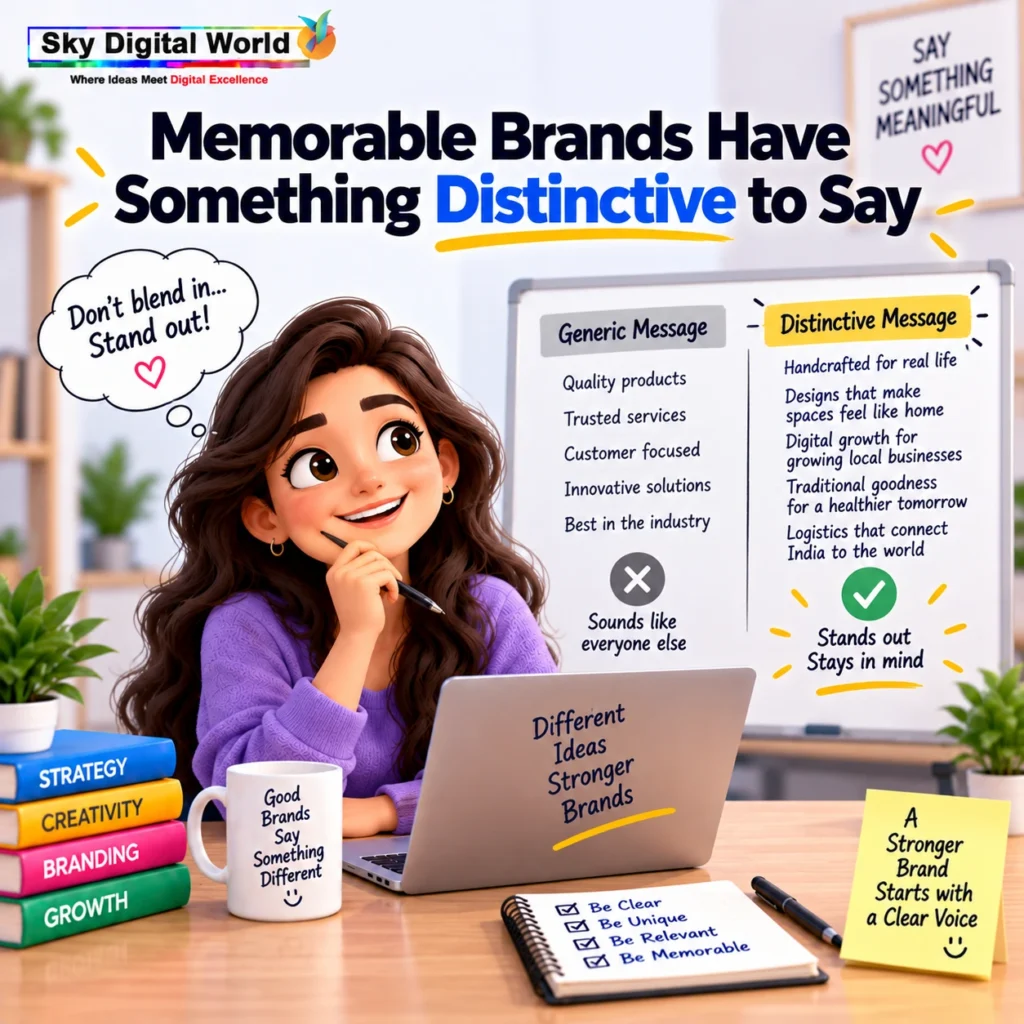
6. Memorable Brands Have Something Distinctive to Say
If you remove the company name from five competitors’ websites and their headlines could be swapped without anyone noticing, there is a positioning problem.
Words such as:
Quality. Trusted. Innovative. Best. Professional. Customer-focused.
are not automatically bad, but they are widely used.
A memorable brand needs more specificity.
Instead of asking:
“How can we sound better?”
ask:
“Why should the right customer remember us instead of another option?”
Your answer might come from your:
- Specialization
- Customer experience
- Product philosophy
- Process
- Expertise
- Origin story
- Audience focus
- Service model
- Design approach
Distinctiveness does not require being bizarre.
It requires giving customers something identifiable to associate with you.
7. Story Gives Meaning to Brand Identity
A logo tells people what your brand looks like.
A story can help explain why the brand exists.
Your story does not need to be dramatic.
Perhaps the founder noticed an unsolved customer problem. Maybe the company was created around a better process. Perhaps a traditional product was redesigned for modern consumers.
A useful brand story can connect:
Problem → Belief → Beginning → Approach → Customer
Instead of writing a long corporate history that nobody reads, focus on the part that helps customers understand your perspective.
For example:
What did you notice?
Why did you start?
What do you believe should be different?
How does that belief influence what customers receive today?
That makes storytelling relevant rather than decorative.
8. Customer Experience Is Part of Branding
You can have exceptional typography, premium packaging and beautiful social media posts.
But if customers experience slow replies, confusing communication or poor service, that experience becomes part of what they remember about the brand.
Branding therefore continues beyond design.
It includes:
How quickly you respond.
How clearly you communicate.
How easy you are to buy from.
How problems are handled.
How your product arrives.
How customers are treated after the sale.
A powerful brand promise becomes more believable when the customer experience supports it.
What you say creates expectations. What you deliver creates reputation.
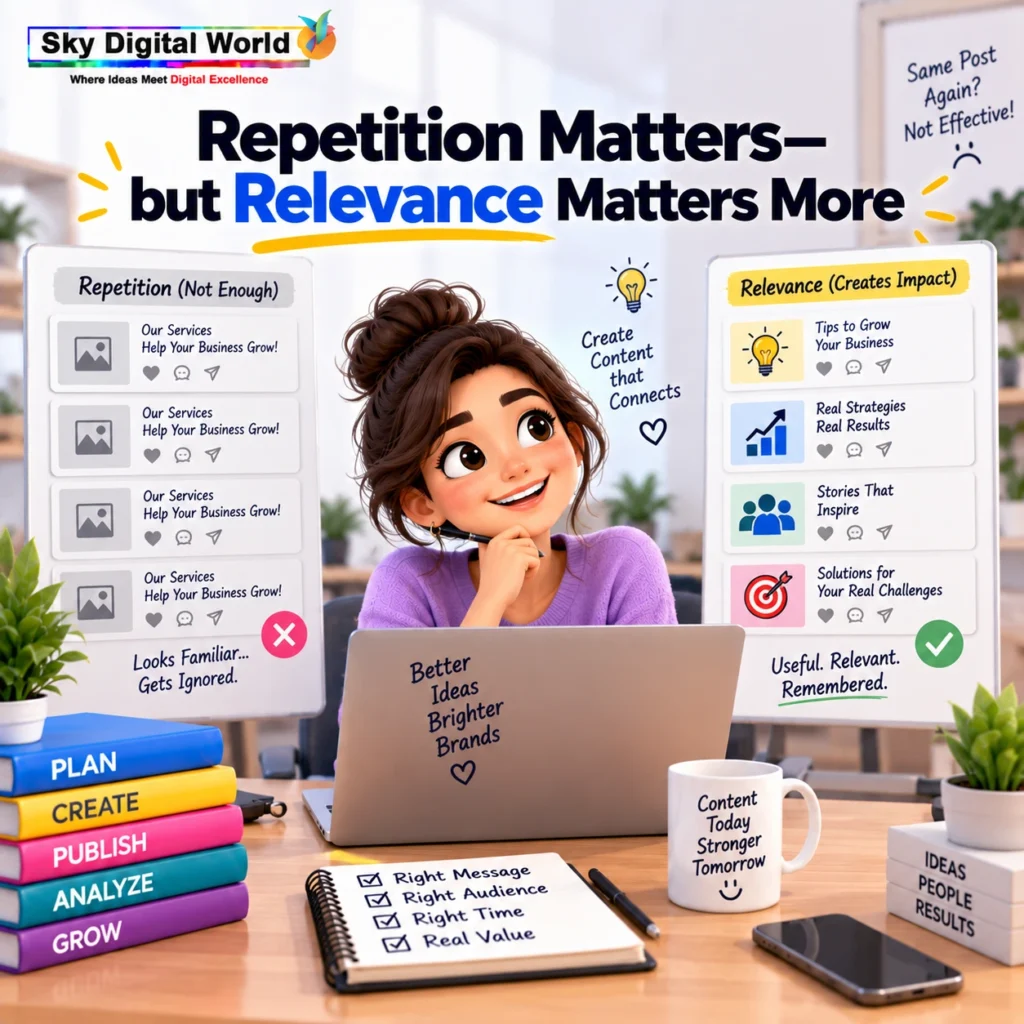
9. Repetition Matters—but Relevance Matters More
Businesses sometimes become bored with their own branding long before customers have seen it enough to recognize it.
They change:
Logo.
Colors.
Tagline.
Campaign style.
Tone.
Then they start again.
Constant reinvention can make recognition harder.
Strategic repetition helps reinforce memory, but simply repeating the same advertisement endlessly is not the answer.
Keep the brand identity consistent while varying the content.
For example, the same brand personality can appear through:
Educational posts, customer stories, reels, product campaigns, blogs, emails and advertisements.
Consistency creates recognition. Variety keeps attention.
10. Memorable Brands Give Customers Reasons to Talk About Them
One of the strongest signals of memorability is simple:
Can customers describe your brand to someone else?
If they say:
“It is basically like every other company in that category.”
your positioning may need work.
But if they can say:
“That’s the company that specializes in…”
“They have that really distinctive…”
“They’re the ones who always…”
“I like how they…”
then your brand has created an association.
This is why businesses should identify a few recognizable assets and ideas they can consistently own.
You do not need customers to remember everything about your business.
You need them to remember the right things.
Brand Awareness vs Brand Memorability
These concepts are related but different.
Brand awareness means someone knows your brand exists.
Brand recognition means they can identify it when they encounter it.
Brand recall means they can bring your brand to mind without seeing it first.
Brand preference means they may consider choosing it over alternatives.
A strong branding strategy attempts to move customers gradually through these stages.
That journey might look like:
See → Recognize → Remember → Trust → Consider → Choose
This is why branding can contribute to marketing performance even when it does not immediately produce a direct sale.
What Should Brand Identity Design Services India Include?
Professional branding should go deeper than creating a logo.
Depending on the business, a complete brand identity project may include:
Brand Strategy – Audience, market, differentiation and positioning.
Brand Messaging – Core message, value proposition and communication themes.
Visual Identity – Logo, colors, typography and supporting graphics.
Brand Voice – How the business should sound across communication.
Brand Guidelines – Rules that help maintain consistency.
Social Media Identity – A recognizable system for digital content.
Website Direction – Translating the brand into an online experience.
Marketing Collateral – Business cards, brochures, presentations, advertisements or packaging where required.
The objective is to create a system that can grow with the business.
A Simple Framework for Building a Memorable Brand
Instead of asking whether your branding “looks good,” evaluate it using six questions:
Clear — Can people quickly understand what you do?
Distinctive — Is there something recognizable about your identity or positioning?
Consistent — Does the brand feel connected across different touchpoints?
Relevant — Does the message matter to your target customer?
Human — Does your communication sound natural rather than generic?
Credible — Does the customer experience support what the brand promises?
Put together:
Clarity + Distinctiveness + Consistency + Relevance + Experience = Stronger Brand Memory
Final Thoughts
So, what makes a brand memorable?
It is rarely one clever tagline, one beautiful logo or one viral campaign.
Memorable brands are built through repeated, connected experiences.
Customers see a recognizable identity. They understand a clear message. They encounter a consistent personality. They receive an experience that matches the promise. Over time, those small interactions create familiarity and trust.
For businesses considering Brand Identity Design Services India, that is the bigger opportunity.
Do not build a brand that only looks professional.
Build one that people can recognize, understand, describe—and remember when it matters.
Faqs
A memorable brand combines clear positioning, distinctive visual elements, consistent communication and a positive customer experience. Customers do not need to remember every detail; they need strong associations that help them recognize and recall the business.
No. A logo is an important identifier, but a complete brand also includes messaging, colors, typography, voice, positioning, visual style and customer experience. These elements should work together consistently.
Consistency helps customers encounter recognizable elements repeatedly across websites, social media, advertisements, packaging and other touchpoints. Over time, this can strengthen familiarity and make the brand easier to recognize.
Start with a clear target audience and positioning. Develop a distinctive but practical visual identity, maintain a consistent voice, communicate a few important ideas repeatedly and ensure the actual customer experience matches the brand promise.
Depending on the project, Brand Identity Design Services India can include brand strategy, positioning, messaging, logo design, color palette, typography, visual elements, brand voice, social media direction, marketing collateral and brand guidelines.