




Digital Marketing Services India: How to Increase Sales
How Can Digital Marketing Increase Sales? A Practical Growth Guide for Businesses
Every business wants more sales, but increasing sales is rarely about simply “running ads” or posting regularly on social media.
A potential customer may discover your business on Google, watch one of your Instagram videos, visit your website, read reviews, leave without purchasing, see a retargeting ad a few days later and finally contact you.
That entire journey is digital marketing at work.
A strong digital strategy connects visibility, trust, customer experience and conversion so that marketing does more than attract attention—it helps move the right people closer to buying.
For businesses considering Digital Marketing Services India, understanding this complete customer journey is more valuable than focusing on a single platform or metric.
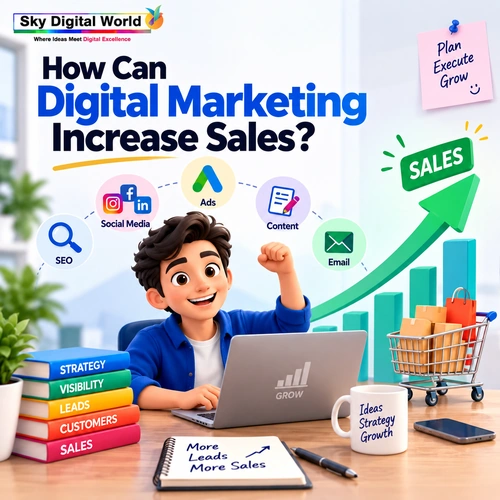
How Can Digital Marketing Increase Sales?
Digital marketing can support sales by helping businesses reach relevant audiences at different stages of their buying journey.
A simple way to understand the process is:
Reach → Engage → Build Trust → Generate Leads → Follow Up → Convert → Retain
If one stage is weak, sales opportunities can be lost.
For example, advertising may generate thousands of visitors, but a confusing website may fail to convert them. Similarly, an excellent website will not produce much business if potential customers cannot discover it.
The strongest strategy connects every stage.
1. Reach Customers Who Are Already Searching
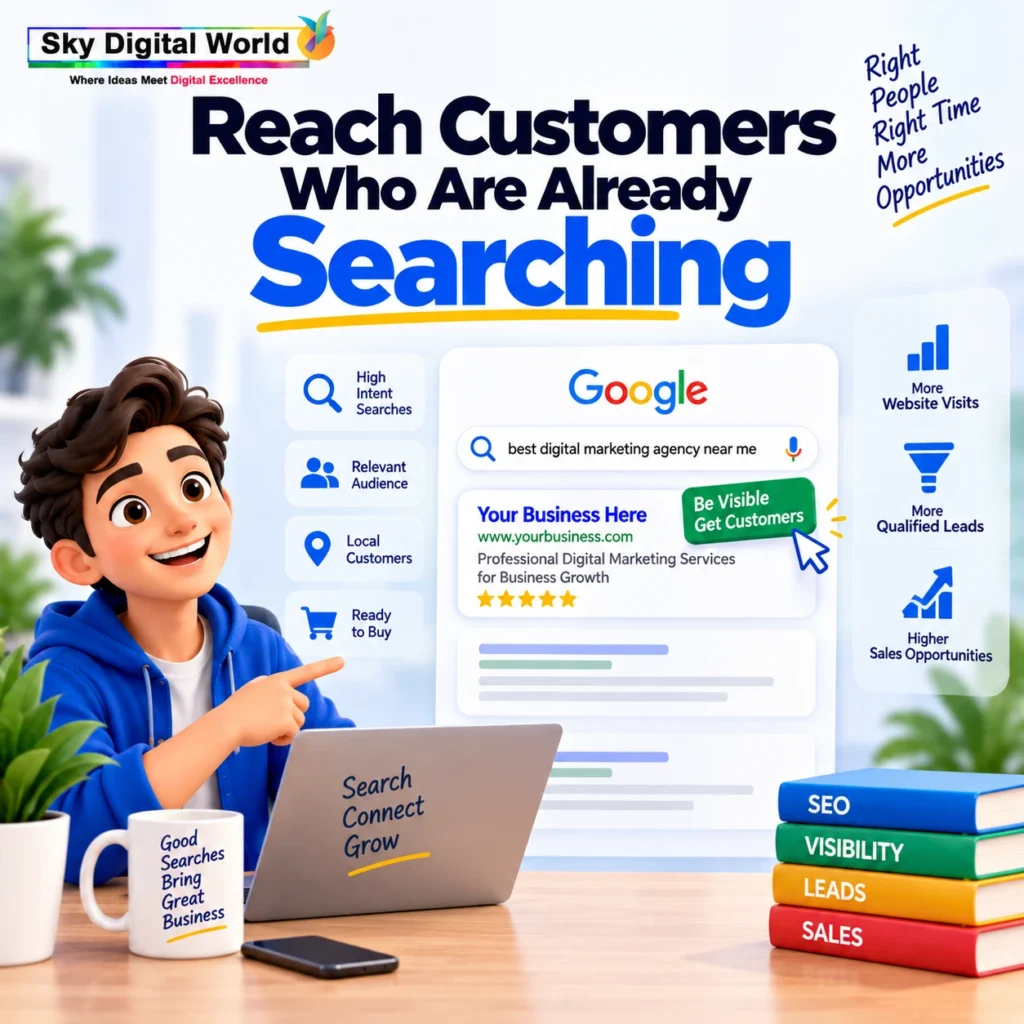
One of the biggest advantages of digital marketing is the ability to connect with people based on what they are actively looking for.
Imagine someone searches:
“Commercial solar installation company near me”
That search shows clear intent.
SEO and search advertising can help relevant businesses appear during this decision-making moment.
This is why Search Engine Optimization (SEO) can contribute to long-term sales growth. Instead of reaching everyone, SEO helps businesses become discoverable when potential customers are researching products, services or solutions.
An effective SEO strategy may include:
- Search-intent and keyword research
- Technical SEO
- Service and product page optimization
- Helpful content
- Local SEO
- Internal linking
- Website performance improvements
- Authority building
The objective should not simply be more traffic.
It should be more relevant traffic.
2. Social Media Keeps Your Business Visible
Not every customer is ready to buy the first time they discover a brand.
They may need to see:
Your work → Your expertise → Customer experiences → Product benefits → Your team → Your offers
before they feel comfortable contacting you.
This is where Social Media Marketing Services India can support the sales process.
A useful social media strategy should not consist entirely of promotional posts saying:
“Buy Now!”
Instead, create a balanced content mix.
Educational Content
Answer customer questions.
Problem-Solution Content
Show how your product or service solves a real problem.
Trust Content
Use genuine testimonials, reviews, case studies or behind-the-scenes content where appropriate.
Product or Service Content
Explain benefits clearly rather than simply listing features.
Conversion Content
Give customers a clear reason and method to take the next step.
Good social media marketing builds familiarity.
And familiarity can make future buying decisions easier.
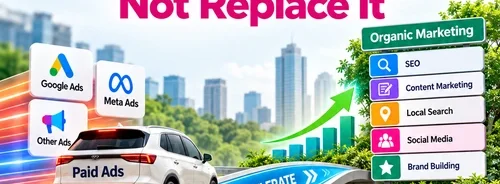
3. Paid Advertising Can Reach High-Potential Audiences Faster
Organic growth takes time.
Paid advertising allows businesses to create targeted visibility more quickly.
Depending on the business, platforms such as Google Ads and Meta Ads can be used to reach people based on factors such as search intent, interests, location or previous interactions.
But successful advertising is not simply:
Spend More Money = Get More Sales
The complete system matters:
Audience + Creative + Offer + Landing Page + Follow-Up + Measurement
If an advertisement generates clicks but no leads, increasing the budget may simply increase wasted spend.
Before scaling an advertising campaign, ask:
- Is the audience relevant?
- Is the message clear?
- Is the offer compelling?
- Does the landing page match the advertisement?
- Is the call-to-action obvious?
- Is the lead form unnecessarily complicated?
- Are leads followed up quickly?
- Are conversions being tracked correctly?
Effective Performance Marketing Services India should focus on business outcomes, not vanity metrics alone.
4. A Better Website Can Turn More Visitors Into Customers
Your website is often where marketing efforts come together.
SEO sends visitors there.
Ads send visitors there.
Social media sends visitors there.
Email campaigns send visitors there.
But what happens after they arrive?
A potential customer should quickly understand:
Who are you?
What do you offer?
Who is it for?
Why should they trust you?
What should they do next?
If these answers are difficult to find, visitors may leave.
A conversion-focused website should provide clear messaging, easy navigation, strong calls to action, useful information, mobile-friendly design, fast performance and genuine trust signals.
Instead of designing a website only to look impressive, design it to help customers make decisions.
5. Content Marketing Builds Trust Before the Sales Conversation
Customers often research before making a purchase—especially for expensive, technical or long-term services.
Helpful content allows your business to participate in that research process.
For example, instead of publishing:
“We Are the Best Digital Marketing Agency”
a digital agency could create:
- How Much Should a Business Spend on Digital Marketing?
- SEO vs Google Ads: Which Is Better for Your Business?
- Why Are Meta Ads Generating Leads but Not Sales?
- How Long Does SEO Take to Show Results?
- How Can a Website Generate More Leads?
These topics address actual customer concerns.
Strong Content Marketing Services India should help audiences understand problems, compare options and make better-informed decisions.
When customers eventually contact the business, they may already understand its expertise.
That can make the sales conversation more productive.
6. Retargeting Can Reconnect With Interested Visitors
Not every visitor converts during the first interaction.
Someone may view a product, visit a service page or start exploring your website and then leave.
They may have been:
Busy.
Comparing alternatives.
Waiting for approval.
Not ready to purchase.
Retargeting allows businesses to reconnect with some of these audiences through advertising, subject to platform capabilities and applicable privacy requirements.
The message can then be more relevant to where that customer is in the journey.
For example:
First interaction: Introduce the solution.
Later interaction: Explain the benefits.
Next interaction: Show customer proof.
Conversion stage: Present a suitable call to action.
Instead of repeatedly showing the exact same advertisement, build a journey.
7. Email and WhatsApp Can Improve Follow-Up
Lead generation is only half the job.
Lead follow-up can determine whether marketing investment becomes revenue.
Suppose two companies receive the same 100 enquiries.
Company A follows up consistently, shares useful information and maintains communication.
Company B responds once and forgets the lead.
Their final sales numbers can be very different—even if both marketing campaigns generated identical leads.
Email and permission-based WhatsApp communication can support:
- Lead nurturing
- Product updates
- Appointment reminders
- Offers
- Educational information
- Abandoned enquiries
- Existing customer engagement
- Repeat purchases
Automation can make this process more efficient, but communication should still feel relevant and human.
Customers should not feel like they are receiving endless automated spam.
8. Digital Marketing Makes Sales Performance More Measurable
Traditional marketing can sometimes make attribution difficult.
Digital marketing provides businesses with more measurable signals.
Depending on the channel and tracking setup, you can analyze:
Impressions → Clicks → Website Visits → Leads → Qualified Leads → Sales → Revenue
This helps businesses identify where opportunities are being lost.
For example:
High impressions + low clicks
The message or targeting may need improvement.
High clicks + low leads
The landing page, offer or audience may be the problem.
High leads + low sales
Lead quality, pricing, qualification or sales follow-up may need investigation.
Good sales + poor repeat purchases
Customer retention may deserve more attention.
Marketing becomes stronger when decisions are based on meaningful data rather than assumptions.
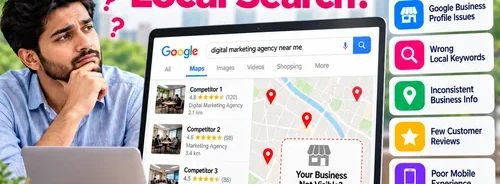
9. Local Digital Marketing Can Generate Nearby Customers
For local businesses, visibility in the right geographical area can be more valuable than reaching a massive national audience.
A salon in Indore does not necessarily need one million website visitors from across India.
It needs relevant potential customers within the areas it can realistically serve.
A local digital marketing strategy can combine:
Local SEO + Google Business Profile + Reviews + Location Pages + Local Content + Geo-Targeted Ads + Social Media
This can work particularly well for businesses such as:
- Clinics
- Salons
- Restaurants
- Real estate businesses
- Local retailers
- Home services
- Professional service providers
- Training institutes
The objective is simple:
Be visible when nearby customers need what you provide.
10. Digital Marketing Can Increase Repeat Sales
Growth does not always require finding a completely new customer.
Existing customers already know your business.
With appropriate communication, businesses can use digital channels to support:
- Repeat purchases
- Product recommendations
- Service renewals
- New launches
- Loyalty programs
- Educational updates
- Customer support
- Referral opportunities
For e-commerce and repeat-purchase businesses, customer retention can become an important part of the digital growth strategy.
Marketing should therefore continue after the first sale.
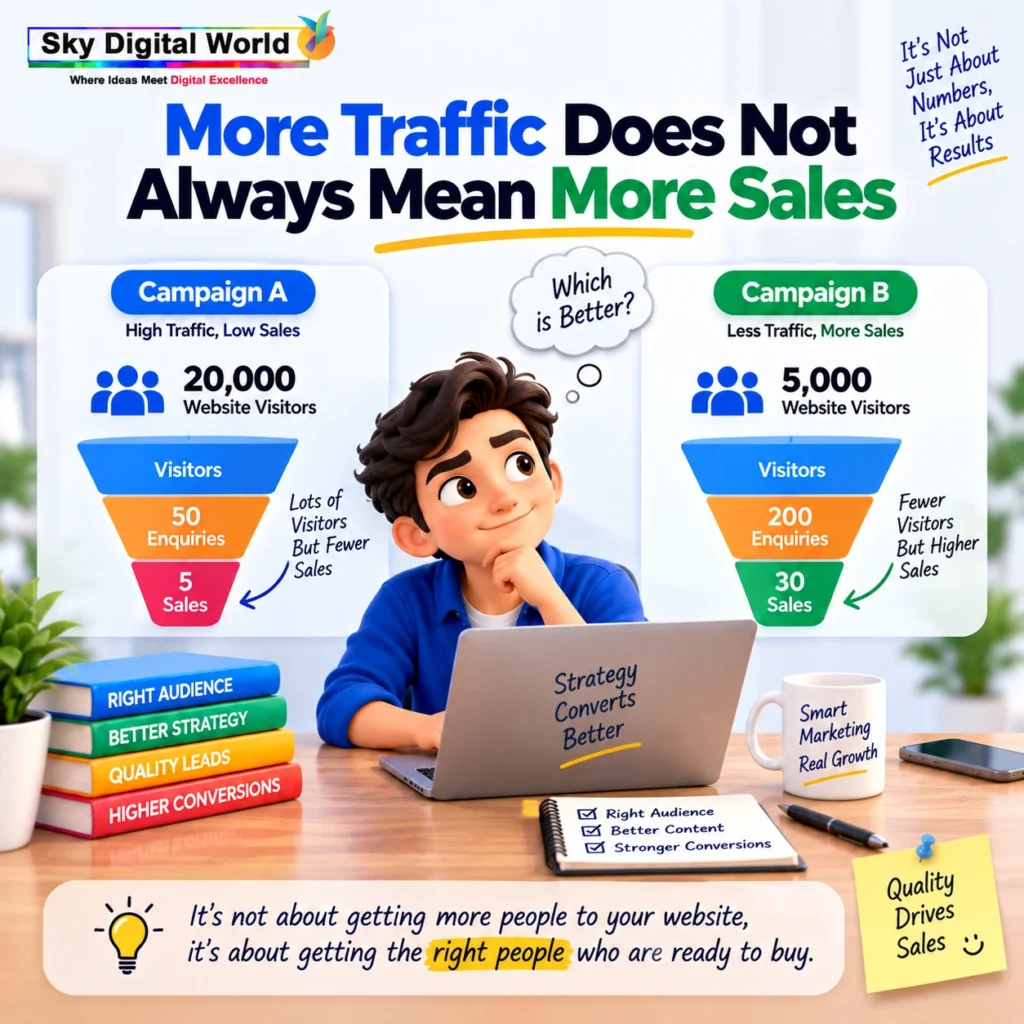
More Traffic Does Not Always Mean More Sales
This is one of the most important lessons in digital marketing.
Imagine:
Campaign A: 20,000 visitors → 50 enquiries → 5 sales
Campaign B: 5,000 visitors → 200 enquiries → 30 sales
Campaign A has significantly more traffic.
Campaign B may have significantly more business value.
This is why businesses should stop treating website traffic, followers, likes and impressions as final objectives.
They are indicators.
The real questions are:
Are we attracting the right audience?
Are they becoming qualified leads?
Are qualified leads becoming customers?
What Should Digital Marketing Services India Include?
A complete digital growth strategy may combine:
SEO – Build long-term organic visibility.
Social Media Marketing – Create awareness, engagement and familiarity.
Google & Meta Ads – Reach targeted audiences and generate opportunities.
Content Marketing – Educate customers and demonstrate expertise.
Website Optimization – Convert more visitors into enquiries.
Local SEO – Capture location-based demand.
Retargeting – Reconnect with interested audiences.
Email & WhatsApp Marketing – Nurture and follow up with leads.
Analytics & Conversion Tracking – Understand what generates meaningful results.
However, not every business needs every channel.
The right combination depends on the business model, audience, sales cycle, location, competition and budget.
A Better Digital Marketing Framework for Sales Growth
Instead of running disconnected campaigns, use this framework:
Attract
Reach people with genuine potential to become customers.
Educate
Help them understand their problem and available solutions.
Build Trust
Demonstrate expertise, credibility and consistency.
Convert
Make the next step simple and clear.
Follow Up
Stay connected with prospects who are not ready immediately.
Retain
Continue delivering value after the first purchase.
Measure
Identify what is generating leads, customers and revenue.
This creates a connected customer journey:
Discovery → Interest → Trust → Enquiry → Sale → Loyalty → Growth
Final Thoughts
So, how can digital marketing increase sales?
Not by simply posting more often, buying more clicks or chasing more followers.
Digital marketing becomes valuable when it connects the right customer with the right message at the right stage of their decision-making journey.
A strong strategy combines:
SEO + Content + Social Media + Paid Advertising + Website Experience + Retargeting + Follow-Up + Analytics
The goal should not be to generate the biggest numbers on a marketing report.
It should be to create a digital system that helps your business become easier to discover, understand, trust and choose.
Because successful digital marketing does not end when someone clicks an advertisement or visits your website.
It succeeds when visibility turns into opportunity—and opportunity turns into measurable business growth.
provide the faq and provide the blog details
FAQs
1. How does digital marketing help increase sales?
Digital marketing helps businesses reach relevant audiences, build trust, generate leads and guide potential customers toward a purchase. SEO, social media, paid ads, content marketing, retargeting and follow-up work best when they are connected as part of one customer journey.
2. Which digital marketing strategy is best for increasing sales?
There is no single strategy that works best for every business. SEO can support long-term organic visibility, paid ads can generate targeted reach faster, social media can build awareness and trust, while email, WhatsApp and retargeting can nurture interested prospects. The right combination depends on the audience, budget, sales cycle and business goals.
3. Can digital marketing increase sales for small businesses?
Yes. Small businesses can use local SEO, Google Business Profile, social media, targeted advertising and useful content to reach customers without necessarily competing for a nationwide audience. The focus should be on attracting relevant potential customers rather than simply generating maximum traffic.
4. How long does digital marketing take to generate sales?
The timeline varies by channel and business. Paid campaigns may begin generating enquiries relatively quickly, while SEO and organic content usually require more time to develop. Sales results also depend on the offer, competition, website experience, pricing, lead quality and follow-up process.
5. How should a business measure digital marketing success?
Businesses should look beyond followers, impressions and website traffic. Important metrics can include qualified leads, conversion rate, cost per lead, customer acquisition cost, sales, revenue and repeat customers. The most useful metrics depend on the campaign objective and the quality of the available tracking.