




How Can Businesses Build a Useful Post-Purchase Customer Experience?
How Can Businesses Build a Useful Post-Purchase Customer Experience?
A customer visits your website, explores your products, completes the payment, and successfully places an order.
For many businesses, this is where the marketing journey ends. But for the customer, another important journey has just begun.
They want to know when their order will arrive, how to use the product, whom to contact for assistance, and what happens if something goes wrong.
The way a business handles these questions can influence whether a customer returns for another purchase or chooses a competitor next time.
A well-planned post-purchase customer experience helps businesses build stronger relationships, improve customer satisfaction, and encourage repeat purchases.
What Is a Post-Purchase Customer Experience?
The post-purchase customer experience includes every interaction between a business and its customers after an order has been placed.
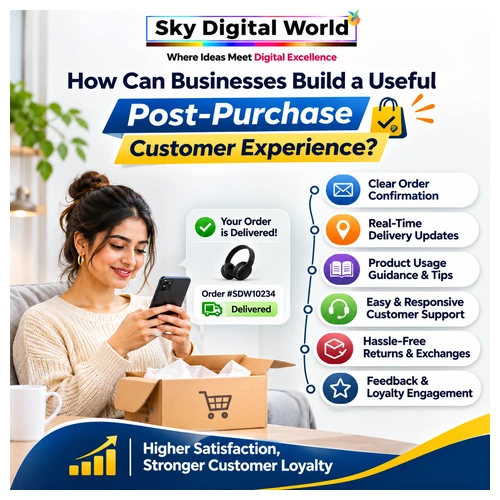
It begins with order confirmation and continues through delivery, product usage, customer support, feedback, and future purchases.
For example, when someone purchases a coffee machine from an online store, their experience does not end with receiving the product.
They may need installation instructions, cleaning guidance, warranty information, or assistance with operating the machine.
Providing this information at the right time makes the overall experience more useful.
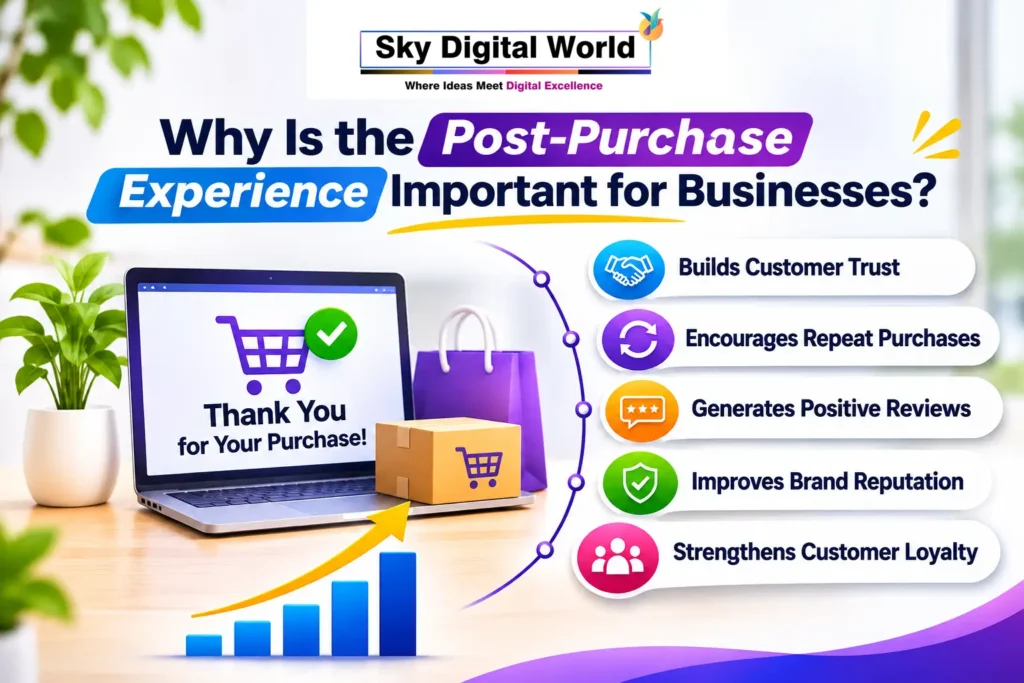
Why Is the Post-Purchase Experience Important for Businesses?
Businesses often invest significant resources in attracting new customers through advertising, SEO, and social media marketing.
However, retaining existing customers deserves equal attention.
A positive post-purchase experience can help businesses:
- Build long-term customer trust.
- Encourage repeat purchases.
- Reduce unnecessary customer support enquiries.
- Generate genuine customer reviews.
- Improve brand reputation.
- Strengthen customer loyalty.
Customers may forget the advertisement that encouraged them to purchase, but they often remember how a business treated them afterwards.
1. Send Clear and Helpful Order Confirmation Messages
The first communication after a purchase should reassure customers that their order has been successfully received.
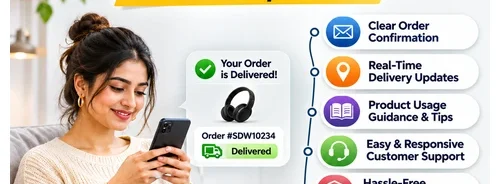
A useful order confirmation should include the order number, purchased products, payment status, delivery address, estimated delivery date, and customer support information.
Instead of sending a generic message saying “Thank you for shopping,” provide information customers can refer to whenever needed.
Businesses can deliver order confirmations through email, SMS, or WhatsApp, depending on customer preferences and applicable messaging requirements.
2. Keep Customers Updated Throughout Delivery
Customers should not have to contact your business repeatedly to find out where their orders are.
Proactive delivery updates can reduce uncertainty and make the shopping experience more convenient.
Order Stage | Recommended Communication |
Order Confirmed | Order details and estimated delivery |
Order Packed | Confirmation that the order is ready |
Order Shipped | Shipment details and tracking link |
Out for Delivery | Expected delivery notification |
Order Delivered | Delivery confirmation and support details |
If a shipment is delayed, inform the customer and provide an updated estimate rather than waiting for a complaint.
3. Help Customers Understand How to Use Their Products
Receiving a product is not the same as knowing how to use it effectively.
Businesses can improve customer satisfaction by providing useful product guidance after delivery.
For example, a skincare brand could explain how to incorporate a product into a daily routine. A furniture company could provide assembly instructions, while an industrial equipment supplier could share installation and maintenance guidelines.
Useful post-purchase content may include:
- Product demonstration videos.
- Getting-started guides.
- Installation instructions.
- Product care recommendations.
- Frequently asked questions.
This approach helps customers get more value from their purchases while reducing avoidable confusion.
4. Make Customer Support Easy to Access
Imagine purchasing a product online and discovering a problem after delivery. You visit the website but cannot find a contact number or customer support email.
Such experiences can quickly damage customer confidence.
Businesses should provide accessible support channels, including relevant contact information, WhatsApp assistance, email support, and help centre resources.
Clearly communicate support hours and expected response times.
An automated chatbot can answer common questions, but customers should also have a way to reach a human representative when necessary.
5. Create a Simple Return and Exchange Process
Not every purchase will meet customer expectations. Products may arrive damaged, clothing may not fit, or customers may receive an incorrect item.
A transparent return and exchange process can prevent these situations from becoming negative brand experiences.
Explain return eligibility, applicable timelines, refund methods, exchange conditions, and how customers can submit requests.
Businesses should make these policies easy to find and avoid unnecessary complications.
Handling a genuine customer concern professionally can help preserve a relationship even when the original purchase did not go as planned.
6. Ask for Customer Feedback at the Right Time
Requesting a review immediately after order confirmation is unlikely to produce meaningful feedback because the customer has not yet used the product.
Instead, allow customers enough time to receive and experience their purchases.
The appropriate timing depends on the product category.
For example, feedback about a grocery delivery may be requested shortly after delivery, while a home appliance may require more time.
Ask simple questions about product quality, delivery experience, and overall satisfaction.
Genuine feedback can help businesses identify improvements and understand what customers value most.
7. Recommend Relevant Products Without Being Pushy
Post-purchase communication creates opportunities to introduce complementary products.
However, businesses should focus on relevance rather than sending random promotional messages.
For example:
Previous Purchase | Relevant Recommendation |
Coffee Machine | Coffee Filters or Coffee Beans |
Running Shoes | Sports Socks |
Shampoo | Conditioner |
Smartphone | Protective Case |
Cooking Oil | Complementary Pantry Essentials |
These recommendations should reflect customer needs and purchasing behaviour.
Avoid overwhelming customers with promotional messages immediately after every order.
8. Encourage Repeat Purchases Through Useful Reminders
Some products naturally require replenishment.
Businesses selling groceries, personal care products, office supplies, or other consumables can send timely reminders based on typical usage patterns.
For example, an online grocery store could remind customers to reorder their regular pantry essentials after an appropriate period.
Personalized reminders can make repeat shopping more convenient.
However, customers should have control over their communication preferences, and businesses should respect applicable consent and privacy requirements.
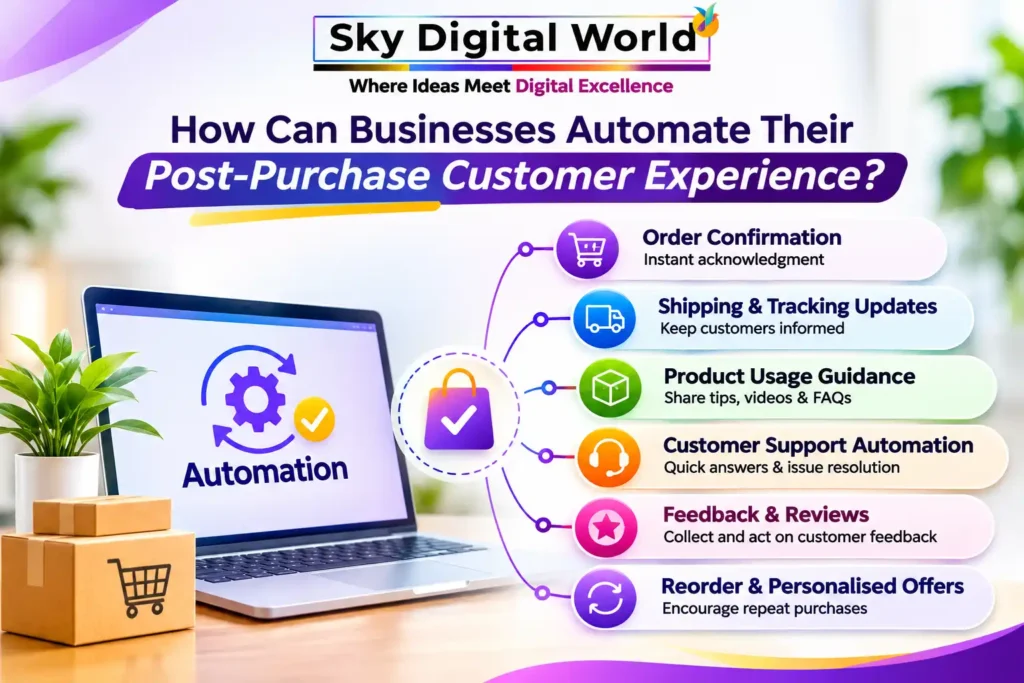
How Can Businesses Automate Their Post-Purchase Customer Experience?
Automation helps businesses communicate consistently without manually contacting every customer.
Shopify stores and other e-commerce businesses can use compatible email marketing platforms, WhatsApp automation tools, CRM systems, and order management integrations.
A simple post-purchase automation workflow could look like this:
Customer Places an Order
Order Confirmation
Immediately after purchase
Shipping & Tracking Updates
Throughout the delivery process
Product Usage Guidance
After successful delivery
Customer Feedback Request
After sufficient product usage
Relevant Recommendations & Reorder Reminders
Based on customer needs and preferences
Automation should make communication more helpful, not less personal. Test workflows regularly and provide human assistance when required.
How Can Businesses Measure Post-Purchase Customer Satisfaction?
Businesses should monitor customer behaviour and feedback to understand whether their post-purchase strategy is effective.
Metric | What It Measures |
Repeat Purchase Rate | Customers returning for another purchase |
Customer Satisfaction Score | Satisfaction with products or services |
Customer Retention Rate | Ability to retain existing customers |
Return and Refund Rate | Frequency of returned or refunded orders |
Customer Lifetime Value | Estimated value of a customer relationship |
Support Resolution Time | Time required to resolve customer concerns |
Review these metrics regularly to identify opportunities for improvement.
Conclusion
A successful business relationship does not end when a customer completes a payment.
From order confirmation and delivery updates to product guidance and customer support, every post-purchase interaction creates an opportunity to strengthen customer trust.
Businesses that focus on providing genuine value after a sale can build more meaningful customer relationships and encourage repeat purchases.
Don’t just focus on getting customers to buy. Give them a reason to come back.
At Sky Digital World, we help businesses develop professional e-commerce websites, Shopify stores, WhatsApp automation workflows, and customer-focused digital marketing strategies.
Want to build a better post-purchase customer experience? Connect with Sky Digital World to create a smarter and more connected customer journey for your business.
Frequently Asked Questions
The goal is to support customers after purchasing, improve satisfaction, build trust, and encourage long-term relationships.
Yes. WhatsApp can provide order confirmations, delivery updates, product guidance, and customer support when used in accordance with applicable messaging policies.
Start with clear order confirmations, timely delivery updates, accessible customer support, and helpful product instructions.
Relevant and helpful post-purchase communication can support customer retention, although results depend on product quality, service, pricing, and customer expectations.
Yes. Shopify stores can use supported automation features and compatible applications to manage customer communication throughout the post-purchase journey.