





Affordable SEO Services in India for Startups & SMEs
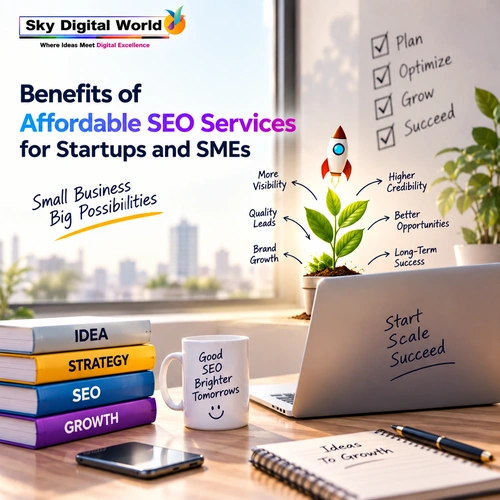
Benefits of Affordable SEO Services for Startups and SMEs
Starting a business is exciting, but getting noticed online can be difficult—especially when established competitors already dominate search results and have much larger marketing budgets.
For startups and small and medium-sized enterprises (SMEs), every marketing rupee needs to work harder. Running paid advertisements can create immediate visibility, but businesses may also want a channel that can build organic discoverability over time.
This is where Affordable SEO Services in India can help.
Affordable SEO is not about choosing the cheapest package available. It is about identifying the SEO activities that matter most to your business and investing your available budget strategically. When done properly, SEO can help startups improve search visibility, attract relevant audiences, strengthen credibility and create more opportunities for enquiries and sales.
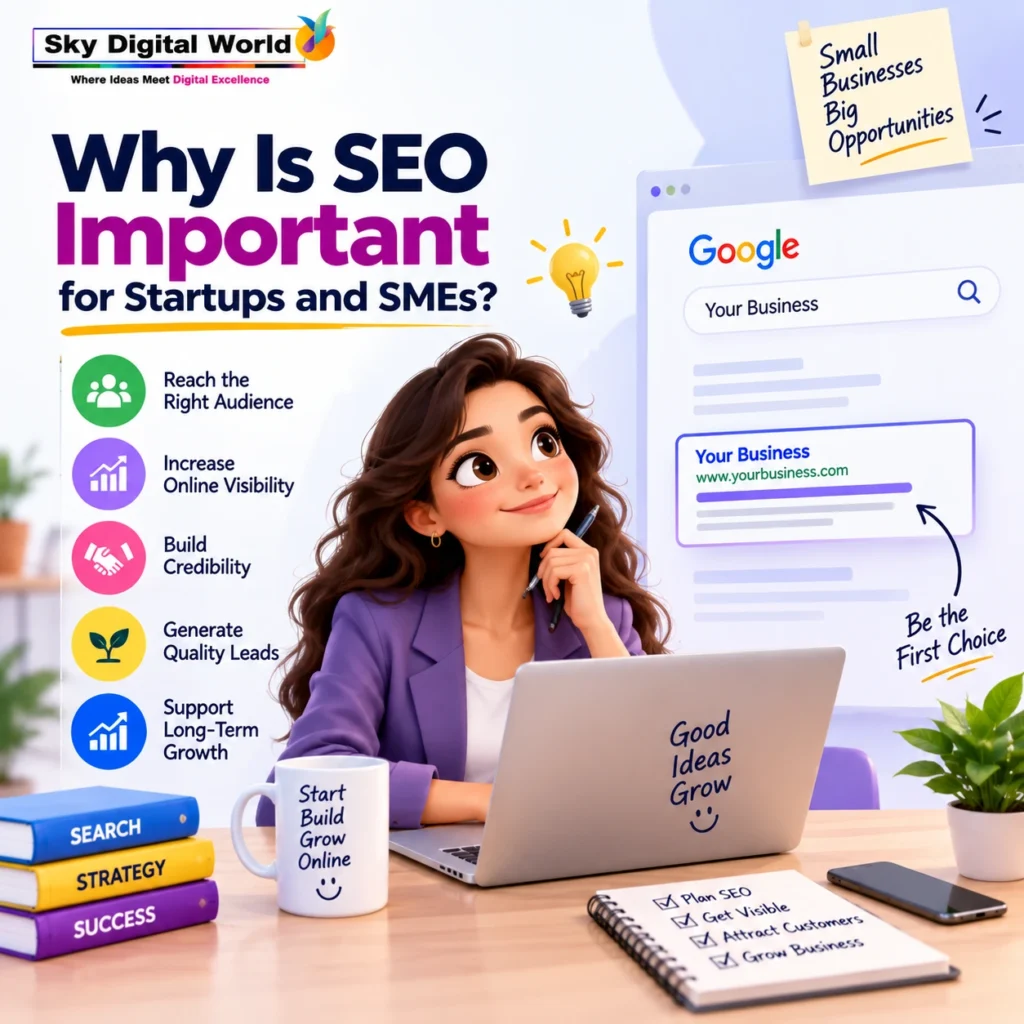
Why Is SEO Important for Startups and SMEs?
A potential customer may already be searching for the product or service your business provides.
The challenge is whether they can find you.
Imagine a startup providing accounting software. A business owner searches Google for “accounting software for small business,” but the startup’s website does not appear prominently. The customer may discover a competitor instead.
SEO helps reduce this visibility gap.
Instead of trying to reach everyone, a strong SEO strategy focuses on searches that are relevant to your products, services, locations and customers.
For a growing business, that can turn Google from simply a search engine into an important customer discovery channel.
1. Reach Customers Who Are Already Searching
One of SEO’s biggest advantages is search intent.
When someone searches for “website development company for small business,” “industrial supplier near me,” or “best CRM for startups,” they are expressing an existing need.
SEO helps your business appear during these moments.
This is particularly valuable for startups because you do not always need to create demand from zero. Instead, you can position your website in front of people already researching a problem, comparing solutions or looking for a provider.
Good keyword research therefore goes beyond search volume.
It considers:
Keyword → Search Intent → Business Relevance → Competition → Conversion Opportunity
The objective is not simply getting more clicks. It is attracting visitors who have a genuine reason to interact with your business.
2. Build Visibility Without Depending Entirely on Ads
Paid advertising can be extremely useful for startups because it can generate visibility quickly.
However, advertising generally requires ongoing spending to maintain paid exposure.
SEO works differently.
A well-optimized service page or genuinely useful article can continue earning organic visibility after publication, although rankings can change and should never be treated as permanent.
This makes SEO and paid advertising complementary rather than competing strategies.
Paid Ads → Faster Visibility
SEO → Longer-Term Organic Visibility
A startup can use advertising for immediate campaigns while simultaneously developing its organic presence through SEO.
Over time, this creates a more diversified digital marketing strategy.
3. Compete Through Relevance Instead of Budget
Startups often assume they cannot compete with established brands in Google.
They may not need to compete with them everywhere.
Instead of targeting only broad, highly competitive keywords, SMEs can identify more specific opportunities.
For example, rather than focusing exclusively on:
a business might target searches around a specific service, industry, customer type, problem or location.
These more specific searches can sometimes reveal stronger commercial intent.
Professional Affordable SEO Services in India should therefore help businesses identify realistic opportunities instead of chasing high-volume keywords simply because they look impressive in a report.
A smaller business can become competitive by being more specific, more relevant and more useful.
4. Strengthen Local Visibility
For SMEs serving specific cities or regions, local SEO can be particularly important.
Consider a salon, clinic, real estate company, restaurant, consultant or repair service.
Its customers usually do not need a provider hundreds of kilometres away. They need a relevant business within their service area.
Local SEO can involve improving:
- Google Business Profile information
- Location and service pages
- Business details across relevant platforms
- Local content
- Customer reviews and reputation
- Website location signals
The goal is not nationwide traffic when the business serves only a limited area.
It is visibility among the people the business can actually serve.
That makes local SEO a practical component of affordable SEO for many SMEs.
5. Build Trust Before Customers Contact You
Search visibility gets attention, but customers still need a reason to trust the business.
Before contacting an unfamiliar company, people may look at its website, services, reviews, About page, portfolio, FAQs and other information.
A weak digital presence can create hesitation.
SEO can indirectly encourage businesses to strengthen these areas by developing clearer service pages, useful information and better website structure.
Think of the journey as:
Search → Discover → Understand → Trust → Contact
Your website should answer the questions customers naturally have before they enquire.
For startups without strong brand recognition, this can be especially important.
6. Turn Your Expertise Into Searchable Content
Small businesses often possess valuable knowledge that never reaches the website.
Your sales team knows what customers ask.
Your support team knows what problems customers face.
Your founder knows what buyers misunderstand.
These insights can become excellent SEO content.
Instead of publishing generic articles simply to keep a blog active, create content around genuine customer questions.
For example:
How much does this service cost?
Which option is suitable for a small business?
How long will implementation take?
What should customers check before choosing a provider?
What are the common mistakes?
Useful content can attract relevant searches while demonstrating expertise.
The objective should always be to help first and optimize naturally.
7. Improve the Overall Website Experience
SEO is not limited to keywords and blog posts.
A proper SEO audit may uncover problems such as slow loading pages, poor mobile usability, broken links, confusing navigation, duplicate pages, weak internal linking or important pages that search engines cannot easily discover.
These problems can affect both search visibility and customer experience.
For example, attracting a visitor through Google is not very useful if the website takes too long to load or the visitor cannot find the enquiry button.
Technical SEO, content and user experience should therefore support each other.
Better Website → Better Experience → Better Opportunity to Convert
8. Generate Better Opportunities, Not Just More Traffic
Traffic alone is not the ultimate goal of SEO.
Imagine Website A receives 10,000 monthly organic visitors but generates very few enquiries.
Website B receives 1,500 highly relevant visitors and consistently generates qualified leads.
Which one has the stronger business outcome?
For most startups, Website B.
This is why affordable SEO should focus on relevant traffic and conversions rather than vanity metrics.
Important pages should have clear next steps such as:
Request a Quote
Book a Consultation
Schedule a Demo
Call Now
Send an Enquiry
The real SEO journey should look like:
Visibility → Relevant Traffic → Engagement → Trust → Lead → Customer
9. Learn More About What Customers Want
SEO can also provide valuable market intelligence.
Search data may reveal which services people are interested in, what terminology customers use, which problems they frequently search for and which locations generate demand.
Businesses can use these insights beyond SEO.
They may influence advertising campaigns, social media content, website messaging, sales conversations and even future service offerings.
For a startup still learning about its market, this information can be extremely useful.
Affordable SEO vs Cheap SEO: Understand the Difference
These two terms should not be confused.
Cheap SEO often focuses on maximum quantity at minimum cost—mass-produced content, irrelevant backlinks, keyword stuffing or unrealistic ranking promises.
Affordable SEO focuses on priorities.
If the budget is limited, the strategy might begin with the most important technical fixes, commercial pages, local visibility and a focused content plan.
Then the business can expand its SEO investment as results and opportunities develop.
A simple approach is:
Audit → Prioritize → Fix → Optimize → Create → Measure → Improve
This makes limited budgets more purposeful.
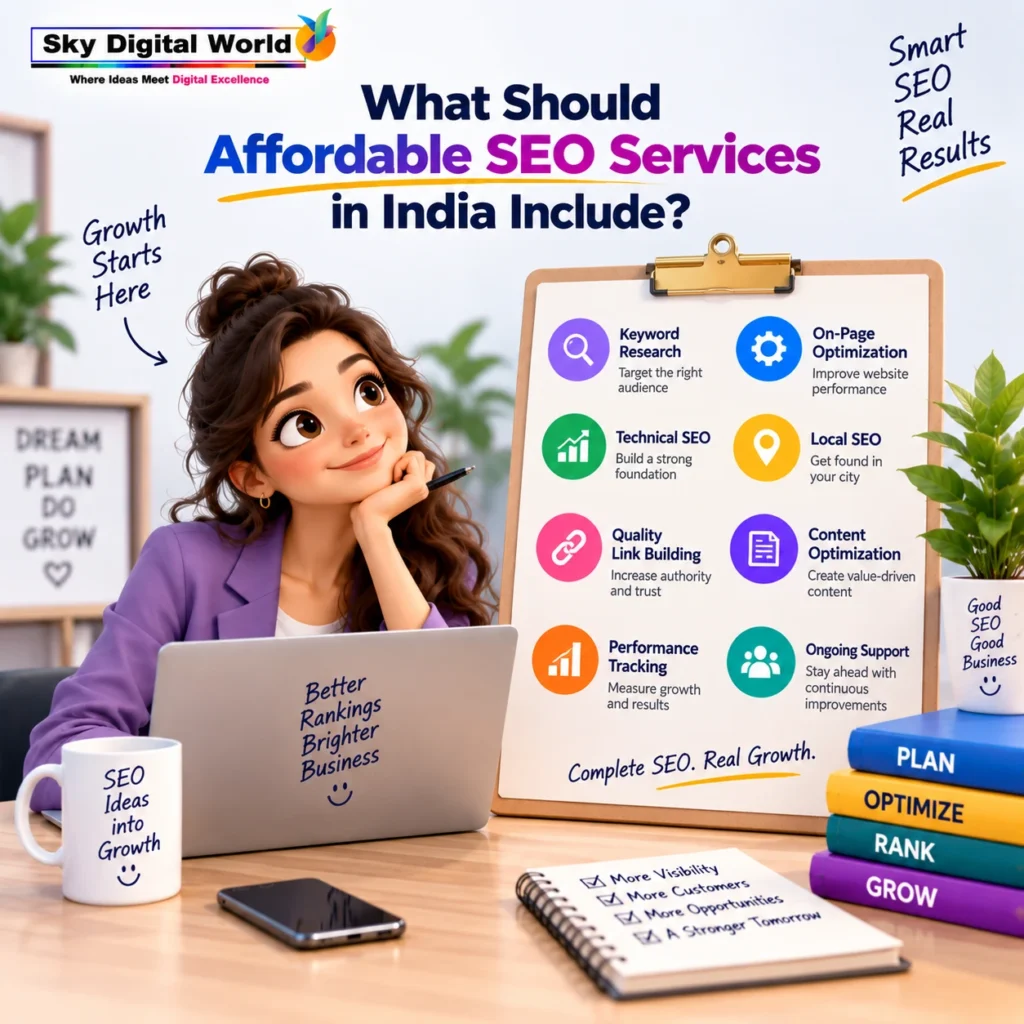
What Should Affordable SEO Services in India Include?
A practical package can include an SEO audit, keyword and search-intent research, technical SEO, on-page optimization, internal linking, content planning, local SEO where relevant, competitor research and performance measurement.
Not every startup needs every SEO activity immediately.
A local business may need local SEO first. A SaaS startup may need product-led content and technical improvements. A manufacturer may benefit more from strong product and industry pages.
The strategy should fit the business rather than forcing every business into the same package.
How Long Does SEO Take for a Startup?
There is no universal SEO timeline.
Performance depends on competition, website history, technical condition, content quality, existing authority and how consistently the strategy is implemented.
Instead of waiting for one dramatic ranking jump, businesses should watch progressive indicators such as:
Indexing → Impressions → Keyword Movement → Relevant Clicks → Engagement → Leads → Sales
SEO is generally a process of building visibility and authority over time rather than an overnight marketing tactic.
Final Thoughts
Startups and SMEs do not necessarily need the largest SEO budget.
They need a focused strategy.
The right Affordable SEO Services in India should help a business understand what customers search for, improve important website pages, solve technical problems, develop useful content and turn relevant organic visibility into genuine opportunities.
SEO should not be about doing everything at once.
It should be about doing the highest-impact work first and building from there.
For a growing business, that approach can transform SEO from another marketing expense into a valuable long-term digital asset.
FAQs
Affordable SEO Services in India are search optimization solutions designed around a business’s priorities and available budget. They may include technical SEO, keyword research, on-page optimization, content strategy, local SEO, internal linking and performance tracking.
Yes, SEO can help a startup build organic discoverability, particularly when potential customers already search online for its products, services or solutions. The appropriate strategy depends on the startup’s market, competition and business model.
Small businesses may struggle for highly competitive broad keywords, but they can target more specific opportunities based on location, niche services, customer problems and long-tail search intent. Strong relevance can help smaller businesses compete in areas that matter to them.
There is no fixed timeline. Technical improvements may be noticed relatively quickly, while competitive organic growth can take longer. Website condition, competition, content, authority and consistency all influence SEO performance.
Affordable SEO focuses on prioritizing high-value activities within a realistic budget. Cheap SEO often relies on shortcuts, low-quality content or questionable link-building practices. A sustainable strategy prioritizes relevance, website quality, useful content and measurable business outcomes.