




Can Your Website Answer the Questions Customers Actually Search?
Can Your Website Answer the Questions Customers Actually Search? A Complete Guide to Answer-Focused SEO
Imagine a potential customer searching Google for “How much does website development cost for a small business?”
They find your website, click on your blog, and start reading.
But instead of finding a helpful answer, they see paragraphs explaining how experienced your company is, how many services you provide, and why they should choose your business.
The customer leaves without making an enquiry.
Why?
Because your website talked about your business instead of answering the customer’s question.
This is a common mistake many businesses make with their website content.
Today, customers don’t just search for products and services. They search for answers, comparisons, solutions, prices, recommendations, and practical advice before making purchasing decisions.
If your website doesn’t provide the information they need, they may continue researching elsewhere.
That’s where Answer Engine Optimization (AEO) becomes valuable.
AEO focuses on making content clear, relevant, accessible, and useful for people seeking direct answers through traditional search engines, voice search, and AI-powered search experiences.
In this guide, we’ll explore how businesses can create customer-focused website content that answers real questions, supports organic search visibility, and creates better opportunities for generating qualified leads
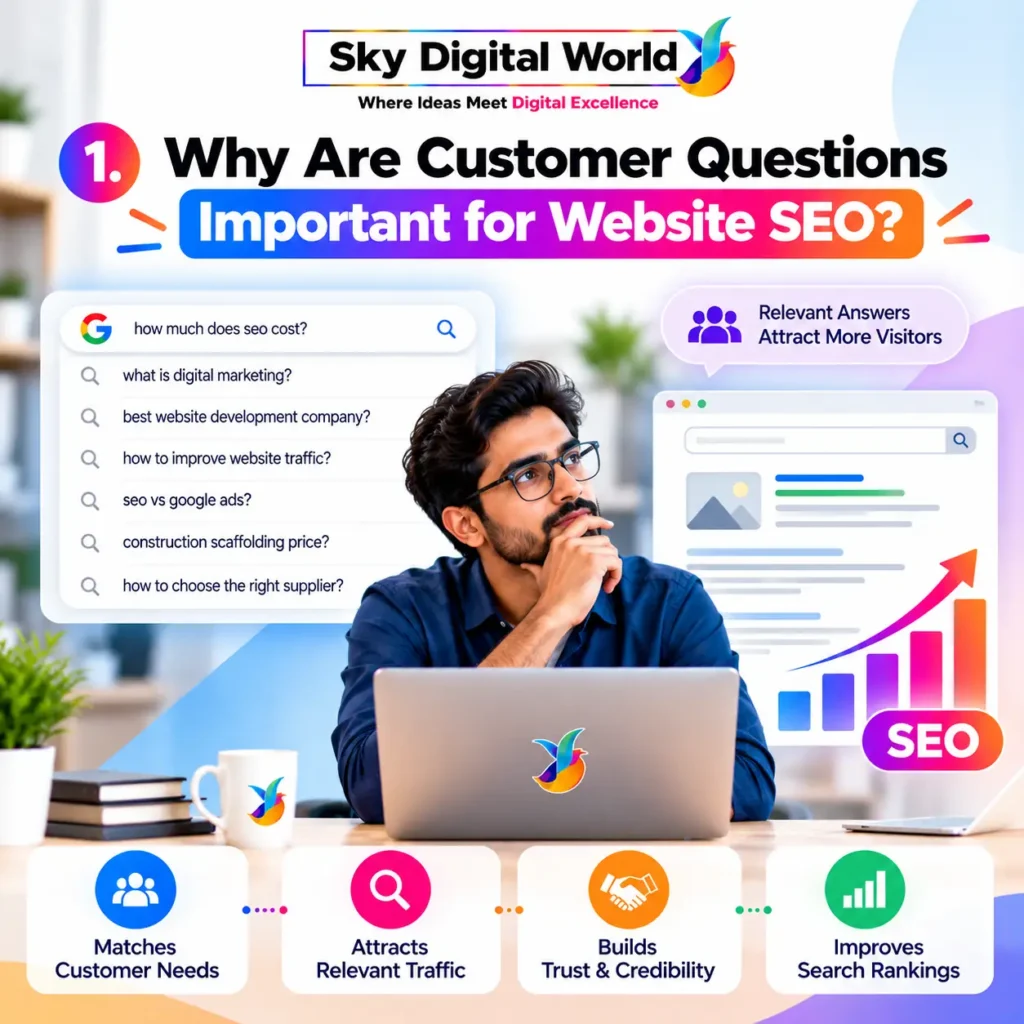
1. Why Are Customer Questions Important for Website SEO?
Think about the last time you searched Google.
Did you simply type a business category, or did you ask something specific?
You may have searched:
- How much does SEO cost for a small business?
- Which digital marketing strategy is best for a startup?
- Why is my website getting traffic but no enquiries?
- How do I choose a reliable construction material supplier?
- What should I check before buying residential property?
Each question reveals something about the customer’s needs.
Some people want basic information. Others are comparing solutions, while some are almost ready to make a purchase.
Understanding these questions helps businesses create content that matches real customer expectations.
For example, a manufacturing company can publish a helpful guide explaining how to select scaffolding materials rather than creating several generic articles that simply repeat product names.
The objective is to provide useful information that helps visitors make informed decisions.
2. What Is Answer Engine Optimization (AEO)?
Answer Engine Optimization (AEO) is an approach to creating and organizing website content so that relevant information is easy for users and answer-based search systems to find and understand.
It emphasizes clear explanations, accurate information, logical page structure, and content that directly addresses questions.
Traditional SEO often includes optimizing pages for relevant keywords and search intent.
AEO builds on these principles by giving additional attention to how questions are answered.
For example:
Customer Question: What is the difference between SEO and Google Ads?
Useful Answer: SEO focuses on improving organic search visibility, while Google Ads allows businesses to run paid advertisements across eligible Google advertising placements. SEO generally requires ongoing optimization, whereas paid campaigns can begin delivering advertising exposure once approved and active.
This answer gives readers useful information immediately.
A longer article can then explain costs, advantages, limitations, and suitable business situations.
Important: AEO does not guarantee that Google, ChatGPT, or another AI platform will feature or cite your website. It helps make your content more useful and understandable.
3. Your Website Talks About Services but Ignores Customer Problems
Many business websites have pages with headings such as:
“Our Services”
“Why Choose Us”
“Best Quality Solutions”
These sections can be useful, but they may not address the questions customers ask before contacting a business.
Consider a website development agency.
A potential customer may want to know:
How long does it take to develop a business website?
Will the website work properly on mobile phones?
Can I update website content myself?
What happens after the website is launched?
If the agency answers these questions clearly, visitors can better understand its services.
How to Improve Your Content
Review each important service page and ask:
What would a first-time customer want to know before choosing this service?
Add concise explanations of the process, deliverables, timelines, limitations, and next steps.
A useful service page should help customers make decisions, not simply advertise the company.
4. How Can Businesses Find the Questions Customers Actually Search?
You don’t need to guess every question your customers might ask.
There are several practical ways to discover relevant topics.
Use Google Search Console
Google Search Console shows search queries that generated impressions and clicks for your website.
Review the queries associated with important pages.
Look for questions and related phrases that reveal what visitors want to understand.
Explore Google’s Search Features
Google autocomplete and relevant People Also Ask results can help identify commonly explored topics.
These suggestions should be treated as research signals rather than guaranteed indicators of search volume.
Review Customer Conversations
Your sales team, customer support staff, WhatsApp enquiries, and consultation calls can reveal valuable questions.
If several customers ask about pricing, delivery, installation, service coverage, or product specifications, those topics may deserve a place on your website.
Study Competitor Content
Review how other relevant websites explain important customer concerns.
Identify missing information and opportunities to provide more accurate, detailed, or practical answers.
The best content ideas often come from the questions your customers already ask.
5. Why Search Intent Matters More Than Simply Adding Keywords
A keyword tells you what someone searched.
Search intent helps explain why they searched.
For example, consider these queries:
Search Query | Likely Customer Intent |
What is digital marketing? | Learn basic information |
SEO vs Google Ads | Compare options |
How much do SEO services cost? | Understand pricing |
Digital marketing agency in Indore | Find a service provider |
Request an SEO consultation | Take a business action |
These searches require different types of content.
Someone researching basic digital marketing concepts may prefer an educational article.
A customer searching for an agency may want service details, experience, location, and contact information.
How to Improve Search Intent Alignment
Create content that matches the customer’s current stage.
Use educational blogs for informational questions, comparison guides for evaluation, and detailed service pages for commercial searches.
Avoid directing every question to the same generic sales page.
This is an important principle of Answer Engine Optimization and customer-focused SEO.
6. How Should You Structure Content to Answer Questions Clearly?
Even accurate information can become difficult to understand when it is poorly organized.
Imagine opening a blog with long paragraphs, vague headings, and no clear answer to the main question.
Most readers would struggle to find what they need.
A better approach is to organize information logically.
Start With a Direct Answer
When a heading asks a specific question, answer it near the beginning of that section.
Then provide relevant explanations and examples.
Use Descriptive Headings
Instead of writing “Important Information,” use a heading such as “How Much Does Website Maintenance Cost?”
This helps readers identify relevant sections quickly.
Add Useful Examples
Realistic examples make technical subjects easier to understand.
For example, explain how a small retailer and a large e-commerce business may have different website requirements.
Include Comparisons When Relevant
Tables can make complex information easier to evaluate.
Keep the Language Natural
Write as if you’re explaining the subject to a customer during a consultation.
Avoid excessive jargon, repetitive keywords, and unnecessarily complicated sentences.
Clear content helps readers understand your message and take the next step with confidence.
7. Can Answer-Focused Content Improve SEO and AI Search Visibility?
Answer-focused content can support both traditional SEO and AI-assisted discovery.
Search engines aim to provide useful results that address searchers’ needs.
AI-powered search experiences may also retrieve, summarize, or cite relevant information from accessible sources.
A page containing accurate answers, clear headings, original insights, and useful supporting details may be easier to interpret than a page filled with vague promotional statements.
However, businesses should understand that good content does not guarantee rankings, featured snippets, AI citations, or recommendations.
AEO should be treated as part of a broader content and SEO strategy rather than a replacement for technical SEO, website accessibility, and credibility.
8. How Can Answer Engine Optimization Help Businesses Generate Better Leads?
Not every website visitor is ready to become a customer immediately.
Some people are researching a problem, comparing providers, or understanding available solutions.
Useful content can help them move through that process.
For example, consider a business selling industrial scaffolding products.
A customer might begin by searching:
“What is a cuplock scaffolding system?”
Later, they may ask:
“What is the difference between cuplock and ringlock scaffolding?”
Finally, they might search:
“Scaffolding manufacturer in India for bulk orders.”
A website offering helpful educational content, detailed product comparisons, and clear enquiry options can support customers at each stage.
This creates a more connected journey from information gathering to supplier evaluation and potential enquiry.
The aim is not to push every reader into submitting a form immediately.
It is to provide the information needed to make a confident decision.
9. What Common Mistakes Should Businesses Avoid?
Even well-intentioned content strategies can become ineffective when they focus too heavily on search visibility.
Writing only for keywords: Repeating phrases without adding value makes content less helpful.
Giving incomplete answers: A question-based heading should be followed by a meaningful response.
Publishing inaccurate information: Outdated prices, unsupported statistics, and incorrect technical details can reduce credibility.
Adding unnecessary FAQs: FAQs should answer genuine customer concerns, not simply repeat existing paragraphs.
Copying generic AI-generated explanations: Content should be reviewed, fact-checked, and improved with genuine expertise.
Ignoring the next step: Relevant pages should make it easy for interested visitors to explore services or contact the business.
Good Answer Engine Optimization starts with helping people, not trying to manipulate search systems.
10. How Do You Measure the Performance of Answer-Focused Content?
Publishing useful answers is only the beginning.
Businesses should evaluate whether their content is reaching relevant audiences and supporting meaningful outcomes.
Performance Metric | What It Measures |
Search Impressions | How often pages appear in eligible search results |
Organic Clicks | Visits originating from organic search clicks |
Search Queries | Questions and keywords bringing search visibility |
Engagement | How visitors interact with website content |
Internal Link Clicks | Movement toward related resources and services |
Enquiries | Contact forms, calls, or other recorded leads |
Conversion Rate | Percentage of relevant visits producing a desired action |
AI Referrals | Visits from identifiable AI-related referral sources |
Use Google Search Console and Google Analytics 4 to review available data.
When evaluating performance, remember that traffic changes may also reflect competition, seasonality, technical problems, or changes in search demand.
Focus on meaningful trends rather than expecting every article to generate enquiries immediately.
11. A Practical 30-Day Answer Engine Optimization Plan
Businesses can begin improving their existing content without rebuilding the entire website.
Timeline | Focus Area | Recommended Action |
Week 1 | Customer Question Research | Review search queries, sales enquiries, and customer concerns |
Week 2 | Content Audit | Identify important pages that fail to answer relevant questions |
Week 3 | Content Improvement | Add direct answers, examples, comparisons, and useful internal links |
Week 4 | Performance Review | Check indexing, organic visibility, engagement, and enquiry activity |
Start with pages that already attract relevant visitors or support important business services.
A structured review can help identify improvements, but results are not guaranteed within 30 days.
12. Should Every Website Page Include FAQs?
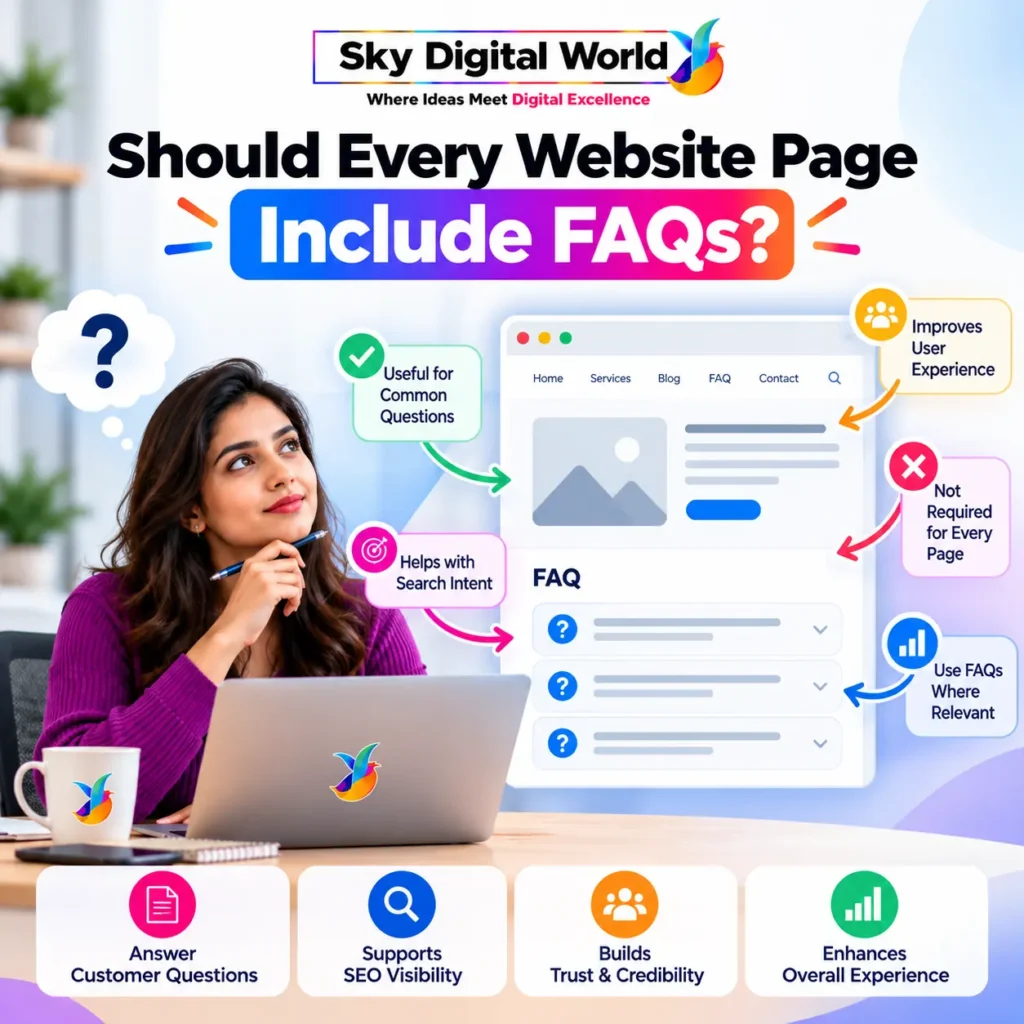
No. Not every page needs an FAQ section.
FAQs are useful when they answer additional questions that visitors genuinely have.
For example, a website development service page might include questions about project timelines, maintenance, mobile compatibility, and content updates.
However, adding ten repetitive questions to every page does not automatically improve SEO.
Use FAQs when they make the page more useful.
Also, FAQ structured data does not guarantee enhanced Google search appearances. Businesses should follow current search engine eligibility guidance rather than assuming FAQ markup creates a ranking advantage.
Final Thoughts: Your Website Should Answer Before It Sells
Customers visit websites because they need information, solutions, or confidence before making decisions.
If your content only talks about your business without addressing their questions, you may miss opportunities to build trust.
A customer-focused website should explain problems clearly, provide accurate answers, offer practical guidance, and make relevant next steps easy to find.
This is the value of Answer Engine Optimization.
By combining helpful content with sound SEO practices, businesses can create websites that support traditional search visibility, AI-assisted discovery, and better customer experiences.
At Sky Digital World, we focus on practical digital marketing strategies that connect useful website content with business goals.
Is Your Website Answering the Questions Your Customers Actually Ask?
Visit Sky Digital World to explore how a structured content strategy, website audit, and SEO improvements can help your business communicate more effectively with potential customers.
Frequently Asked Questions (FAQs)
Answer Engine Optimization is the practice of creating clear, accurate, accessible content that directly addresses user questions and can be understood by search and AI-powered answer systems.
Lorem ipsum dolor sit amet, consectetur adipiscing elit. Ut elit tellus, luctus nec ullamcorper mattis, pulvinar dapibus leo.
Clear and useful content may support discoverability in AI-assisted search experiences, but no AEO strategy can guarantee that an AI system will cite or recommend a particular website.
4. How do I find the questions customers search on Google?
Use Google Search Console, relevant Google search suggestions, customer enquiries, sales conversations, and competitor research to identify questions connected to your products or services.
5. Does answering customer questions help generate leads?
Helpful answers can build understanding and support customer decision-making. When paired with relevant services, clear calls to action, and a good website experience, they may contribute to qualified enquiries.
Use Google Search Console, relevant Google search suggestions, customer enquiries, sales conversations, and competitor research to identify questions connected to your products or services.
helpful answers can build understanding and support customer decision-making. When paired with relevant services, clear calls to action, and a good website experience, they may contribute to qualified enquiries.