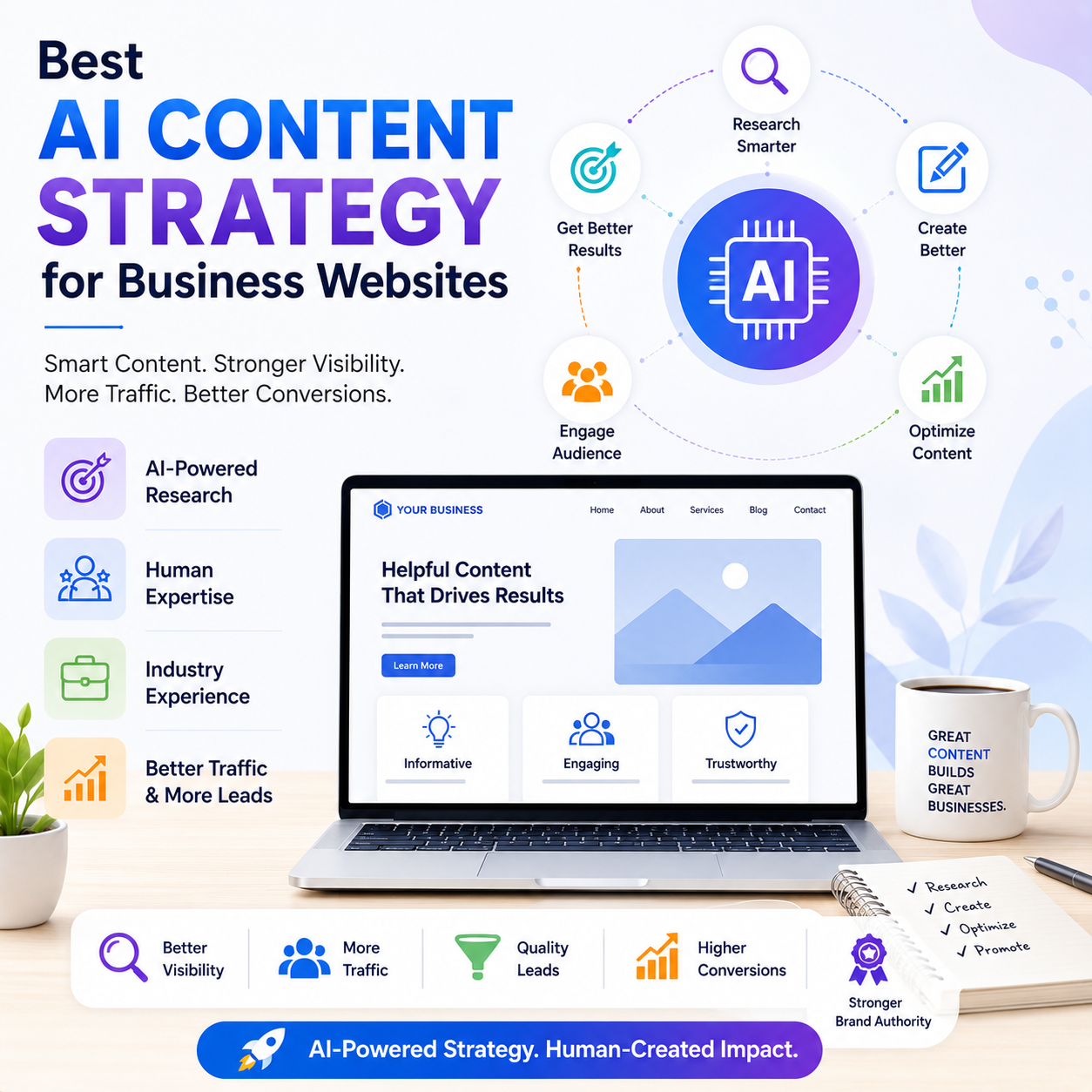
Best AI Content Strategy for Business Websites
INTRODUCTION
The Complete Blueprint to Attract More Traffic, Generate Quality Leads, and Build Long-Term Business Growth
In today’s highly competitive digital landscape, simply having a website is no longer enough. Every business wants more traffic, better visibility, higher engagement, and increased conversions. Yet many websites struggle to achieve these goals despite investing heavily in design, SEO, and digital marketing.
The reason is simple: they lack a strategic content approach.
Content has become the foundation of online growth. It influences how customers discover your business, how search engines rank your website, and how potential buyers perceive your expertise. As Artificial Intelligence continues to transform digital marketing, businesses must rethink how they create, optimize, and distribute content.
The best AI content strategy for business websites is not about producing large volumes of content. It is about creating the right content for the right audience at the right time. Businesses that successfully combine AI-powered insights with human expertise are building stronger online authority, attracting qualified traffic, and converting visitors into customers more effectively than ever before.
This guide explains how businesses can develop an AI-driven content strategy that delivers measurable results in 2026 and beyond.
Why Content Is the Most Valuable Digital Asset
Every customer journey begins with information.
Before contacting a company, requesting a quotation, or making a purchase, customers typically search for answers online. They compare options, read articles, explore solutions, and evaluate businesses based on the quality of information they provide.
This means your content often creates the first impression of your brand.
High-quality content helps businesses:
- Increase organic traffic
- Improve search engine rankings
- Build credibility and trust
- Generate qualified leads
- Educate potential customers
- Support sales efforts
- Strengthen brand authority
Businesses that consistently publish valuable content position themselves as industry leaders rather than just service providers.
The Rise of AI-Powered Search
The way people search online is changing rapidly.
Traditional search engines are no longer the only source of information. Consumers increasingly rely on AI-powered platforms such as ChatGPT, Google AI Overviews, Gemini, Perplexity, and voice assistants to discover products, services, and solutions.
Instead of typing short keywords, users now ask detailed questions such as:
- What is the best digital marketing strategy for small businesses?
- How can AI improve website conversions?
- Which SEO techniques work in 2026?
- What should I look for in a website development company?
AI-powered search engines prioritize content that is clear, informative, authoritative, and easy to understand.
This shift requires businesses to create content that serves both human readers and AI-powered search systems.

Understanding Customer Intent
One of the biggest mistakes businesses make is focusing solely on keywords.
While keywords remain important, successful content strategies begin with understanding customer intent.
Ask yourself:
What problems are customers trying to solve?
What questions are they asking?
What information do they need before making a decision?
What concerns are preventing them from taking action?
The answers to these questions form the foundation of an effective content strategy.
When businesses focus on solving customer problems rather than simply targeting keywords, they create content that attracts highly qualified prospects.
Building Content Around Topic Authority
Search engines and AI platforms reward expertise.
Instead of publishing random blog posts, businesses should build content around specific topics related to their industry.
For example, a digital marketing website might focus on:
SEO and Search Visibility
- Local SEO Strategies
- Technical SEO
- AI SEO
- On-Page Optimization
Website Development
- Website Design Best Practices
- Conversion Optimization
- Mobile-Friendly Websites
- User Experience Design
AI Marketing
- AI Content Creation
- AI Lead Generation
- Marketing Automation
- AI Search Optimization
This approach establishes topical authority and helps search engines understand your expertise
Create Content for Every Stage of the Customer Journey
Awareness Stage
At this stage, users are looking for information.
Examples:
- What Is AI Marketing?
- Benefits of Business Websites
- Why SEO Matters
Consideration Stage
Users are comparing options.
Examples:
- SEO vs Google Ads
- AI Marketing vs Traditional Marketing
- Custom Website vs Template Website
Decision Stage
Users are ready to purchase.
Examples:
- Best Website Development Company
- Digital Marketing Agency India
- Professional SEO Services
Creating content for every stage helps guide customers through the buying process.

Quality Content Wins Over Quantity
Many businesses believe that publishing more content automatically leads to better results.
This is no longer true.
Search engines increasingly prioritize content quality, expertise, relevance, and user satisfaction.
A successful article should:
- Address specific problems
- Provide actionable insights
- Demonstrate expertise
- Offer unique perspectives
- Be easy to read
- Deliver genuine value
One exceptional article can generate more traffic and leads than dozens of low-quality posts.
Using AI to Improve Content Strategy
Artificial Intelligence has become a valuable tool for content marketing.
AI can help businesses:
- Identify content opportunities
- Analyze customer behavior
- Discover keyword trends
- Generate topic ideas
- Improve content optimization
- Monitor performance
However, AI should enhance human creativity, not replace it.
The most effective content combines:
AI-Powered Research
Human Expertise
Industry Experience
Original Insights
This combination creates content that stands out from competitors and builds trust with readers.